
Illegal Fishmeal Operations Threaten West Africa's Marine Sanctuary
A joint investigation by the Guardian and DeSmog has uncovered extensive illegal fishmeal and fish oil production operations off the coast of Guinea-Bissau, threatening one of West Africa's most important marine ecosystems. The investigation reveals that industrial vessels are illegally processing thousands of tonnes of sardinella within the protected Bijagós archipelago, with the resulting products entering international supply chains.
Local Fisheries Struggle Amid Industrial Exploitation
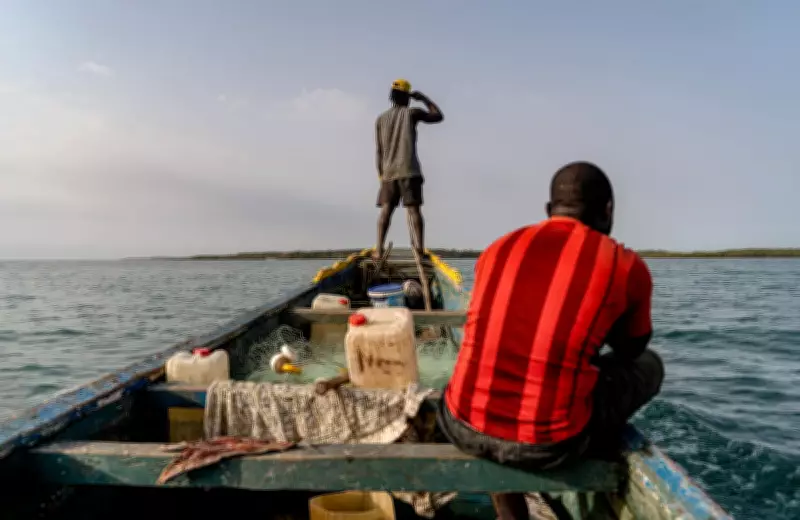
On Bubaque island in the Bijagós archipelago, local fishers face daily challenges that highlight the contrast between small-scale fishing and industrial operations. The island's only ice factory has been broken for months, forcing fishers like Pedro Luis Pereira to make six-hour round trips to the mainland for ice. Pereira sells his fresh sardinella catch for just 250 CFA francs (£0.33) per kilogram at Bissau's markets, racing against the tropical heat to preserve his catch.
The Bijagós archipelago, comprising 88 islands, is recognized as a protected area where only wooden canoes and small-scale fishing are permitted. Scientists have dubbed this region "the Galápagos of West Africa" due to its rich biodiversity, including endangered turtles, manatees, and numerous fish species that rely on sardinella as a vital food source.
Industrial Intrusion into Protected Waters
Despite protection measures, industrial vessels have been operating at the boundaries of the marine protected area. The investigation identified two floating fishmeal factories: the Hua Xin 17, a 125-meter Chinese-owned vessel, and the Tian Yi He 6, which has operated in the area for over five years. Both vessels have been processing fresh sardinella into fishmeal and oil while anchored offshore.
Satellite records from Global Fishing Watch indicate that six Turkish purse seiners appear to be supplying these factory vessels. These Turkish boats are licensed to fish within Guinea-Bissau's exclusive economic zone but are not authorized to transship at sea or fish within the protected Bijagós waters. Analysis shows these vessels routinely disable their Automatic Identification System (AIS) signals when approaching restricted areas, a practice commonly associated with illegal, unreported, and unregulated (IUU) fishing activities.
Human Rights and Environmental Concerns
Testimony from a local sailor who worked aboard the Hua Xin 17 reveals harsh conditions for Guinean crew members. The sailor, identified only as Antonio for protection, reported that 25 crew members worked six-hour shifts processing sardinella while receiving inadequate food and accommodations. "They only gave us rice to eat," Antonio stated, describing separate facilities and treatment for Chinese managers versus local workers.
Video footage obtained by investigators shows tonnes of fresh sardinella moving along assembly lines aboard the factory vessels. The scale of operations represents a significant threat to food security in Guinea-Bissau, where fish provide one-third of animal protein consumption and the fishing industry employs 225,000 people in a nation of 2.2 million.
International Supply Chain Implications
Trade data analysis reveals that fishmeal from these operations enters global markets. The Tian Yi He 6 exported fish oil to brokers in Chile, the world's second-largest salmon producer, and sold 440 tonnes of product valued at $1.7 million to Gisis SA in Ecuador in 2023. Gisis SA produces shrimp feed as part of Skretting, Nutreco's aquaculture feed division.
Skretting has confirmed purchasing fishmeal from Guinea-Bissau in 2023 but stated they were unable to verify whether the fish was caught within the marine protected area. The company has initiated an internal investigation, emphasizing their "zero-tolerance policy" regarding IUU fishing.
Government Response and Enforcement Challenges
Following a coup in November, Guinea-Bissau's new government took decisive action in January, announcing a sweeping ban on fishmeal and fish oil production both at sea and on land. The government also suspended licenses for purse-seine fishing of small pelagic fish. This landmark decision goes further than measures taken by neighboring countries Mauritania, Senegal, and Gambia.
However, enforcement remains a significant challenge. Dyhia Belhabib from Ecotrust Canada notes that "Guinea-Bissau does not have the capacity to enforce control at sea." The government's action follows pressure from Senegal and the European Union, which has a sustainable fisheries partnership agreement with Guinea-Bissau that prohibits fishing small pelagics to protect food security.
Local Perspectives and Future Outlook
Back on Bubaque island, the ice machine remains broken, highlighting the infrastructure challenges facing local fishers. Papa Cá, president of the Guinean Platform of Non-State Actors in Artisanal Fisheries and Aquaculture, welcomes the ban but emphasizes the need for investment in cold storage and other infrastructure to help local fishers get their catch to market before it spoils.
"Only then can this measure become a real opportunity to improve community incomes and promote food security in the country," Cá states. The investigation's findings have been shared with authorities and international organizations, bringing attention to the complex interplay between industrial fishing, environmental protection, and local livelihoods in one of West Africa's most vulnerable marine ecosystems.



