
The $10.2 Billion De-Extinction Dream: Can Science Really Bring Back Lost Species?
In an unassuming brick building within a Dallas business park, scientists at Colossal Biosciences are attempting what was once pure science fiction: resurrecting animal species that vanished from Earth thousands of years ago. The company, now valued at a staggering $10.2 billion after raising hundreds of millions from investors including celebrities like Tiger Woods and Paris Hilton, has ignited both fervent acclaim and sharp criticism with its ambitious de-extinction projects.
The Jurassic Park Comparisons and Moral Obligations
Colossal's work inevitably draws comparisons to Jurassic Park, a parallel that CEO Ben Lamm, a 44-year-old billionaire, doesn't shy away from. "I don't mind the Jurassic Park comparison because we get it a lot," Lamm told the Guardian during an interview in his office, which features statues of a mammoth and a brontosaurus. He noted that while the film depicts a dystopian outcome, it educated millions about DNA and genetic modification.
Lamm argues that humanity faces a "moral obligation" to respond to the extinction crisis, where species are disappearing at up to 1,000 times the natural rate due to human activity. He believes Colossal's high-profile announcements help "parents in middle America care about conservation and also get excited about science."
The Science Behind the Controversy
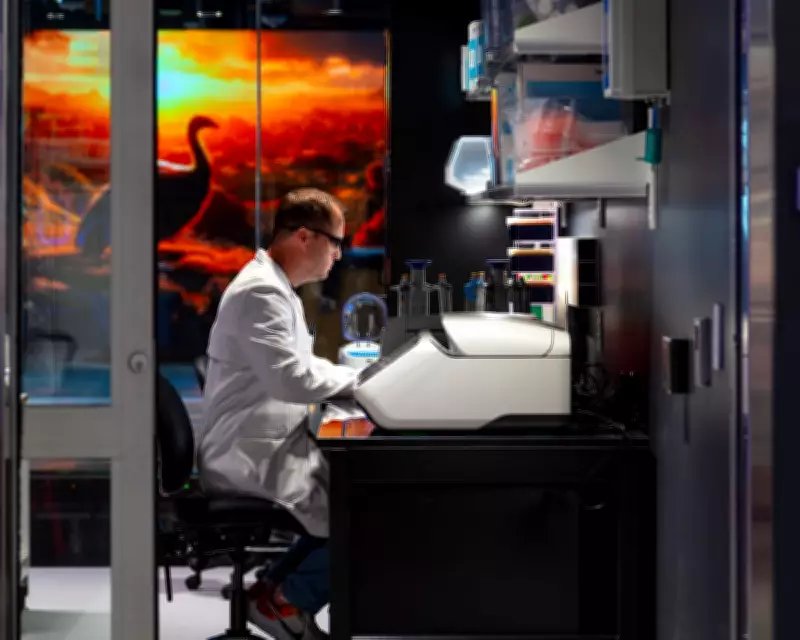
At Colossal's 55,000-square-foot Dallas facility, scientists in white lab coats work meticulously with ancient DNA extracted from fossils. Using CRISPR gene-editing technology, they modify the genomes of living relatives to approximate extinct species. For the dire wolf project, researchers edited 14 out of 19,000 gray wolf genes to create hybrid pups with snow-colored fur, larger size, and enhanced cold resistance.
The company claims it has already made the dire wolf "de-extinct" through the birth of three pups—two males named Romulus and Remus and a female named Khaleesi, a nod to Game of Thrones. Next on the agenda are the woolly mammoth, targeted within two years, and the dodo, followed by the thylacine (Tasmanian tiger) and the massive moa bird of New Zealand.
However, the technical challenges vary significantly across species. Birds like the dodo present particular difficulties because they cannot be cloned from skin or hair samples like mammals. Colossal's team is working with pigeon eggs—the dodo's closest living relative—cultivating primordial germ cells in an attempt to overcome this hurdle.
The Critics' Perspective: "Tech Bro" Hype or Conservation Breakthrough?
Many scientists remain deeply skeptical of Colossal's claims. Vincent Lynch, an evolutionary developmental biology expert at the University at Buffalo, argues that creating genetically modified gray wolves does not equate to resurrecting dire wolves. "You can't put a mutation into a related species and call that thing the extinct thing," Lynch stated. "Ben Lamm is a tech bro who thinks technology can solve the world's problems, but de-extinction isn't going to do that."
Critics also question whether these revived creatures would truly be the extinct species or merely approximations. The debate extends to philosophical questions about what defines a species, with Lynch noting that Colossal's approach relies on an outdated "if it looks like the thing then it's the thing" definition.
Ecological Concerns and Moral Hazards
Beyond taxonomic debates, scientists express concerns about reintroducing long-extinct animals into modern ecosystems. Julie Meachen, a paleontologist at Des Moines University who helped sequence the dire wolf genome, warned that mammoths reintroduced to Alaska or Canada "would cause an incredible amount of drama" and potentially conflict with human settlements.
Victoria Herridge, a paleontologist at the University of Sheffield, expressed shock at Colossal's plan to use Asian elephants as surrogates for mammoths, noting that "we are so far from understanding" how these animals would interact with contemporary environments.
Perhaps most troubling to conservationists is the potential "moral hazard" created by de-extinction technology. If society believes extinct species can simply be revived later, there may be reduced urgency to protect endangered species and their habitats today. This concern has gained particular relevance amid efforts by the Trump administration and Congressional Republicans to weaken endangered species protections.
The Broader Conservation Mission
Despite the controversy surrounding flagship projects like the mammoth and dodo, Colossal's leadership emphasizes that their core mission extends beyond charismatic megafauna. Chief scientist Beth Shapiro notes that the company's gene-editing technology could have more immediate applications in preserving existing endangered species.
Potential uses include restoring genetic diversity to critically endangered red wolves, developing vaccines against deadly viruses in Asian elephants, and creating toxin resistance in Australian marsupials threatened by invasive cane toads. "I actually think that is going to be the broader application of these technologies," Shapiro acknowledged.
Colossal has described itself as "a species preservation company" in submissions to conservation organizations, framing de-extinction as "a practical gateway to develop next-generation conservation tools." The business model also includes spin-off companies addressing plastic pollution and national security applications.
The Cultural Impact and Future Prospects
Colossal's work has captured public imagination in unexpected ways. The dire wolf pups were presented to Game of Thrones author George R.R. Martin, who reportedly responded with "very overemotional sort of stuttering" before declaring, "You guys brought back the dire wolf." Director Peter Jackson, another investor, suggested photographing the pups on the Iron Throne from the HBO series.
As Colossal continues its controversial work, the fundamental questions remain: Can we truly resurrect lost species, and should we? The company's $10.2 billion valuation suggests significant investor confidence, but the scientific community remains divided between those who see groundbreaking conservation technology and those who perceive dangerous hype that could ultimately undermine genuine preservation efforts.
The coming years will test whether Colossal's ambitious projects represent a new frontier in conservation biology or a cautionary tale about technological overreach in addressing complex ecological crises.



