
Billionaire's Conservation Project Pays Príncipe Villagers to Protect 'African Galapagos'
The unique biodiversity of Príncipe island has captivated observers since Portuguese navigators first encountered it in 1471. Now, a groundbreaking conservation initiative is transforming how this fragile ecosystem is protected by making local residents its primary stewards.
Cash Dividends for Environmental Protection
At Porto Real's colonial-era farm buildings, agricultural worker Kimilson Lima, 43, represents the human face of this innovative program. "With this money we can have a proper floor in the house," he explained after signing the agreement. "And an inside toilet." Lima is among nearly 3,000 participants—more than 60% of the adult population—who now receive quarterly payments for adhering to environmental protection guidelines.
The first dividend distribution delivered €816 (£708) per participant, a substantial sum on this remote West African island. "This will be truly transformative, both for nature and for the people," declared Felipe Nascimento, president of the self-governing region.
From Colonial Plantation to Conservation Laboratory
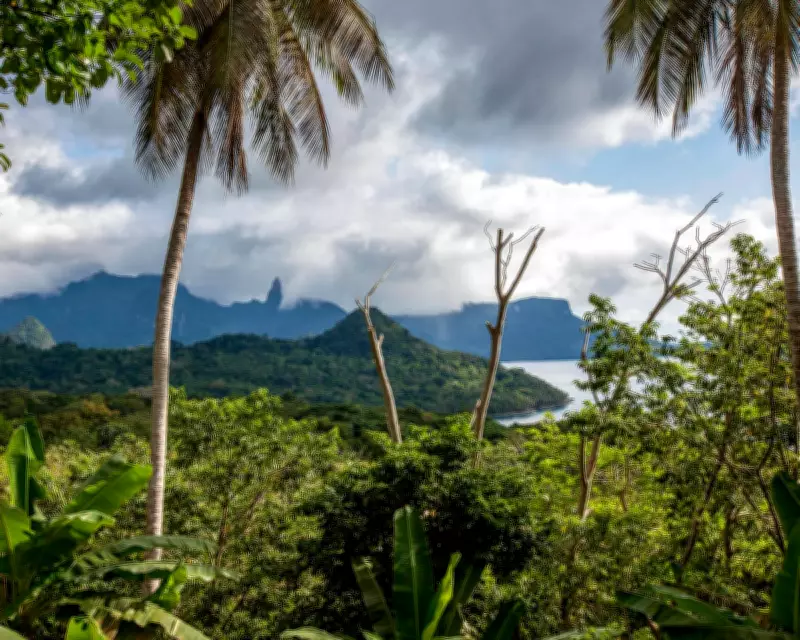
Príncipe's 20-mile-long landmass, separated from mainland Africa by over 160 miles of ocean, evolved unique rainforest ecosystems where giant land snails and crabs became apex predators. The island continues to yield new species discoveries, earning its "African Galapagos" nickname.
After Portuguese cacao plantations collapsed following 1975 independence, descendants of slaves and laborers from Angola and Cabo Verde formed tight-knit subsistence farming communities. Residents increasingly encroached into unexplored forest areas, cutting trees and foraging as economic pressures mounted.
Billionaire's Vision for Sustainable Development
The transformation began when South African billionaire Mark Shuttleworth arrived in 2010, initially seeking a home before embracing a philanthropic mission. "The normal path to development for Príncipe would be to cut down forest and grow 'fair trade' peppercorns," Shuttleworth observed. "But we want to reward them as stewards of their precious environment."
His Faya Foundation has committed approximately £87 million to date, converting plantation houses into hotels with locally-trained staff while establishing the dividend program. "They've been let down in the past," acknowledged Faya project CEO Jorge Alcobia. "They didn't expect us to keep our promises."
Balancing Conservation with Community Needs
The program maintains strict environmental accountability. "We have to explain that it's not free money," Alcobia emphasized. "Dividends are reduced, for example, if there's unauthorized tree-felling." Beyond cash payments, the foundation funds school improvements, organizes the moribund cacao industry, and provides financial literacy training for residents unfamiliar with banking systems.
In newly constructed villages, beneficiaries like Clara Gomes are investing in their futures. "My money is going on a new kitchen and training in carpentry," she revealed. Neighbor Edmundo now sells cacao to the project after previously lacking buyers. "I'm hoping they might take vanilla next," he added.
Skepticism and Scientific Discovery
Despite widespread participation, some residents remain cautious. "It's a monopoly," one bystander challenged. "Is that good? And what if everyone buys motorbikes and chainsaws?"
Meanwhile, former forager Yodiney dos Santos has transformed into a wildlife guide leading scientific expeditions that have discovered multiple new species, including a previously unknown owl. He understands the ecosystem's fragility intimately: "My ancestors brought edible West African snails from Angola for food. Now those snails are pushing out the endemic Príncipe snails."
A Model for Global Conservation
This unprecedented social experiment represents a potential blueprint for protecting irreplaceable ecosystems worldwide. "If it's successful," Shuttleworth concluded, "I hope other irreplaceable ecosystems might benefit from the idea at scale." As Príncipe villagers become paid guardians of their environment, they're demonstrating how economic incentives can align with ecological preservation in one of Earth's most distinctive island habitats.



