
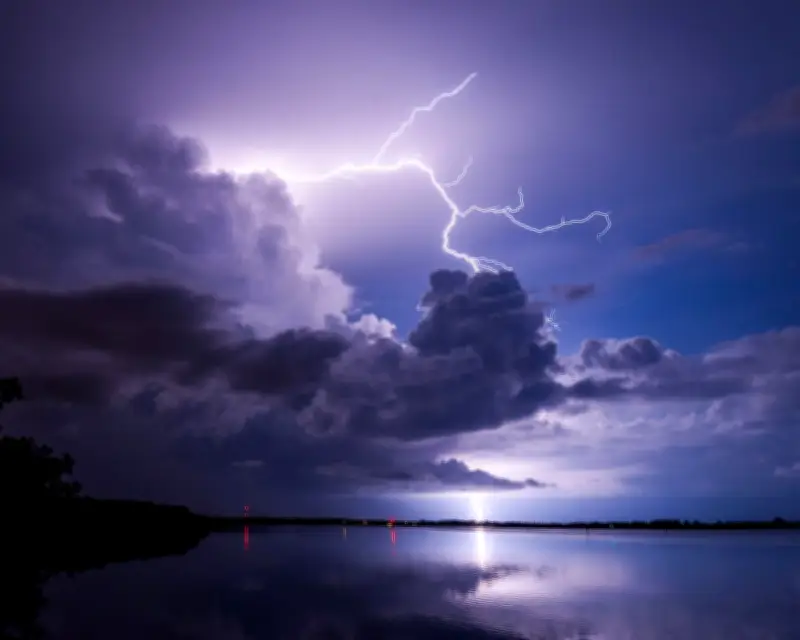
Thunder is the sound produced by lightning, and its formation is a rapid and violent process. When a lightning bolt strikes, it heats the surrounding air to around 30,000°C (54,000°F) – five times hotter than the surface of the sun. This extreme heating causes the air to expand explosively, creating a shockwave that travels outward faster than the speed of sound. Within a few metres, the shockwave slows down to the speed of sound and becomes a sound wave – what we hear as thunder.
The Rumble and the Clap
The characteristic rumble of thunder is due to the length of the lightning bolt, which can be several kilometres long. The sound from different parts of the bolt reaches the observer at different times because sound travels at about 340 metres per second (1,125 ft/s) in air. The nearest part of the bolt produces a sharp clap, while the more distant parts produce a lower, rumbling sound that arrives later. This is why thunder often starts with a loud crack and then rumbles on.
According to the Met Office, the distance to a lightning strike can be estimated by counting the seconds between seeing the flash and hearing the thunder. Five seconds equals roughly one mile (1.6 km). This method works because light travels almost instantaneously, while sound travels much slower.
Why Thunder Is Rarely Heard Beyond 25 Kilometres
Thunder is rarely heard from lightning more than 25 kilometres (15 miles) away. This is because sound waves are refracted (bent) by temperature and wind gradients in the atmosphere, and also because the high-frequency components of thunder are absorbed by the air. The lower frequencies travel further, which is why distant thunder sounds like a low rumble.
The loudness of thunder can vary widely. A typical thunderclap is about 120 decibels (dB) at a distance of 100 metres (330 ft) from the lightning channel. For comparison, a jet engine at 30 metres (100 ft) is about 140 dB. Prolonged exposure to sounds above 85 dB can cause hearing damage, so thunder can be dangerous to hearing if you are very close to the strike.
Different Types of Thunder
There are several types of thunder, depending on the orientation of the lightning bolt. Cloud-to-ground lightning produces the loudest thunder because the bolt is vertical and the sound from the entire length reaches the observer in a relatively short time. Intra-cloud lightning, which occurs within a single cloud, often produces a muffled rumble because the sound is partially blocked by the cloud itself. Sheet lightning – a cloud-to-cloud discharge that illuminates the sky – produces a diffuse glow and a low, continuous rumble.
The sound of thunder can also be affected by the landscape. In mountainous regions, echoes from cliffs and valleys can prolong the rumble. In flat, open areas, thunder may sound sharper and shorter.



