
The year 2025 proved to be a pivotal period for climate accountability within the United States judicial system. As the Trump administration actively promoted fossil fuel interests, a growing wave of citizens, states, and cities turned to the courts, aiming to hold major oil and gas corporations responsible for alleged decades of climate deception. This surge in litigation saw significant advancements but also encountered formidable new obstacles and industry counter-strategies.
Courtroom Progress Meets Stiff Resistance
Throughout the year, more than 70 subnational governments across the US continued their legal pursuit of big oil. The judiciary repeatedly rebuffed attempts by fossil fuel interests to derail these cases. Notably, the US Supreme Court declined to intervene in a high-profile lawsuit filed by Honolulu and rejected an unusual effort by several Republican-led states to block such litigation entirely. Numerous state courts also denied motions to dismiss cases or move them to federal courts, which are traditionally viewed as more favourable to industry defendants.
However, the path was not without setbacks. In May, under considerable pressure, Puerto Rico voluntarily dismissed its lawsuit filed just the previous year. Similarly, the city of Charleston, South Carolina chose not to appeal after its case was dismissed.
All eyes are now on the Supreme Court as it considers whether to review a critical case from Boulder, Colorado. The state's supreme court had previously allowed the lawsuit against two major energy firms to proceed. The companies have petitioned the nation's highest court, arguing the case is pre-empted by federal law. A decision to hear the case and rule in favour of the oil companies could potentially void the Boulder suit and over a dozen others with similar legal foundations.
"So far, the oil companies have had a losing record trying to get these cases thrown out," observed Richard Wiles, president of the Center for Climate Integrity. "The question is, does Boulder change that?" He emphasised that even an unfavourable ruling would not mark the end of accountability efforts, stating it "would not mean the end of big oil being held accountable in the court."
Novel Legal Strategies and an Industry Push for Immunity
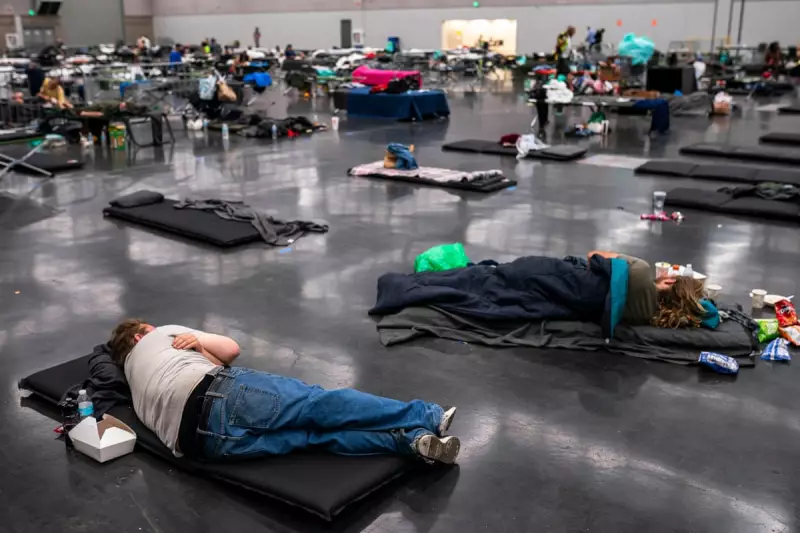
2025 witnessed the emergence of groundbreaking legal approaches. In a historic first, a Washington state woman filed a wrongful-death lawsuit in May, alleging that the fossil fuel industry's climate negligence contributed to her mother's death during an extreme heatwave. Later in the year, Washington residents launched a class action claiming that industry deception led to spiralling homeowners' insurance costs driven by climate impacts.
"These novel cases reflect the lived realities of climate harm and push the legal system to grapple with the full scope of responsibility," said a legal analyst.
Simultaneously, the fossil fuel industry and its political allies mounted a concerted campaign to secure protection from litigation. In April, former President Trump signed an executive order directing the Department of Justice to halt climate accountability lawsuits. By June, reports indicated that 16 Republican state attorneys general had asked the Justice Department to help create a "liability shield" for fossil fuel companies, akin to protections enjoyed by the firearms industry since 2005. Lobbying disclosures revealed that major trade groups and energy giants like ConocoPhillips were actively pushing Congress for draft legislation on the topic.
"We expect they could sneak language to grant them immunity into some must-pass bill," warned Richard Wiles, whose organisation is monitoring these efforts closely.
The Legal Horizon: Plastics, Extreme Weather, and Beyond
Looking ahead to 2026, legal experts anticipate a broadening of climate accountability lawsuits. The focus will likely expand beyond traditional oil and gas giants to include other high-emitting sectors. A significant precedent was set in 2025 when New York's attorney general secured a $1.1 million settlement from meatpacking giant JBS over alleged greenwashing claims.
Future litigation is expected to increasingly leverage advances in attribution science, which can link specific extreme weather events to climate change, enabling lawsuits focused on discrete disasters. Furthermore, cases concerning plastic pollution deception, similar to one filed by California, are predicted to multiply.
"Companies have engaged in decades of awful behaviour that creates liability on so many fronts," said Wiles. "We haven't even really scratched the surface of the numerous ways they could be held legally accountable for their behaviour." The legal battle to assign responsibility for the climate crisis is poised to intensify in the courtrooms of America.



