
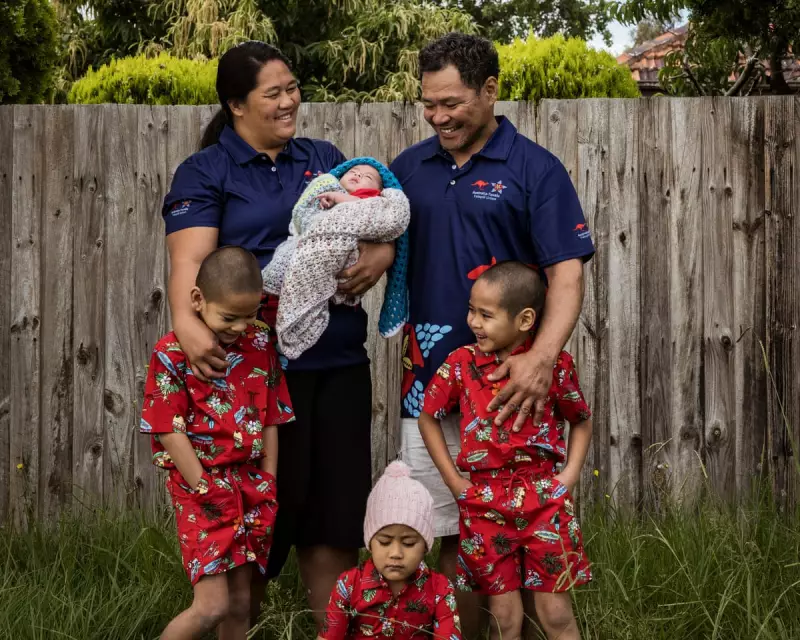
In a landmark response to the escalating climate crisis, a mother from the low-lying Pacific nation of Tuvalu has been offered a chance to build a new life in Australia. Alolita Semesi, 38, is among the first group to be granted a special visa under a pioneering migration scheme, as rising sea levels threaten to erase her homeland.
A Home Slipping Beneath the Waves
The dire situation in Tuvalu is no longer a distant forecast but a daily reality. Alolita described the heartbreaking changes she has witnessed on Funafuti, the nation's main atoll. King tides and storm surges now regularly inundate the land, contaminating precious freshwater supplies with salt and destroying vital food crops like taro and pulaka. The very soil of the islands is becoming saturated with saltwater, rendering it infertile.
"The sea is eating our land," Alolita stated, capturing the existential threat faced by her community. Coastal erosion is relentless, and the groundwater has turned brackish, forcing reliance on unpredictable rainwater. For families like hers, the connection to their land and ancestors is profound, making the prospect of leaving an agonising decision forced upon them by global inaction on emissions.
The Australia-Tuvalu Falepili Union: A Lifeline
The pathway for Alolita and her fellow citizens was created by the Australia-Tuvalu Falepili Union, a treaty signed in November 2023. This groundbreaking agreement recognises climate change as a primary security threat. A key pillar is the creation of a special mobility pathway allowing up to 280 Tuvaluans each year to live, work, and study in Australia.
Alolita received her formal invitation in late 2025, marking the start of the scheme's implementation. The visa offers permanency and a route to citizenship, a critical aspect for ensuring cultural continuity and stability for displaced communities. While Australia has pledged to support Tuvalu's ongoing habitation, the treaty implicitly acknowledges that, for some, migration may become the only viable option.
Between Hope and Heartbreak
For Alolita, the offer is bittersweet. It represents security for her children's future—access to consistent education, healthcare, and safety from climate-fuelled storms. However, it means leaving behind her elderly parents, her culture, and the only home she has ever known. Her story underscores that climate migration is not a choice but a last resort.
The emotional toll is immense. "How can I leave my parents behind?" she asked, highlighting the painful family separations that this new era of climate displacement will create. Her journey symbolises the human face of a crisis often discussed in abstract terms of degrees Celsius and millimetres of sea-level rise.
A Global Precedent and Unanswered Questions
The Australia-Tuvalu pact is being closely watched internationally as a potential model for climate refugee resettlement. It moves beyond ad-hoc disaster responses to establish a structured, dignified pathway for migration. However, it also raises complex questions about sovereignty, legal status, and the responsibility of high-emitting nations.
Critics argue that while the visa is a necessary humanitarian gesture, it must not absolve Australia and other major polluters from their primary duty: drastically cutting carbon emissions to mitigate the worst impacts. The future of Tuvalu and other island nations ultimately depends on global climate action, not just relocation plans.
As Alolita prepares for her potential move, her story is a powerful testament to loss, resilience, and the urgent need for justice. It signals the beginning of a painful new chapter for vulnerable coastal communities worldwide, for whom climate change is not a political debate but a force reshaping their destiny.



