
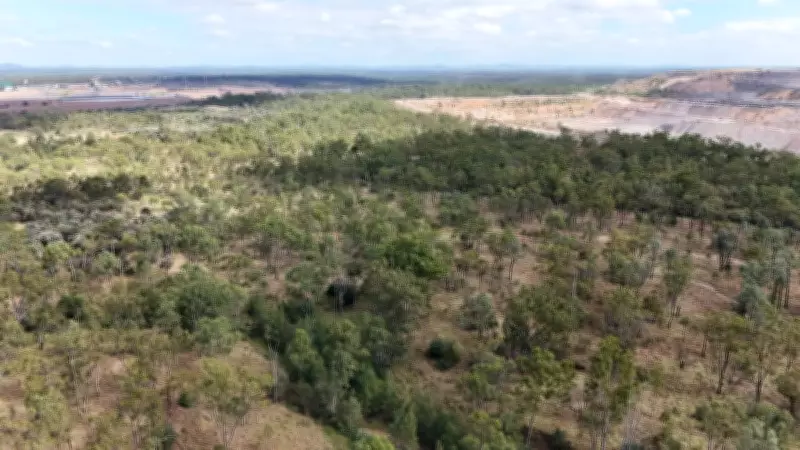
Middlemount Mine Expansion Greenlit Amidst Climate Policy Announcements
The Albanese government has approved a significant expansion of the Middlemount coal mine in Queensland's Bowen Basin, a decision that conservationists warn could result in approximately 236 million tonnes of carbon dioxide emissions over the coming decades. This volume equates to more than half of Australia's annual emissions, as the coal is slated for export and combustion overseas for steel production and electricity generation.
Carbon Leakage Review Unveiled After Year-Long Delay
On the same day, the government released the final report of a review into carbon leakage, which had been shelved for twelve months. Led by esteemed climate economist Professor Frank Jotzo from the Australian National University, the review examined the risks of industrial activities relocating abroad due to Australia's climate policies, potentially undermining global net-zero efforts.
The report concluded that while carbon leakage is not an immediate threat, it is likely to escalate as major industries face stricter pollution controls under the safeguard mechanism. To address this, Jotzo recommended implementing a carbon border adjustment mechanism (CBAM), akin to a carbon tariff, to level the playing field between domestic producers and imports.
Initial targets for the CBAM include cement and clinker, with considerations for lime, hydrogen, ammonia, glass, steel, and iron. Similar mechanisms are already operational in the European Union, with the United Kingdom set to follow suit next year, and Taiwan, Canada, and South Korea exploring options.
Political Reactions and Industry Implications
Opposition leader Angus Taylor swiftly criticized the proposal, labeling it a "carbon tax" and warning of increased cost-of-living pressures. However, Professor Jotzo countered that a CBAM could foster new industries by establishing a "green premium" if local and imported goods face equivalent carbon costs.
A spokesperson for Climate Change and Energy Minister Chris Bowen stated that the government would "always back Australian industry to be competitive at home, and on the world stage," noting that Jotzo's findings would inform upcoming discussions on the safeguard mechanism review.
Controversial Environmental Decisions
In a separate move, Environment Minister Murray Watt rejected calls to list the Maugean skate, an ancient ray-like species endemic to Tasmania's Macquarie Harbour, as critically endangered. Instead, it retains its endangered status, a classification held since 2004. This decision has sparked debate, given the skate's vulnerability to salmon farming activities in the harbour.
Conservationists accused the government of prioritizing corporate interests over environmental protection, while Watt emphasized a commitment to preventing extinction and allocated $37.5 million for conservation efforts.
New Additions to Threatened Species Register
The Australian Conservation Foundation highlighted 34 newly listed threatened species, including:
- The lemuroid ringtail possum in North Queensland, impacted by rising temperatures.
- The Mount Donna Buang wingless stonefly, confined to a single square kilometer in Victoria.
- The glossy grass skink in Tasmania, affected by habitat clearing for agriculture and development.
- Four other reptiles, a fish, a mollusc, and 25 plant species.
Broader Context of Fossil Fuel Approvals
The Middlemount mine expansion marks the 33rd coal or gas project approved by the government since its election in 2022. The approval includes specific conditions aimed at protecting the threatened greater glider, though details remain contentious among environmental groups.
This series of announcements, made amidst political turmoil within the Liberal opposition, underscores the government's balancing act between economic interests and environmental stewardship, as global climate pressures intensify.



