
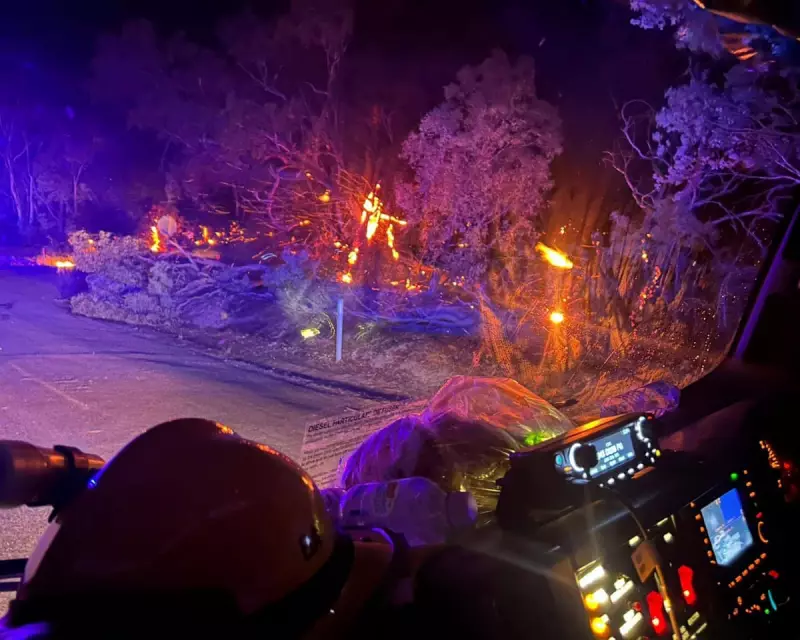
South-eastern Australia is bracing for a day of severe bushfire peril as an extreme heatwave engulfs the region, pushing Victoria into its most dangerous fire conditions since the devastating Black Summer of 2019-20.
Dire Warnings and Catastrophic Ratings
Emergency services across Victoria are on high alert with catastrophic and extreme fire danger ratings declared across the entire state. A total fire ban is in effect for all districts, with authorities warning that any blazes will be "unpredictable, uncontrollable and fast-moving."
Victoria’s emergency management commissioner, Tim Wiebusch, highlighted the lethal combination of extreme heat, damaging winds gusting up to 100km/h, and the risk of dry lightning. The state's Country Fire Authority chief officer, Jason Heffernan, described the forecast conditions simply as "dire."
Record-Breaking Heat Scorches the South-East
The Bureau of Meteorology has reported daytime temperatures 12-16C above average across much of south-eastern Australia. On Thursday, numerous locations shattered January heat records.
Tarcoola in South Australia's far north reached a scorching 48.2C. Other record-breakers included Renmark (47.3C) and Loxton (46.2C) in SA's Riverland, and Hopetoun (46.3C) in Victoria's Mallee region.
Melbourne was forecast to hit 43C, with some suburbs enduring up to 45C. The heat offered little respite overnight, with Renmark's minimum temperature a stifling 30.9C.
Fires Already Burning Amid Nationwide Crisis
Even before the peak of Friday's danger, fires were active in several states. In Victoria, out-of-control bushfires were reported at Longwood and Walwa. The catastrophic fire danger rating was specifically forecast for the north central, northern country, south-west and Wimmera districts.
The threat extended beyond Victoria. Extreme conditions were expected across much of South Australia and the NSW Riverina. Total fire bans were also declared for 11 of 15 districts in South Australia and four in New South Wales.
A cool change was anticipated to move through south-western Victoria in the early afternoon, reaching Melbourne between 6pm and 7pm. However, this front was predicted to push the extreme heat and winds into south-eastern NSW, elevating fire dangers there for Saturday.
Climate Drivers and a Warming Planet
Climate expert Adjunct Professor Andrew Watkins from Monash University noted the unusual nature of such extreme heat and fire conditions during a La Niña summer, which typically brings flood concerns. He pointed to two significant factors: the strongest stratospheric warming above Antarctica since 2019 and the overarching impact of climate change.
This event follows Australia's fourth-warmest year on record in 2025, where national average temperatures were 1.23C above the norm, according to Bureau of Meteorology data. The climate crisis is intensifying the frequency and severity of such extreme weather events.
Meanwhile, north-east Queensland is under a severe weather warning for potential flooding as a tropical low threatens to develop into a cyclone, highlighting the nation's concurrent weather extremes.



