
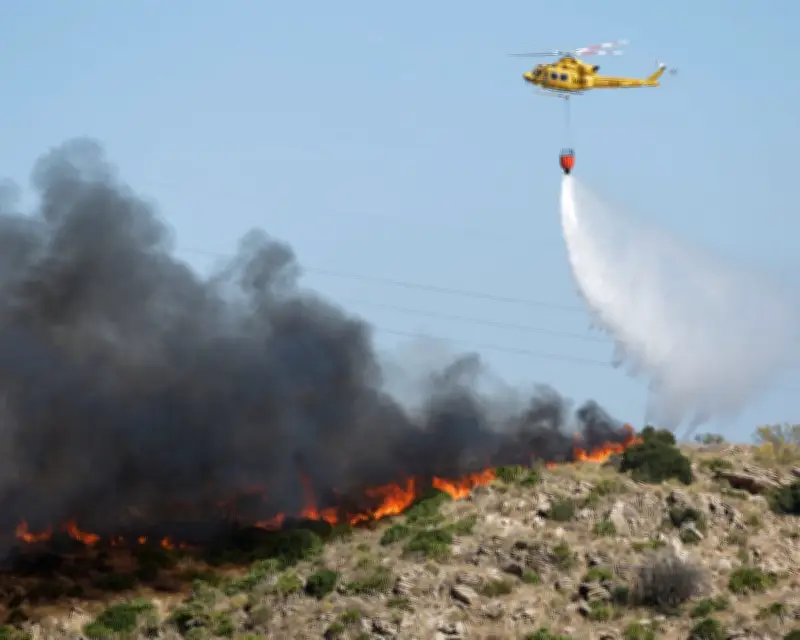
Recent unprecedented heatwaves in the UK may have killed thousands, children are suffering in overheating schools, and NHS trusts are straining under record-breaking demand. Climate extremes have even affected national security, with three of Britain’s five worst harvests occurring since 2020, impairing food security. This is what life looks like in the “adaptation gap”—the difference between the climate society is built for and the one that exists.
Political Consequences of the Adaptation Gap
For years, the government’s climate-risk advisers have warned of a yawningly wide gap, yet the failure to close it has had little consequence for politicians. Evidence suggests this is starting to change, but the political consequences are far from hopeful. In Spain, devastating floods in October 2024 hit the Valencia region, supercharged by climate breakdown. The climate-denying Vox party capitalised on the aftermath, using misinformation to weaponise anger over hundreds of deaths from a disaster many saw coming. While Spain is praised for renewable investments, its record on climate adaptation is poorer.
Similar dynamics appear in the UK. Persistent flooding in poorly adapted Wales has been followed by reports of a rise in Reform UK support. Reform’s lead spokesperson for Wales denied the flooding was linked to climate breakdown, calling such claims a “red herring” and focusing instead on a failure to invest in flood defences. The politics of the adaptation gap is here, and it comes with political penalties.
Urgency for Incoming Prime Minister
This is important for incoming Prime Minister Andy Burnham because climate breakdown is playing out worse than many expected. In 2021, the chances of a 40°C heatwave in the UK before 2040 were assessed at 0.02%, yet it happened the following year. If extreme temperatures worsen even slightly, we could face far bigger shocks: wildfires burning larger areas, hospitals stressed beyond coping, and train collisions caused by heat-stressed signalling. The domino effect of climate impacts on food is also a risk: the area of high-quality farmland in England and Wales is projected to collapse by 75% in the next two decades without adaptation, while supply chains are disrupted by biodiversity collapse abroad, as a government security assessment recently warned.
Derailment Risk and the Doom Loop
Many politicians will argue for doubling down on decarbonisation—the only way to become safe is to eradicate fossil pollution. However, some will argue it’s pointless to focus on this intractable global challenge and that resources should be used solely for adaptation. If this argument prevails, there will be less climate action, leading to more climate shocks and more opportunities to exploit resulting anger. This is a “derailment risk”: the threat that climate consequences undermine climate action in a self-defeating spiral, derailing the world from avoiding the worst.
The incoming government must get ahead of this dynamic by recognising that the politics of the adaptation gap will only escalate. Closing it should become a priority, not an afterthought. That means retrofitting buildings for heat extremes—something Burnham did in Greater Manchester—and changing the law to set a maximum safe working temperature, a long-standing demand of the labour movement.
Deeper Changes Needed
To stop derailment, even deeper changes are needed beyond what we currently consider “adaptation”. Inflation is becoming a premier climate consequence, with extreme weather destroying crops and raising prices. Inflation has driven voters to extremist parties, often the same ones seeking to roll back climate action. Debates over how the Bank of England responds to climate-driven price shocks touch on adaptation: raising interest rates in Britain doesn’t protect from crop failures abroad. Instead, investing in regenerative farming in the UK can reduce exposure to climate-vulnerable global supply chains and, by restoring nature, create greater climate resilience at home.
These are job-creating, economy-boosting investments that can reduce the cost of living and are critical for national security. In a competitive, climate-changed world, better-adapted countries will have the edge. Climate breakdown is the key dimension often missing from demands to make investments beyond defence that make Britain more resilient.
Co-benefits of Adaptation
The premier co-benefit of adaptation is that it can simultaneously decarbonise, making us safer today and into the future: insulation protects against extremes while reducing emissions; regenerative farming does the same while bolstering food security. These overlaps must be better identified and prioritised, ensuring demands for adaptation are not used as a foil to derail net zero. Adaptation must seem like common sense—prioritising things that intuitively protect. For example, heat pumps, often framed as a decarbonisation measure, can operate like air conditioners, cooling in summer and heating in winter—a no-brainer to protect homes from extremes. Adaptation is about place—retrofitting the nearby school, cooling streets with trees—and lends itself to local control and decision-making.
As Burnham takes the keys to No 10 in this combustible summer, his choice is simple: close the adaptation gap or fall into it.



