
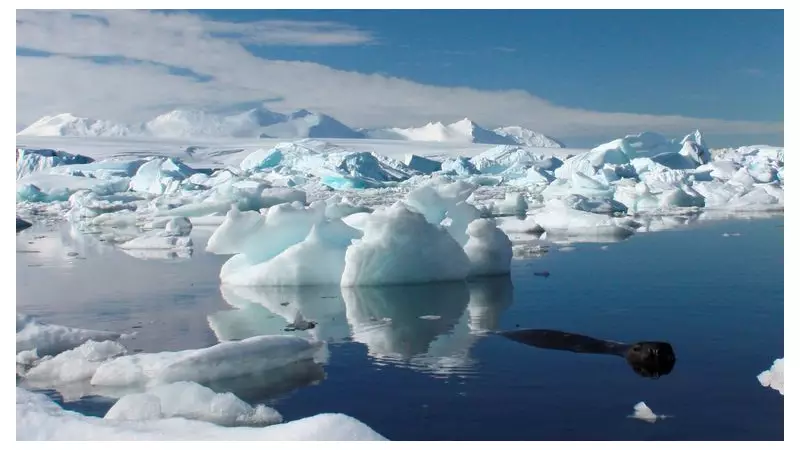
In the frigid waters off the Rothera research station, where the ocean temperature sits at a biting -1°C even in high summer, scientists are diving into a world of biological extremes. This unique marine ecosystem, a murky soup of plankton, holds secrets about life in the cold and stark warnings about the impact of climate change.
The Fragile Giants of the Freezing Ocean
For the dive team of the British Antarctic Survey (BAS), each plunge reveals wonders not seen elsewhere. Marine biologist Pati Glaz describes her fascination with starfish boasting up to 40 arms, while colleague Matt Bell is captivated by 'polar gigantism'. This phenomenon sees species in the cold polar oceans grow significantly larger than their relatives in warmer seas.
Professor Lloyd Peck, who leads marine biology research at BAS, explains the fundamental differences. "Because it's cold, the biology is very different," he states. The high oxygen content in cold water supports larger bodies, and creatures here live extraordinarily long lives, growing and reproducing at a glacial pace. An Antarctic starfish may take hundreds of days to reproduce, compared to just weeks for its UK cousins.
A Warming Threat to Slow-Motion Life
This slow-paced existence becomes a critical vulnerability in a rapidly warming Antarctic. The BAS team, who have been surveying the same seabed sites for nearly 30 years, observe an ecosystem already close to a degree warmer on average than when their research began.
"We're really worried that many species could fail because the timing of their cycles is changed in a very detrimental way, by just a small amount of warmth," warns Prof Peck. A temperature increase of just a degree or so can cause larvae to hatch earlier, in the dark Antarctic winter when there is no food, potentially collapsing populations.
Diving here carries unique risks, with predatory leopard seals and killer whales prompting immediate dive cancellations for safety, a protocol strengthened after a fatal encounter in 2003.
Lessons in Sub-Zero Science for Human Health
Beyond documenting climate impacts, the research seeks to understand the fundamental rules of sub-zero biology. At a cellular level, science knows little about how life functions in freezing conditions. "If you take the cells of animals that live at warmer temperatures and you cool them down to zero degrees, they don't work," notes Prof Peck.
A key mystery is how proteins in Antarctic animals avoid sticking together in the cold—a problem that causes diseases like Alzheimer's and CJD in humans when it occurs abnormally in the brain. Understanding these anti-sticking mechanisms could shed light on human neurodegenerative diseases.
Furthermore, studying how animals grow slowly yet healthily in high-oxygen environments may reveal insights into the molecular basis of human ageing. A new collaboration with the University of Cambridge aims to build microscopes that can operate at sub-zero temperatures, exploring this frozen biology at a molecular level for the first time.
Amid the concern, there are signs of change. The team recorded a new record of 30-40 humpback whales in the bay at Rothera, a population recovering since the whaling ban 40 years ago and now able to access areas freed by receding sea ice.
The stakes are high. In the geological past, ocean ecosystems absorbed enough carbon to help trigger ice ages, a fact highlighted by the fossilised palm trees found on the continent. However, Antarctica is now warming at a pace far exceeding ancient cycles, a rate its exquisitely adapted, slow-motion biology may simply be unable to match.



