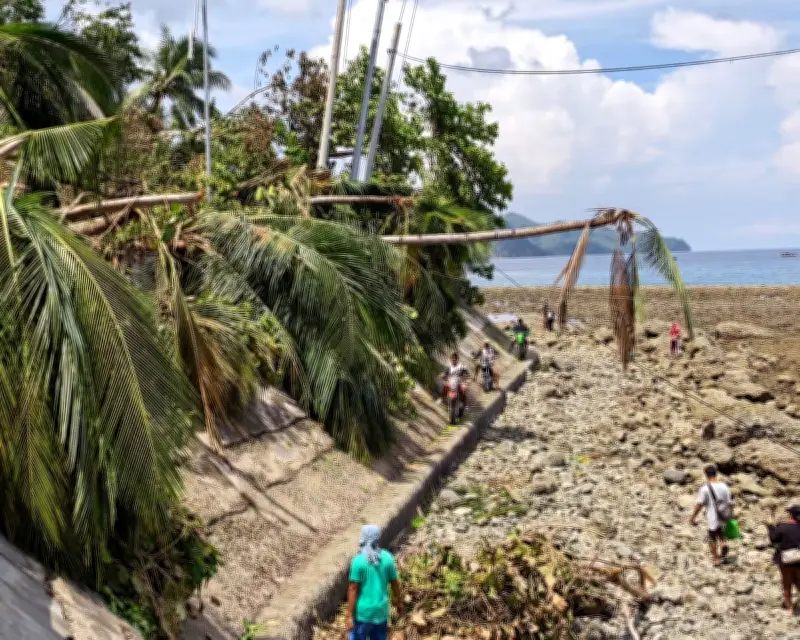
A powerful earthquake that struck the Philippines this week, killing at least 61 people, has been found to have raised the seabed by up to 2 metres (6.6 feet), exposing coral and harming marine life, the country's environment department has announced.
At least 40 people are still missing after the 7.8-magnitude quake off southern Mindanao island on Monday, according to updated tolls from the disaster agency.
Coastal Uplift Phenomenon
Residents first reported the geological phenomenon known as “coastal uplift” two days after the quake, which extended the shoreline by as much as 200 metres in some places, the environment department said on Sunday.

The Philippine Institute of Volcanology and Seismology explained that a shifting of the Cotabato trench “pushed upward part of the coastlines of Sarangani and Davao Occidental provinces … exposing the bottom of the sea that was originally submerged”. It added: “Approximately 2 metres was the mapped uplift.”
Seismic Activity in the Region
The Cotabato trench, which lies as close as 50 kilometres (31 miles) off the coast of southern Mindanao, is the site of frequent seismic activity. This includes a “swarm” of thousands of mostly small earthquakes recorded in January.
A team dispatched to the area has “found that long stretches of shoreline, coral reef and seagrass beds have been exposed”, the environment department said.
Impact on Marine Life
An official who spoke to Agence France-Presse on Sunday said they could not yet say precisely how wide an area had been affected, given the size that would be needed to survey. Images released by the department’s regional office showed a large swathe of exposed coral, with dead fish and other aquatic life lying on top.
“These exposed corals and seagrass beds had begun dying off alongside their resident organisms such as reef fishes, eels, clams, and shells,” it said.
Residents initially reported the changes to the seabed out of concern that they might be poisoned by the fumes from decaying sea life.