Environmental Concerns Challenged Over Chagos Islands Sovereignty
Recent correspondence regarding the Chagos Islands' potential return to Mauritian sovereignty has sparked renewed debate about environmental protection. Several experts have now come forward to counter claims that this political transition would inevitably damage the archipelago's ecosystems.
The Historical Context of Chagos Ecology
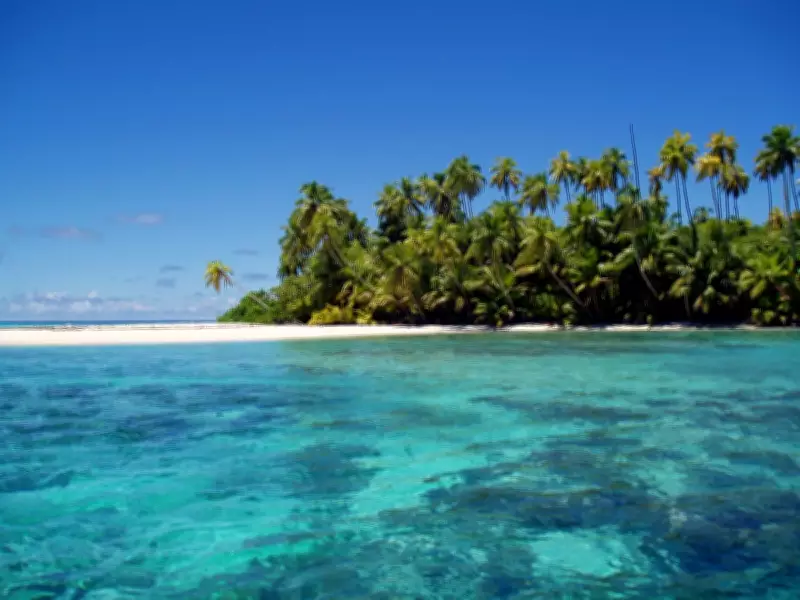
Contrary to popular perception, the terrestrial environments of the Chagos Islands are not pristine wilderness areas. As Anthony Cheke, co-author of Lost Land of the Dodo: The Ecological History of Mauritius, Réunion & Rodrigues, explains, these islands served as major coconut plantations for approximately two centuries before their forced depopulation during the 1970s.
The vegetation that exists today represents secondary forest growth that developed through decades of neglect following the islands' abandonment. While this environment does support important seabird colonies, it cannot be accurately described as "virgin" habitat. Similarly, the marine environment has experienced human interaction for generations, with former inhabitants fishing these waters for two hundred years and exporting some catch to Mauritius.

Legal and Moral Imperatives for Return
From a historical perspective, the Chagos Islands were administered from Mauritius from their first settlement in the late 1700s until their detachment as the British Indian Ocean Territory in 1968, coinciding with Mauritian independence. The displaced inhabitants were employees of the Chagos Agalega Company and held Mauritian and Seychellois citizenship.
Dr Tom Frost, senior lecturer at Loughborough Law School, highlights the troubling history behind current environmental protections. "Declassified archival documents reveal that various legal mechanisms were employed to 'clear' the islands," he notes, including the characterization of Chagos Islanders as mere "contract labourers" rather than British subjects with rights to their homeland.
According to Frost, environmental protections were implemented more recently primarily to counter Chagossians' claims to return, rather than stemming from genuine ecological concern. This perspective challenges the narrative that equates Mauritian sovereignty with inevitable environmental degradation.
Current Conservation Realities
Richard Dunne, lead author of research on the Chagos Marine Protected Area, provides crucial context about the current state of conservation efforts. The marine environment has experienced significant challenges, including widespread coral bleaching and mortality events that have impacted reef systems.
The remarkable aspects of Chagos' ecosystem stem from its geographical remoteness and complex history, which includes nearly two centuries of low-impact plantations, the forced removal of approximately 1,500 Chagossians in the 1970s, a licensed tuna and inshore fishery operating for over twenty years, and fifteen years as a no-take marine protected area.
Importantly, the licensed fishery was well-regulated with no evidence of fish stock depletion, suggesting that a complete no-take regime may not have been scientifically necessary. Furthermore, in 2015, the marine protected area was found to violate the United Nations Convention on the Law of the Sea and is no longer recognized by international authorities.
The Mauritian Conservation Plan
Mauritius has announced its own marine protected area plan for 2022, which represents a shift from what Dunne characterizes as "failed fortress conservation" toward a more inclusive approach. This new framework would permit the return of Chagossians to their homeland while implementing protections against commercial exploitation.
The proposed regulations would allow only "an agreed sustainable quota for artisanal, traditional, ceremonial and subsistence purposes" where fishing is permitted, explicitly prohibiting commercial fishing operations. Under treaty arrangements, the United Kingdom has agreed to provide assistance to Mauritius in implementing these conservation measures.

As Cheke concludes, there exists no substantive evidence that the islands' return to Mauritius would cause the "irreversible destruction" that some commentators have suggested. The combination of historical administration patterns, citizenship status of former inhabitants, and carefully planned conservation measures supports both the legal and moral case for sovereignty transfer while addressing legitimate environmental concerns through science-based management approaches.