A year has passed since the ferocious Eaton fire tore through the San Gabriel foothills, but for the residents of Altadena, California, the disaster is far from over. While the flames have long been extinguished, a more insidious threat lingers: widespread toxic contamination in the very homes that survived.
A Community Living in a Toxic Shadow
The fire, which ignited on 7 January 2024, left a staggering toll: 19 people dead, tens of thousands displaced, and nearly 9,500 structures destroyed. The blaze incinerated older buildings laden with now-banned materials like lead-based paint and asbestos, showering the community with hazardous particulate matter and heavy metals.
Today, as families trickle back to rebuild, they are confronting a disturbing reality. Official information on health risks was initially scarce, leaving residents to discover the dangers piecemeal. Many are experiencing new health issues, from severe migraines to aggravated respiratory conditions, while simultaneously fighting insurance providers to cover essential safety testing and remediation.
‘Your house looks the same – but it’s not’
For residents like Dawn Fanning, the return home was bittersweet. Her Spanish bungalow in Pasadena miraculously escaped the flames, but it was not unscathed. "It’s dusty and there’s piles of ash in the windowsills," she described. "Your house looks the same – but it’s not. There’s toxicity in your attic and in your crawlspace and on your mattresses and on all the things." Testing later confirmed the presence of both lead and asbestos.
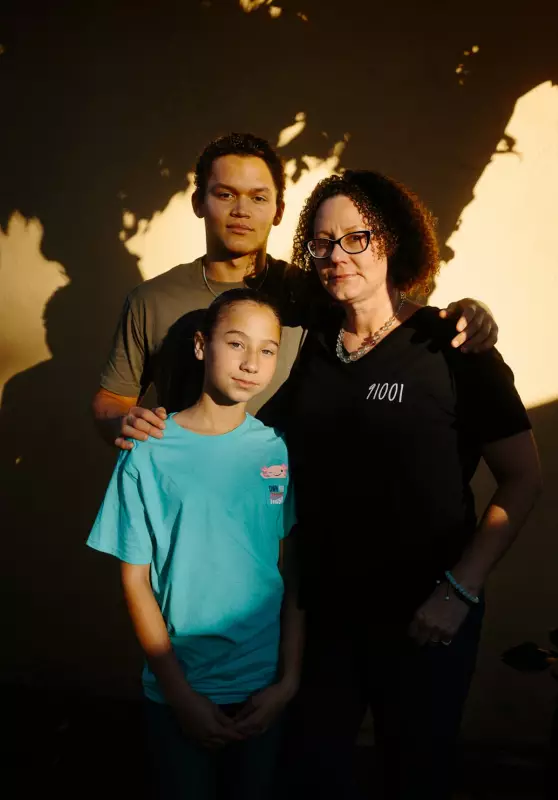
Data scientist Nicole Maccalla moved her family, including her 18-year-old son Sebastian and 12-year-old daughter Ande Jaye, back into their Altadena home in the summer after an extensive cleanup. Yet, her air purifiers still register high levels of particulate matter, and the acrid smell of fire returns with the rain. "The toll of displacement was really high on my family," Maccalla said. "I just had to move home and try to mitigate risk... I also don’t have other choices."
Residents Unite to Fill an Information Void
Frustrated by the lack of clear guidance, Maccalla, Fanning, and other survivors formed Eaton Fire Residents United (EFRU). This community group has become a crucial source of support and data, collecting hygienic testing reports from hundreds of homes and advocating for stricter safety protocols.
Research led by Maccalla for EFRU revealed a shocking ongoing risk: more than half of homes that had undergone professional remediation still contained levels of lead or asbestos that exceeded US Environmental Protection Agency safety thresholds. "We’re putting people back in homes without confirming that they’re free of contamination," Maccalla warned. "It feels very unethical."
The predicament highlights the amplified dangers of modern urban wildfires, where burning plastics, electric car batteries, and older construction materials create a complex toxic cocktail. For many in Altadena, a diverse community where over 90% of homes were built before 1975, the financial and emotional strain is immense.
Renter Tamara Artin, who returned to her standing home out of necessity, summarised a feeling shared by many: "We don’t have anywhere else to go. We can’t do anything." Meanwhile, Dawn Fanning, still displaced and battling her insurance company, dedicates her time to EFRU. "There’s so many people that don’t have enough insurance coverage, that don’t speak English... I feel it’s my duty as a human," she stated.
As Altadena serves as a grim real-world laboratory for post-fire recovery, the road ahead remains long. The community's struggle underscores a chilling new normal in the age of climate-fuelled wildfires, where the greatest threat can remain long after the last ember has cooled.