Australian Study Reveals $6.2 Billion Annual Health Cost from Truck and Bus Pollution
A groundbreaking study from the University of Melbourne has uncovered that emissions from trucks and buses are costing Australians approximately $6.2 billion each year in health-related expenses. The research highlights how proximity to major truck routes significantly increases health risks, with vulnerable populations including children, elderly individuals, and disadvantaged communities bearing the brunt of the impact.
Health Impacts Comparable to Cigarette Smoke
According to Dr. Clare Walter, the study's author and a health and policy researcher, heavy vehicle exhaust contains a toxic mixture of fine carbon particles and gases that cause inflammation when inhaled. This pollution is linked to a wide range of serious health issues, including respiratory diseases, heart conditions, and other chronic ailments. The study describes the health effects as being alarmingly similar to those caused by cigarette smoke, with children attending childcare near major roads exposed to pollution levels equivalent to smoking eight cigarettes per day.
"The overall cost is huge," Walter emphasized. "This is one of our biggest environmental health risks." The $6.2 billion figure represents only the most severe health outcomes, such as premature mortality, hospital admissions, early-onset asthma, and lung cancer, suggesting the true cost could be even higher.

Disproportionate Impact from Heavy Diesel Vehicles
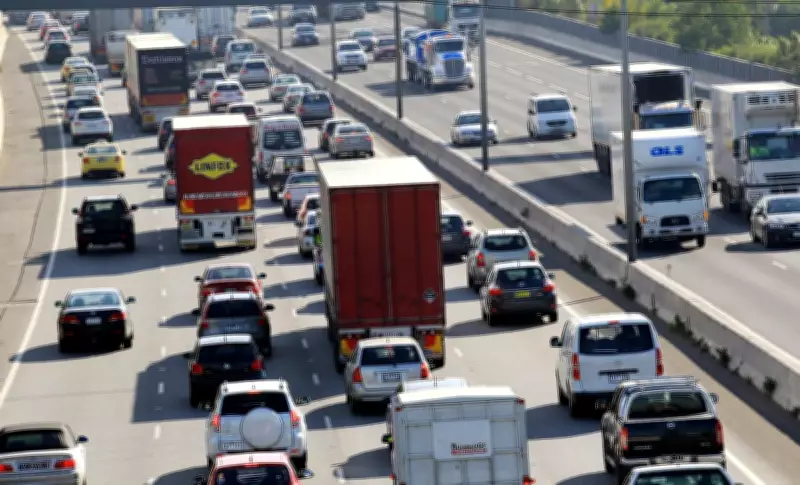
Heavy diesel vehicles, including trucks and buses, account for a disproportionate share of air pollution. While they make up only about 4% of the vehicle fleet in Australia, they are responsible for one-quarter of all exhaust-related pollution. Most Australians are exposed to traffic pollution daily, but those living, working, or attending schools near major truck routes face elevated health risks.
The study was conducted ahead of expected changes to national heavy vehicle laws, with researchers urging policymakers to incorporate health impacts into decision-making processes. To date, health considerations have been largely overlooked in policy options related to vehicle emissions.
Parental Concerns and Community Advocacy
Parents and community advocates have expressed deep concern over the findings. Laura Billings, a campaigner with Parents for Climate, described the situation as "terrifying" for parents who worry about the air their children breathe. "We've been hearing from parents for a long time that they're deeply worried about the air their children are breathing, particularly in these areas that are freight corridors," Billings said. "They can't just move their kids from schools or childcare or their homes because they're really connected to communities."
Emily Buckley, a parent of two living in Sydney's Maroubra Junction area, shared her personal experience. "We don't own a car, so we get around by foot, bike, and scooter," she explained, noting that this constant exposure to traffic fumes makes her feel like she is "letting her kids down" by not providing a healthier environment.
Recommendations for Policy and Action
The study's authors have proposed several key recommendations to mitigate the health impacts of heavy vehicle pollution:
- Incorporate health impact assessments into the decision-making process for heavy vehicle laws.
- Establish mechanisms to remove older, highly polluting trucks from the roads.
- Reroute trucks away from residential areas, schools, and childcare centers.
- Shift freight transport from roads to rail where feasible.
- Accelerate the transition to electric and cleaner trucks and buses.
These measures aim to reduce the community's exposure to harmful emissions and address what researchers describe as a significant environmental health crisis. The report underscores the urgent need for policy reforms to protect public health and reduce the economic burden of air pollution in Australia.