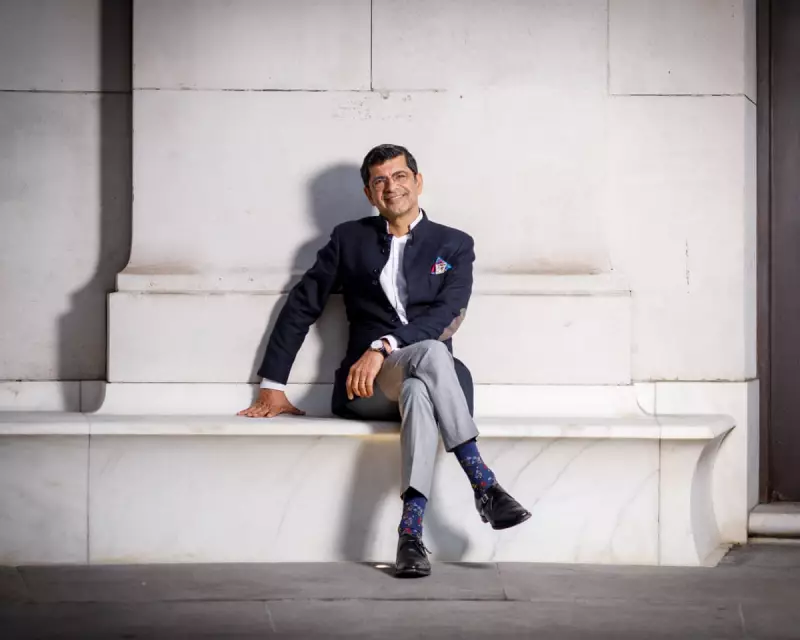
A leading university vice-chancellor has sparked a fierce debate by suggesting a UK degree is no longer a guaranteed 'passport' to social mobility, but merely a 'visa'. The comments from Professor Shitij Kapur of King's College London have drawn sharp criticism from academics who argue he overlooks deeper systemic issues.
The 'Class Ceiling' and Systemic Barriers
In a letter to The Guardian, Professor Patrick Callaghan of London South Bank University challenged Kapur's central argument. Callaghan stated that social mobility is fundamentally rooted in class, region, race, and socioeconomic status. He pointed to research by Daniel Laurison and Sam Friedman which identifies a powerful 'class ceiling'. This concept describes how graduates from more privileged backgrounds continue to be favoured in the competition for top jobs, regardless of academic merit.
"A good job is central to increasing social mobility," Callaghan wrote. "If access to this is barred by prejudice and discrimination, social capital reduces, and this strangles social mobility." He also noted that Kapur's view of a graduate is outdated, failing to account for the rise of degree apprenticeships which combine academic study with practical employment skills.

A Failure of Ambition, Not a Surfeit of Graduates
The core disagreement lies in diagnosing the UK's problem. While Kapur suggested a 'surfeit' of graduates has devalued degrees, his critics contend the issue is a failure of economic strategy. Callaghan argued the real challenge is a shortage of political ambition, a weak industrial strategy, and a lack of investment in an economy that can fully utilise its highly educated workforce.
This failure is seen as particularly acute in Stem fields (science, technology, engineering, and mathematics), leading to a worrying exodus of world-class scientists from the UK. The argument concludes that the narrowing 'graduate premium' and fierce competition for roles are not due to too many graduates, but a failure of government and employers to create enough high-quality, graduate-level jobs.
Education's Value Beyond GDP
Dr Campbell Edinborough, an associate professor at the University of Leeds, expressed dismay at Kapur's economically focused analysis. He found it "demoralising" and "bizarre" to frame a degree solely as a transactional tool for employment without acknowledging its role in education, personal growth, and critical thinking.
"Claiming that there could ever be a surfeit of critical thinking, literacy or imagination when democratic values around the world are in decline seems a very slippery slope," Edinborough warned. He emphasised that the value of higher education extends far beyond its contribution to gross domestic product.
A Call for Legal Protection for Social Mobility
Adding another dimension to the debate, Nicholas Milton from Stratford-upon-Avon proposed a concrete legal solution. He suggested that social mobility should be made a protected characteristic under the Equality Act 2010, alongside attributes like age, race, and disability. This move, campaigned for by the Trades Union Congress and the Social Mobility Commission, could legally compel institutions to address class-based barriers.
Milton noted that despite progress in widening university participation, significant obstacles remain for disadvantaged students in accessing elite institutions and the best graduate jobs. He pointed out that universities have been "strangely quiet" on endorsing this potential legal change.
The controversy highlights a fundamental rift in how the purpose and value of a university degree are perceived. Is it primarily an economic lever for individual advancement, or a broader societal good? The consensus from Kapur's critics is clear: blaming an excess of graduates misses the mark. The true barriers to social mobility, they argue, are entrenched inequality and an economy not fit for the talent it produces.