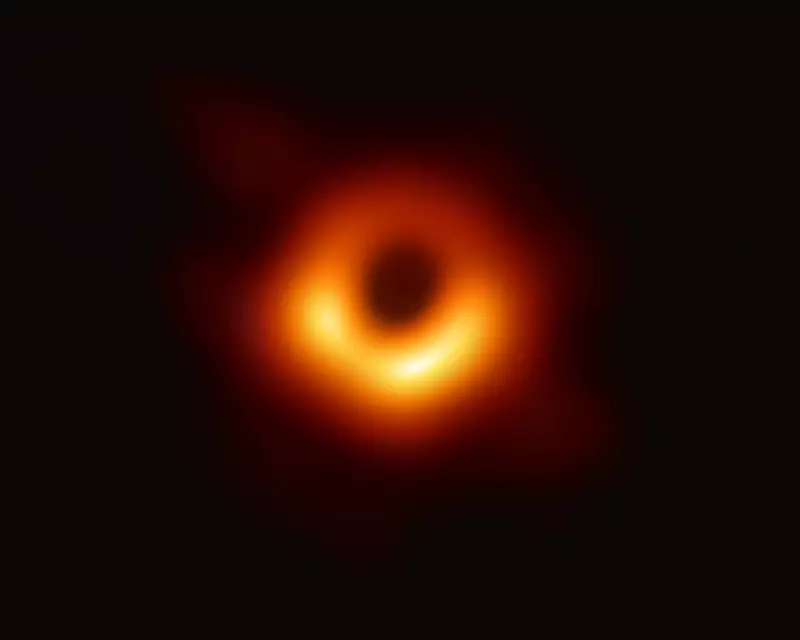
In a groundbreaking astronomical endeavour, scientists are preparing to capture the first-ever moving image of a supermassive black hole. This ambitious project, spearheaded by the global Event Horizon Telescope (EHT) collaboration, aims to transform a static snapshot into a dynamic movie, offering unprecedented insights into these enigmatic cosmic giants.
The 'Revolutionary' Movie Campaign
The target is the colossal black hole at the centre of the Messier 87 (M87) galaxy, first imaged in 2019. Throughout March and April, the EHT's network of 12 radio telescopes—spanning from Antarctica to Spain—will track this behemoth. By capturing a complete image roughly every three days as Earth rotates, astronomers plan to stitch these snapshots into a cinematic sequence.
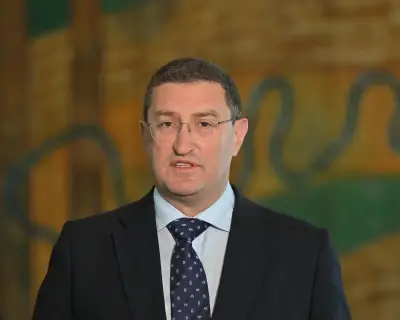
Sera Markoff, the newly appointed Plumian Professor of Astronomy at the University of Cambridge and a founding EHT member, calls the campaign revolutionary. "It will accelerate our science by an order of magnitude," she stated. The movie is expected to reveal the turbulent motion of the swirling disc of superheated gas that traces the event horizon, the point of no return for light and matter.

Unlocking Cosmic Secrets
The primary scientific goals are profound. Firstly, measuring the black hole's spin speed could settle a major debate. If black holes grow mainly by steadily accreting nearby material, they should spin incredibly fast. If they expand mostly through mergers with other black holes, their spin would be slower.
Secondly, the observations may explain how black holes launch powerful jets of gas. These jets, among the universe's most energetic phenomena, can channel material out of galaxies, stifling star formation and influencing galactic evolution. "They can change the entire evolution of the galaxy and even surrounding galaxies," Markoff explained.
She also challenged the black hole's sinister reputation, noting their crucial role in the cosmic ecosystem. "Black holes have a bad rap," Markoff said. "They actually play a very important role... and represent the edge of our understanding."
From Sci-Fi to Scientific Frontier
The scale of the M87 black hole is almost incomprehensible—equivalent to 6 billion suns and as wide as our solar system. This immense size means it moves slowly enough for the EHT's method to work. However, patience is required. The vast data collected must be physically shipped from Antarctica in the southern summer to processing centres in Germany and the US, meaning the world will have to wait to see the final film.
Professor Markoff, the 17th holder of a prestigious professorship established with oversight from Sir Isaac Newton in 1704, credits science fiction for her career path. "My interest in astrophysics really just came from reading science fiction and comic books," she revealed. Now leading at Cambridge, she hopes to inspire more people from under-represented backgrounds into science, proving that a career exploring the universe's greatest mysteries is within reach.