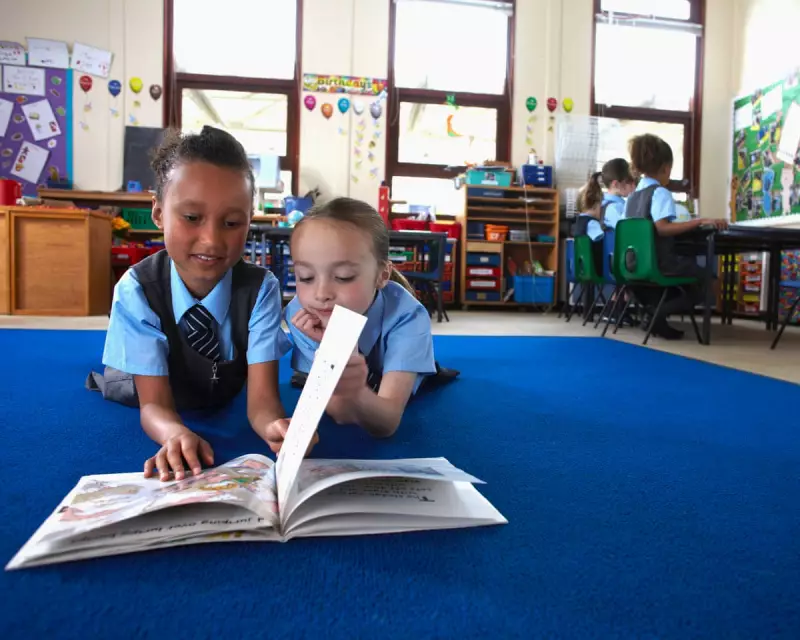
The government has officially launched the National Year of Reading 2026, a major initiative aimed at tackling the deepening reading crisis among children and young people across the United Kingdom. This campaign comes alongside a significant £27.5 million funding package for libraries, announced by Culture Secretary Lisa Nandy, marking a concerted effort to revive reading for pleasure.
A Response to Alarming Statistics
The campaign is a direct response to stark research from the National Literacy Trust, which reveals that reading enjoyment has plummeted to its lowest recorded level. The data shows a mere one in three children and young people aged eight to eighteen now report enjoying reading "very much" or "quite a lot." This year-long initiative seeks to collaborate with schools, communities, libraries, and early years settings to fundamentally boost reading engagement and provide children with the best possible start in life.
Star-Studded Support and Personal Passion
Championing the cause is acclaimed author and former children's laureate Malorie Blackman, who serves as a key ambassador. "It's about making reading seem as natural and everyday as breathing," Blackman asserts. She passionately argues that reading is crucial for understanding the world, expanding horizons, and learning about diverse perspectives. Reflecting on her own childhood, Blackman credits her local library as the foundation of her love for reading, highlighting its role as an essential, accessible resource.
"I used to live in my local library. I didn't actually go into a bookshop until I was 14, because I couldn't afford the books," she recalls. "Having a public library within walking distance, and the revelation that I could read any and all of the books, made me who I am."
Modernising the Reading Campaign
As the third National Year of Reading, following campaigns in 1998 and 2008, this iteration acknowledges a vastly changed digital landscape. The focus will explicitly include all forms of reading material, from graphic novels to online content, challenging the perception of reading as a solitary, overly worthy activity. Blackman emphasises that reading can enhance any hobby or interest, making it a versatile and engaging pursuit.
Addressing Societal Shifts and Barriers
Jonathan Douglas, Chief Executive of the National Literacy Trust, which is helping deliver the campaign, notes the challenge. Reading "doesn't seem to offer the immediate social rewards that motivate us today," he explains, being seen as "slow, solitary, and studious in a world that values speed, status and spectacle."
The Department for Education is encouraging parents to lead by example and read with their children. Julie Hayward, Director of Partnerships for BookTrust, a campaign partner, stresses that shared reading in the early years is the most impactful way to build a lifelong love for reading, aiding in self-regulation, empathy, and bonding. However, she acknowledges significant barriers, including parents' own negative educational experiences or low literacy confidence, which the campaign aims to address with a non-judgmental, fun approach.
Broadening the Definition of Reading
While the campaign focuses on enjoyment, research suggests a broader perspective may be beneficial. Dr. Sabine Little, a senior language education lecturer at the University of Sheffield, found that multilingual children often read more for pleasure and value reading for the connections it facilitates—such as a book read in a new country or one that introduces a new hobby—rather than just plot or favourite status. This insight suggests validating diverse reading materials could foster a richer reading culture for all children.
The Role of Prizes and Accessibility
Complementing the national campaign is the newly launched Children's Booker Prize, with its first £50,000 winner to be announced in early 2027 for fiction aimed at readers aged eight to twelve. The Booker Prize Foundation will also distribute 30,000 copies of shortlisted and winning books to children annually.
While Julie Hayward believes the prize is a significant step forward, offering children exciting books where they can see themselves, some in the industry express caution. Steven Pryse, co-owner of Pickled Pepper Books in north London, notes the crowded children's book award scene and worries the prize might prioritise literary works over more accessible titles. Nevertheless, Dr. Little is enthusiastic about the prize's inclusion of translated works, seeing it as a valuable way to celebrate diverse cultural contributions to British children's literature.
A Unified Goal for the Future
Ultimately, both the National Year of Reading 2026 and initiatives like the Children's Booker Prize share a common objective: to ignite a passion for reading in every child. As Malorie Blackman succinctly puts it, "Whatever you're into, there are books out there for you. When people say to me that they don't like reading, I always say to them: you just haven't found the right book yet." The success of this national effort will depend on making reading relevant, joyful, and accessible to all young people across the UK.