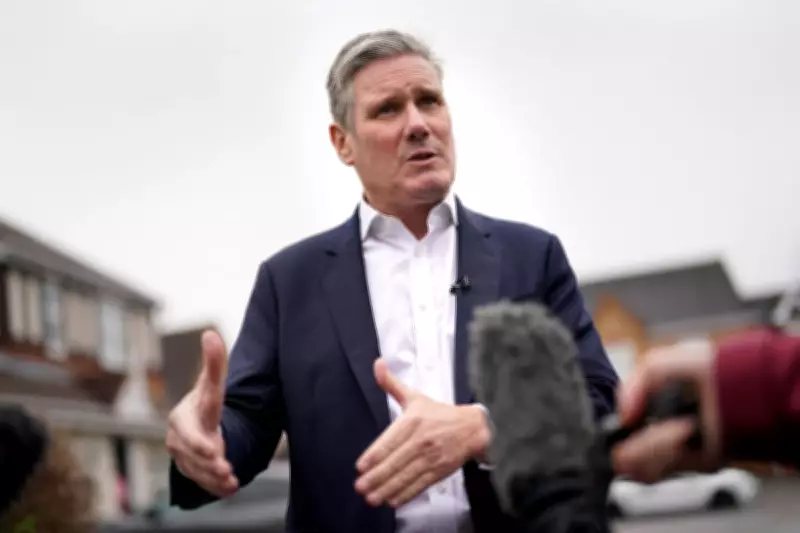
Prime Minister Keir Starmer has declared his government is actively exploring methods to create a more equitable student loans system, responding to mounting pressure from political opponents and public concern over graduate debt. During a heated Prime Minister's Questions session, Conservative leader Kemi Badenoch challenged Starmer on what she described as a "breaking point" for graduates struggling with costly loan repayments.
Political Pressure on Student Debt
The Conservative Party has pledged to eliminate real interest rates on plan 2 student loans that exceed RPI inflation, a mechanism they argue artificially inflates graduate debt beyond original borrowing amounts. Their proposed alternative involves using CPI inflation instead and reducing real interest rates, with funding derived from decreasing university enrollment numbers.
Starmer acknowledged inheriting what he termed a "broken" system from previous administrations but committed to examining potential improvements. "We will look to ways to make it fairer for students," the Prime Minister stated during parliamentary exchanges.

Historical Context and Current Policies
The Prime Minister launched a strong critique against Conservative policies implemented after 2012, accusing them of having "scammed the country" through tuition fee increases and the introduction of plan 2 loans. Starmer specifically referenced coalition-era decisions made with Liberal Democrat support, pointing across the chamber during his remarks.
Chancellor Rachel Reeves previously announced a three-year freeze on the student loan repayment threshold at £29,386 starting April 2027, describing this measure as part of achieving appropriate balance between taxation and public spending. Recent reports indicate the government is considering adjustments to either interest rates or repayment thresholds to alleviate financial pressure on graduates.
Broader Education Initiatives
Education Secretary Bridget Phillipson has defended the government's reintroduction of maintenance grants for students from low-income backgrounds, highlighting this as part of broader efforts to improve educational accessibility. The Prime Minister's spokesperson confirmed the administration continues to review potential modifications to the student loans framework.
Political Confrontations Expand
Beyond education policy, Starmer utilized the parliamentary session to highlight positive economic indicators including inflation dropping to three percent and a larger-than-expected budget surplus in January. However, Badenoch countered by criticizing the government's record on youth unemployment and alleging Starmer has been "distracted by Labour scandal after Labour scandal."
The Conservative leader further claimed Labour backbenchers expressed concerns about being labeled the "paedo defenders party," escalating the political tension during exchanges.
Attacks on Opposition Parties
With crucial by-elections approaching in Gorton and Denton, Starmer launched verbal assaults against both Reform UK and the Green Party. The Prime Minister suggested Reform UK lacked "decency or backbone" and declined to answer questions from Nigel Farage regarding Chagossians. Simultaneously, he criticized Green Party policies on drug legalization and their stance toward NATO.
Recent polling data from Opinium, based on 400 responses, shows both Green and Labour parties tied at 28 percent voter support, with Reform UK closely following at 27 percent, indicating a highly competitive political landscape as these education and economic debates unfold.