Inside the Neo-Nazi Music Scene: A Photographer's Dangerous Two-Year Journey
In 1990, photographer Leo Regan embarked on what would become a two-year immersion into Britain's burgeoning neo-Nazi music scene. What began as a magazine assignment evolved into a comprehensive documentary project that captured the violent, hate-filled world of skinhead bands like Skrewdriver and the Blood and Honour movement.
The Photograph That Captured the Scene
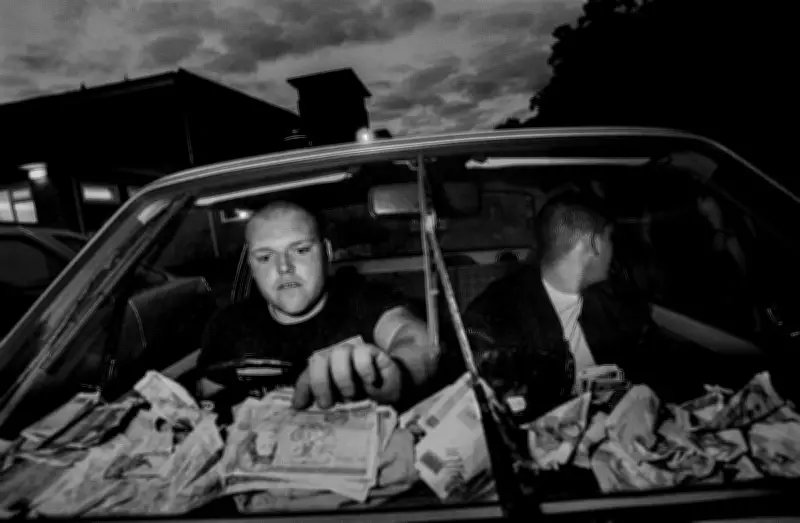
The striking image shows two skinheads meticulously counting cash in a car's interior. This moment occurred during a neo-Nazi gig at a rented school hall in an affluent Milton Keynes neighborhood. "These guys wanted to leave the chaos and fighting of the room," Regan recalls. "They told me, 'We're using your car to count up the takings.' I agreed, but only if I could take a photograph."
Behind this seemingly mundane financial transaction lay a scene of absolute mayhem. The skinheads had deceived venue managers by claiming they needed the space for a 21st birthday party. When police surrounded the building after horrified locals reported the actual event, officers allowed the performance to continue rather than risk violent confrontations spilling into the streets.
Navigating Moral and Physical Danger
Regan's project presented profound ethical challenges alongside genuine physical threats. "It was a difficult project with moral and ethical challenges as well as dangerous ones," he acknowledges. Despite his subjects' suspicion, Regan maintained transparency about his intentions while making clear his disagreement with their extremist politics.
The photographer describes environments "so venomous and hateful" that violence became routine. "I was in situations that were full-on riots," he remembers. "There was always a fight going off. I just tried to keep my head down." Though he received occasional physical blows, Regan avoided serious injury through careful navigation of these volatile spaces.
The Camera as Bridge to Humanity
Despite the project's darkness, Regan approached it with a fundamental belief in human connection. "My driving belief is that we need to be able to communicate, to touch humanity, to try to connect to each other in some way," he explains. Yet he emphasizes: "I'm not trying to forgive or underplay the extremities."
This nuanced perspective drew criticism when Regan published his resulting book, Public Enemies, with a Jewish publisher and editor. "I got a lot of stick from people who were like, how dare you do that?" he recalls. "But I think the whole point of being an artist is to explore and challenge things that are uncomfortable."
Knowing When to Walk Away
After two intense years, Regan recognized his project had reached its natural conclusion. "I was popping up on people's radar," he explains. "The police were looking at me, I was being photographed, and I was being followed by some leftwing group because of the association."
His timing proved prescient as the scene descended into greater volatility with the emergence of Combat 18, an even more dangerous extremist group. Several individuals Regan had documented received life sentences for their involvement with this organization. Others took divergent paths, with some renouncing their extremist views while others remained committed.
Reflecting on the experience, Regan admits: "When I look back, I think 'Jesus Leo, what were you doing?'" Yet he stands firmly behind the work, viewing it as essential documentation of a disturbing cultural phenomenon. The camera, he believes, offers "this amazing privilege to be in other people's lives" - even when those lives exist in society's darkest corners.
Regan's latest documentary, My Friend Lanre, continues his exploration of challenging subjects and is available on Channel 4's on-demand service.