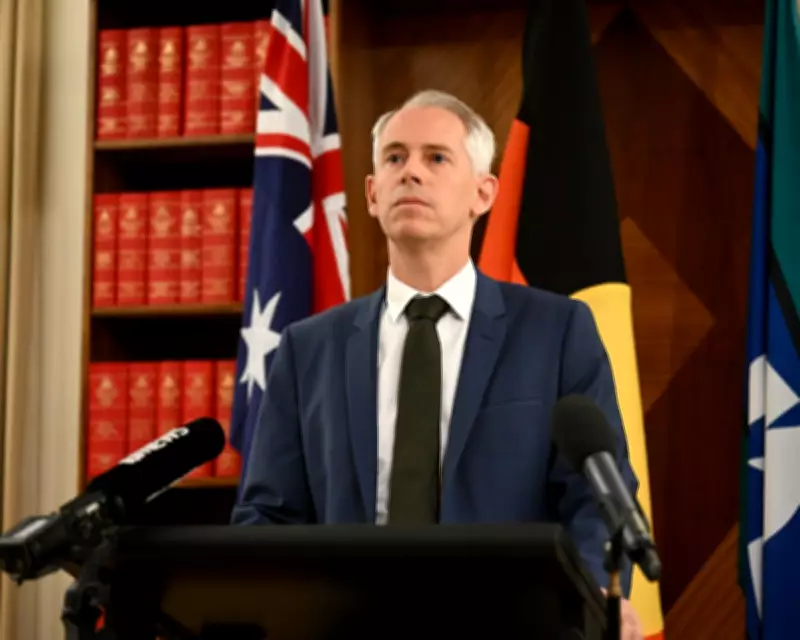
Labor frontbencher Andrew Giles has issued a stark warning, declaring that enhancing foundational literacy and digital skills for Australian workers is not merely beneficial but an "economic necessity" for the nation's future. In a speech prepared for delivery at the McKell Institute thinktank, Giles emphasized that this push is also a moral and democratic imperative, crucial for enabling citizens to navigate a rapidly changing world and make informed choices.
Exploiting Educational Deficits for Political Gain
Giles accused One Nation and the Coalition of cynically exploiting the frustrations of Australians who feel forgotten by government or left behind due to inadequate education and limited job opportunities. He argued that these political entities are adopting reactionary tactics, mirroring strategies from populist and far-right parties in the United States, the United Kingdom, and Europe, to win over voters who are fearful and disenfranchised.
"Pauline Hanson and rightwing populists are cynically exploiting the frustrations of Australians who feel forgotten by government or left behind by poor education and job opportunities," Giles stated. He highlighted that better education is critical to countering this disenfranchisement and preventing a weakening of democracy in Australia.

The Rising Tide of Populist Sentiment
The comments come amid a surge in support for One Nation in recent opinion polls, with electoral tests including the South Australian state election and the Farrer byelection on the horizon. A Guardian Essential poll from last month revealed that nearly 60% of Australians would consider voting for One Nation in the next federal election, including almost half of current Labor supporters. One Nation was polled at 22% of the primary vote, trailing the Coalition at 26% and Labor at 30%.
Giles pointed to Liberal frontbenchers such as Andrew Hastie and Jacinta Nampijinpa Price, accusing them of adopting divisive rhetoric imported from culture wars abroad. He argued that One Nation and the conservative campaign group Advance are capitalizing on genuine sentiments of frustration, while the Coalition aligns with these populist movements to secure voter support.
Skills as a Democratic Equalizer
Warning that many voters are preoccupied with immediate cost-of-living pressures, Giles noted that too many Australians struggle to envision a path to prosperity, especially as artificial intelligence transforms workplaces and disrupts traditional career trajectories. He asserted that skills and training serve as both an equalizer and an enabler, empowering individuals of all ages to navigate change on their own terms and collectively achieve national potential.
"Skills and training is an equaliser as well as an enabler, equipping Australians, both young and old, to navigate a changing world on their terms, while giving us, collectively, the best shot at achieving our potential," Giles explained. "Done well, skills policies strengthen the fabric of our democracy."
Policy Initiatives and Employer Responsibilities
As the Albanese government's skills and training minister, Giles oversees Labor's free Tafe policy, which has already seen over 742,000 new enrolments and nearly 250,000 course completions. He stressed his determination to implement policies that support Australians through the disruptions caused by rapidly advancing technologies like AI.
Giles also called on employers to actively involve workers in technological changes, arguing that businesses that do so will reap the greatest rewards. "Because workers need confidence that they are not just training their own replacement but are contributing to the business’ ongoing success," he said, highlighting the importance of fostering trust and collaboration in the workplace.
Broader Implications for Social Cohesion
The speech touches on broader issues of social cohesion and trust in government. Research by the Scanlon Foundation released last year found that only 37% of respondents believed the federal government could be trusted to do the right thing by the Australian people most or all of the time. However, the same report indicated that individuals who perceive strong local connections and actively participate in their communities are more likely to experience happiness, a sense of belonging, and trust in others.

Giles's address underscores the interconnectedness of education, economic stability, and democratic health, positioning skills development as a foundational element in combating populist exploitation and ensuring a prosperous, cohesive future for Australia.