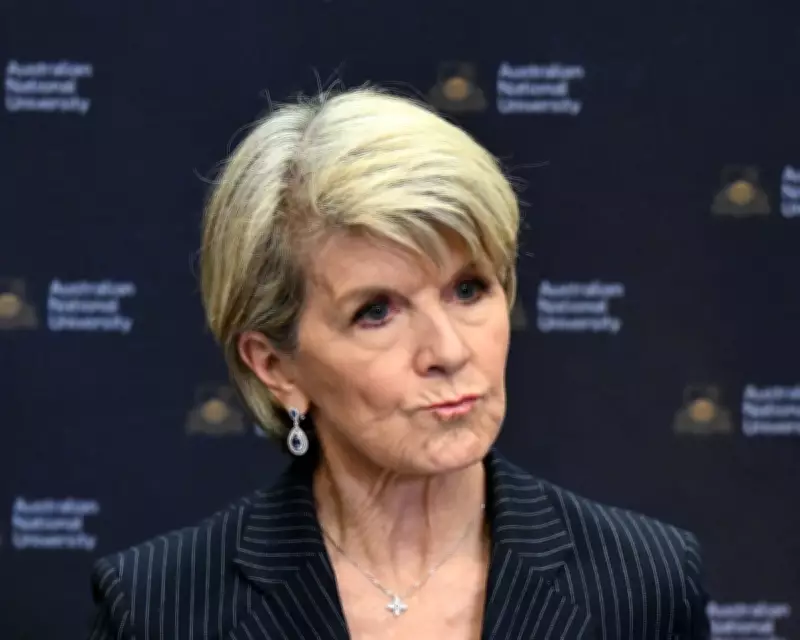
Former foreign minister Julie Bishop has resigned as chancellor of the Australian National University (ANU), stepping down amid ongoing governance challenges at the embattled institution. The resignation, submitted on Thursday evening, was confirmed by an ANU spokesperson, who stated that the university's council has appointed pro-chancellor Dr. Larry Marshall as acting chancellor until a permanent replacement is selected through an independent process, in line with recommendations from the higher education regulator.
Bishop's Legacy and Contributions
In a statement, the ANU spokesperson thanked Bishop for her six years of service, highlighting her role in raising the university's profile domestically and internationally and strengthening global connections, particularly during the COVID-19 pandemic. The council expressed its commitment to providing strong and positive governance and restoring the university's reputation within the community.
Government and Political Reactions
Finance Minister Katy Gallagher acknowledged that the challenges facing ANU did not arise overnight and emphasized that rebuilding trust and confidence across the university community would require time and careful work. She stressed the need for the university leadership and council to work openly and constructively with staff, students, and the broader community.

Independent ACT Senator David Pocock, a vocal critic of Bishop's leadership, praised staff and students for standing together in the face of poor governance. He noted that ANU was founded 80 years ago as a beacon of hope and urged a recommitment to that mission. Pocock highlighted the bravery of dozens of professors, emeriti, and alumni who demanded better governance, adding that Bishop's decision to step aside was in the best interests of the university. He welcomed the independent process for appointing the next chancellor as a step toward rebuilding trust.
Context of Tumultuous Years
Bishop's resignation comes less than a year after the exit of ANU Vice-Chancellor Professor Genevieve Bell, marking a period of instability marked by redundancies, proposed course closures, and allegations of a toxic work culture. Despite pressure from unions, student groups, and Senator Pocock, Bishop had previously vowed to remain in her role until 2026, stating there were no grounds for her to step aside. Labor Senator Tony Sheldon had criticized her tenure, pointing to sweeping restructures, rising dissatisfaction, and a lack of transparency over governance concerns.
The forced job cuts and restructuring have since been reversed under interim Vice-Chancellor Rebekah Brown. At least 399 redundancies were implemented since the restructure began in 2024. ANU remains under scrutiny from the Tertiary Education Quality and Standards Agency (TEQSA), which is reviewing its governance, financial sustainability, and institutional culture.
Reactions from Unions and Student Groups
The National Tertiary Education Union (NTEU) and National Union of Students (NUS) welcomed Bishop's resignation. Dr. Lachlan Clohesy, ACT NTEU division secretary, described it as a chance for calm and stability, while noting that the forthcoming TEQSA report may reveal the root causes of the crisis. Leila Clarke, ACT branch president of the NUS, acknowledged that considerable damage had been done during Bishop's tenure, including massive instability, loss of world-class academics, course cuts, and a decline in the quality of ANU as a whole.
This article was amended on 8 May 2026 to correct an earlier quote that inaccurately stated Bishop's tenure lasted eight years; her tenure lasted six years.