ICE Raids Transform Minneapolis Education into Daily Terror for Students
In south Minneapolis, the educational landscape has been fundamentally altered by the pervasive presence of Immigration and Customs Enforcement agents. What was once a routine school day has become an exercise in survival for many students, with classrooms now serving as both learning environments and potential targets for federal immigration operations.
Basement Classrooms and Panic Attacks
A special education student recently logged into their online class from a basement hiding spot, while immigration agents pounded on their family's door above. In another classroom, a second grader suffered a severe panic attack during art class after learning his father had been detained by ICE. His teacher had to abandon the rest of the class to comfort him outside for thirty minutes, highlighting the impossible choices educators now face.
The case of preschooler Liam Ramos has become particularly symbolic of the crisis. Detained alongside his father after returning home from school, Ramos was flown to a Texas detention center, becoming one of four students in his district recently taken into custody. His photograph, wearing a distinctive blue bobbled winter hat during detention, has circulated widely as evidence of what critics call the indiscriminate nature of current immigration enforcement.
3,000 Agents Pervade Daily Life
The Trump administration has deployed approximately 3,000 federal agents throughout the region, conducting arrests at school bus stops, during morning commutes, outside grocery stores, and near churches. This massive operation has created what educators describe as a parallel crisis within the education system, forcing schools to balance academic instruction with basic safety concerns.
"This is causing so much harm that is going to carry on for decades," said Kate, an early childhood educator working primarily with Spanish-speaking families. "This is a generational trauma that will affect these children long after the current administration has left office."
Segregated Classrooms and Traumatic Stress
The situation has created what teachers describe as a de facto segregation within schools. "Most of the brown kids are at home, and the other kids are at the school," observed Silvia, an art teacher who noted that specialized subjects like art, music, and physical education cannot be offered remotely, creating educational disparities.
Students still attending in-person classes display clear symptoms of traumatic stress. Children have been falling asleep during lessons, bursting into tears without apparent cause, and in some cases, experiencing accidents during lockdowns when outdoor recess is cancelled. "Nobody said 'ICE' or anything like that but the kids know," Silvia explained. "They are having a trauma response to the constant threat."
Safety Lessons Replace Curriculum
Teachers have been forced to abandon standard curriculum to address immediate safety concerns. Phil, who teaches post-secondary special education students, had to postpone his planned civil rights lesson about Martin Luther King Jr. to instead conduct practical training on what to do if immigration agents arrive at their doors.
"Literally I had to spend my lesson telling students about what to do if an immigration agent comes to their door and knocks on them and what rights they have in that situation," Phil said. For students with physical disabilities or autism, the situation presents particular dangers, as their responses to stress could potentially draw unwanted attention from agents.
Community Response and Educator Activism
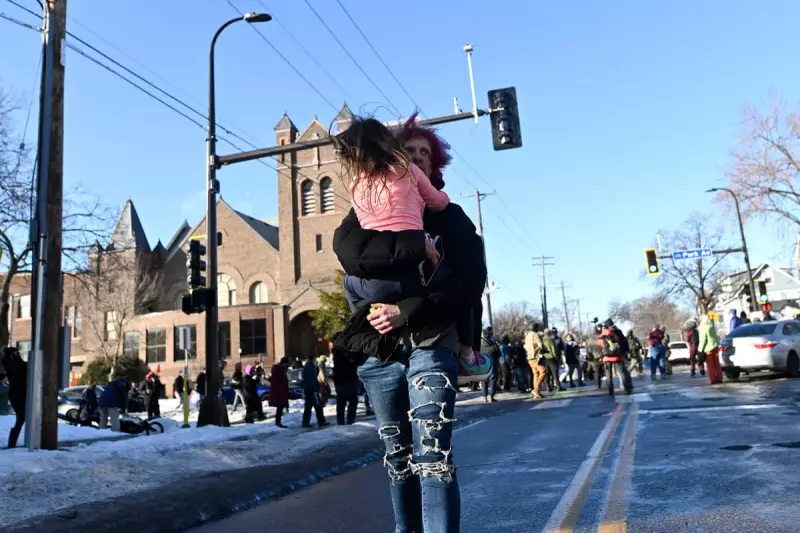
Approximately sixty educators recently held a "teach-in" at Minneapolis city hall, reading bilingual children's books about migration to protest ICE's presence in their community. Teachers have joined healthcare workers, faith leaders, and other residents in coordinated protests across Minnesota against the federal deportation operation.
"Educators have been at the front lines fighting back against ICE's presence in our communities," said Drake Myers of the Minneapolis Federation of Educators Local 59 union. Many teachers now find themselves providing social services alongside education, arranging food deliveries for families too afraid to leave their homes and connecting families with legal and mental health resources.
Personal Toll on Educators
The crisis has taken a significant personal toll on teachers themselves. Many educators of color, including US citizens, now carry their passports at all times despite finding the practice "icky and frankly disgusting," as Phil described it. Teachers have altered their commuting patterns, carpooling and varying their routes to avoid potentially being followed to school by immigration agents.
Silvia described breaking down after her students leave each day. "I try to put on a good face, but as soon as the kids are on the bus back home, I'm crying," she admitted. She has introduced watercolor painting to her classes as a therapeutic activity, finding that both she and her students benefit from the calming effects of the medium during this period of intense stress.
The situation represents what many educators fear may become a permanent scar on Minneapolis's educational system, with the psychological impact of current immigration enforcement likely to affect student learning and development for years to come.