Architects of Survival in Kashmir's Frozen Frontier
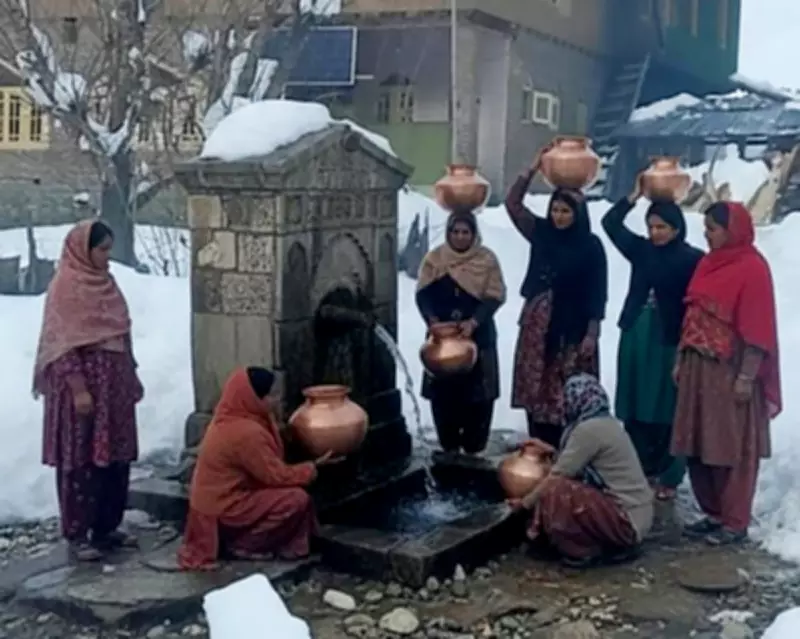
For six relentless months each year, snow completely seals the remote Tulail valley in Jammu and Kashmir. In this frozen isolation, the women of the Dard Shin tribe emerge as the true architects of survival. They are the first to break the ice on water buckets at dawn, their hands never ceasing as they spin, knead, and work until collapsing into exhausted sleep.
The Educational Divide Across Mountain Peaks
Amreen Qadir, academic head at a Srinagar secondary school, sits 130 kilometers south of her ancestral home, separated by the jagged peaks of the Razdan Pass. While her professional life revolves around curriculums and pupil progress, her soul remains in the silent Tulail valley with the sisters of her tribe.
"In my tribe, the Dard Shin, girls' dreams are often over by age thirteen," Qadir reveals. "It is time we cleared a path toward them all fulfilling their potential."

Her father became Tulail's first professor of commerce, walking through waist-deep snow to access an educational world that didn't know he existed. His journey from remote highlands to higher education gave Qadir wings to fly, yet those she left behind remain grounded in perpetual frost.
Children's Dreams Versus Mountain Barriers
Nine-year-old Zubeida dreams of becoming a doctor. "When the snow is deep and the mothers are in pain, I want to be the one who knows how to make them better," she explains. "I will wear a white coat like the snow, but I will bring warmth."
Her path to medical school faces insurmountable obstacles beyond just geography. Tulail lacks even a high school for her to attend, creating educational dead ends before dreams can begin.
Twelve-year-old Irfan, whose father and brothers work construction in Shimla, declares with determination: "I don't want to carry stones. I want to be a scientist. I want to study why the stars are so bright in Tulail and how we can use the sun to keep our homes warm when the electricity goes away."
Winter's Harsh Reality and Systemic Challenges
When first frost arrives, Tulail's men pack frayed bags for construction sites in Shimla or apple orchards in Himachal Pradesh. Young father Mohammad explains: "We leave because the snow is a wall that stands between my children and a full stomach." The women consequently face winter's brutality alone.
In Saradab village, the last settlement before mountains become impenetrable wilderness, electricity visits only three hours daily. Zareena describes trekking hours with axes to gather wood for warmth, cooking over open fires in rooms so smoke-filled that children's coughs become winter's rhythm.
The deepest hardship occurs when, due to haya (shame), women give birth in darkness on cold floors, with only village elders to catch new life. This cycle of invisibility fuels educational advocacy.
Education as Rescue Mission and Future Vision
Qadir's father witnessed his people's suffering daily, transforming that pain into determination for his daughter's education. He now builds verbal bridges across mountains, explaining to Tulail men why daughters must remain in school, why books prove as vital as harvest, and how educated girls can transform village fate.
"When my father looks at young girls in the valley, he does not see victims of geography," Qadir observes. "He sees future leaders who just need a path." His life's work conveys a crucial message: Dard Shin daughters represent not burdens to marry off, but torches that could illuminate the entire valley.
Building Bridges Beyond Geographic Isolation
As an educator, Qadir views the world through agency's lens. In Srinagar, she encounters girls dreaming of stars, while in Tulail, dreams typically end by eighth grade. "When we deny her an education, we are not just missing a student," she emphasizes. "We are burying Zubeida the doctor and Irfan the scientist. We are silencing poets."
Her father demonstrated that Dard Shin minds shine as sharply as mountain air, that scholarship can bloom where only potatoes and barley were thought to grow. Yet empowerment shouldn't represent miracle or lottery for lucky few.

True change requires bringing university to valley, not just girl to university. It demands digital bridges to break winter's isolation. Society must cease viewing tribal women as exotic photographs and start recognizing them as intellectual forces.
As a Dard Shin woman who found voice through paternal courage, Qadir refuses to let sisters' stories be written in disappearing ink. "The women of my tribe are not victims—they are warriors," she declares. "Education is the only bridge strong enough to cross the Razdan Pass and remain open when the world turns white. It is time we stopped waiting for spring and started building that bridge ourselves."