Independent Schools Australia Urges National AI Pilot to Prevent Educational Divide
Independent Schools Australia is issuing a stark warning to the federal government: implement a national artificial intelligence pilot program or risk creating a widening educational divide across the nation. The organization's newly released paper analyzes how schools are integrating generative AI into teaching and learning three years after ChatGPT's debut, revealing concerning disparities in adoption rates.
The AI Revolution in Australian Classrooms
In some forward-thinking Australian schools, the traditional essay submission process has evolved dramatically. Students now face AI chatbots that interrogate them about their work through two-way dialogues designed to ensure genuine understanding. These digital assistants might ask probing questions like "Can you explain this a little bit more?" or "What do you mean by that word?" This approach serves dual purposes: reinforcing learning concepts while verifying students have done their own thinking rather than resorting to plagiarism or ChatGPT assistance.
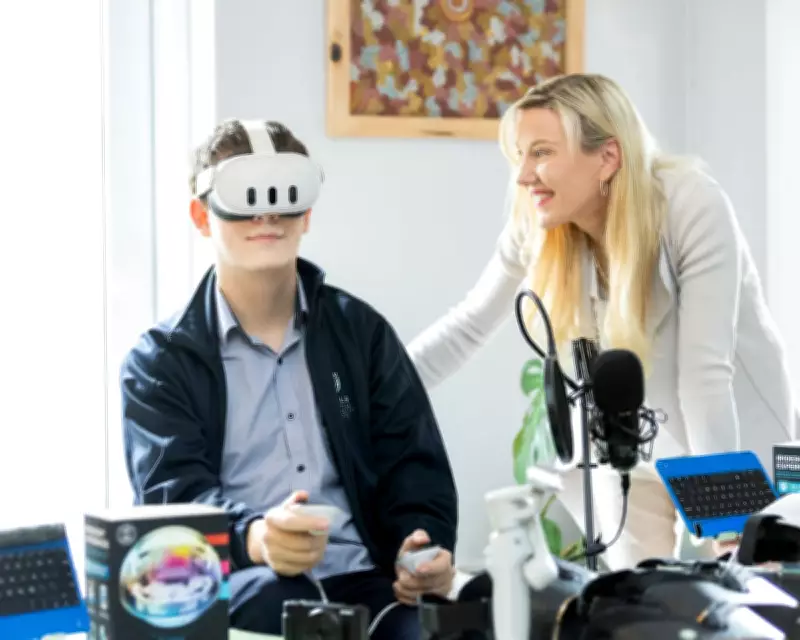
At Hills Christian Community School in Adelaide Hills, artificial intelligence represents just one facet of technological innovation. Students engage with sensors, drones, and coding to study natural ecosystems ranging from river systems to pollinators and bushland habitats. Students with disabilities, including those with limited speech capabilities, utilize Meta AI glasses featuring inbuilt speakers that explain classroom activities without causing disruption.

Uneven Adoption Creates Two-Speed System
Despite these innovative applications, AI implementation remains inconsistent across Australian schools. The Independent Schools Australia paper reveals that adoption rates vary significantly depending on geography and available resources. Currently, only two jurisdictions—New South Wales and South Australia—have rolled out AI programs to public schools following the overturning of technology bans in late 2023.
ISA Chief Executive Graham Catt emphasizes that Australia stands at a critical juncture: "If we don't act deliberately now, we risk creating a two-speed system. Some schools will surge ahead, while others struggle to keep up." The organization calls for a national, sector-blind pilot program that would establish ethical adoption pathways and identify appropriate funding directions.
Teacher Adoption and Concerns
The latest Teaching and Learning International Survey reveals that two-thirds of Australian secondary teachers and nearly half of primary teachers currently use AI in their work, placing Australia among nations with the highest technology uptake. However, educators express significant concerns about potential negative impacts on student wellbeing, privacy issues, and plagiarism risks, indicating a pressing need for better guidance and safeguards.
In independent schools, large language models already assist teachers with marking, provide student feedback, identify learning gaps, and serve as personalized tutors. New South Wales has implemented NSWEduChat—a department-owned generative AI tool available to all public schools—while South Australia's EdChat chatbot, distributed statewide in 2025, has demonstrated time-saving benefits for teachers and particular assistance for students with language or learning barriers.
The Human Element in Technological Integration
Colleen O'Rourke, Hills Christian Community School's leader of digital innovation, articulates their educational philosophy: "AI tools are used by educators to amplify great practice, not dilute it. The human element cannot be lost in this. AI is the co-collaborator in the triad of the teacher and the student."
O'Rourke emphasizes the training imperative facing educators nationwide: "We can't teach our kids how to use it responsibly if teachers don't know how to use it responsibly." As teachers scramble to understand rapidly evolving technology, the call for systematic support grows increasingly urgent.
The Independent Schools Australia paper serves as both warning and roadmap, highlighting how artificial intelligence could either become a tool for educational equity or exacerbate existing inequalities depending on governmental response and systemic implementation.