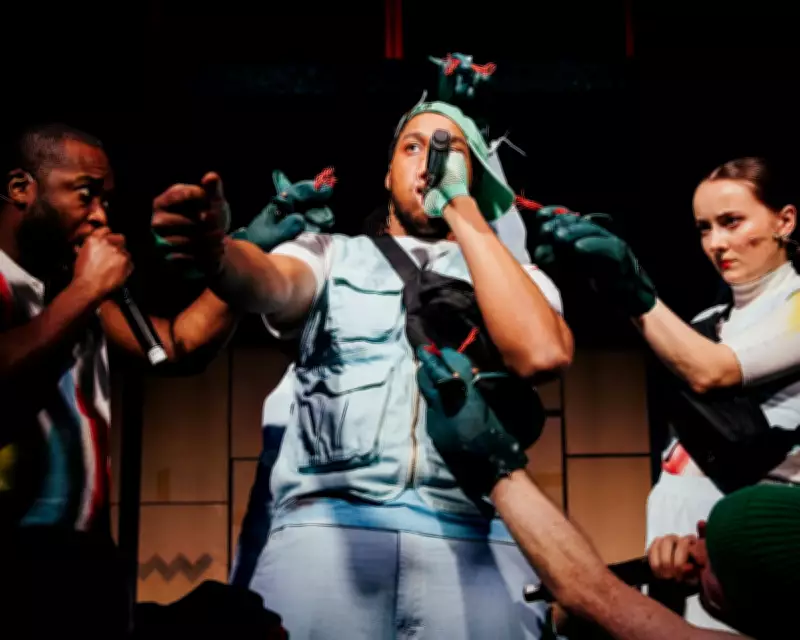
In a bold reinterpretation of the classic German legend, Conrad Murray's beatbox-powered musical Pied Piper has arrived at Derby Theatre, blending hip-hop rhythms with a tale of rats and rebellion. This family-friendly production, which runs until 22 February before touring, is infused with sincere community commitment but ultimately falters due to a noticeable lack of dramatic momentum.
A Modern Take on a Timeless Tale
Murray, who serves as writer, composer, performer, and plays the titular Piper, leads a cast that includes local children flooding the stage in a heartfelt display of community involvement. The show encourages audience participation, urging attendees to practise their hi-hats, and promotes messages of friendship, freedom, and the transformative power of music. These elements are commendable and reflect the production's noble intentions.
Narrative Shortcomings and Emotional Gaps
However, the musical struggles to translate its ambitions into compelling theatre. The plot revolves around the mayor of Hamelin, who operates a pie factory plagued by rats and exploited workers granted only seven-minute lunch breaks. Subplots involve the mayor's daughter, who battles shyness despite frequent singing, and a factory worker in a superficially handled crisis that escalates abruptly to a suicide attempt.

Unfortunately, unclear lyrics often obscure these details, undermining Murray's aim to weave a narrative of class struggle alongside pest control. Key moments, such as the discovery of a rat-infested pie or the abduction of the town's children, pass without significant impact, feeling like mere beats in the rhythm rather than dramatic peaks. The emotional payoffs feel unearned, leaving the audience disconnected from the stakes.
Musical Challenges and Performative Strengths
Creating a score with just seven voices and no backing track is a formidable challenge, and Murray deserves respect for this undertaking. Yet, the arrangements sometimes feel sparse, with harmonies that don't always land and performers occasionally breathless from constant movement. The cast works tirelessly to keep the stage dynamic, showcasing their dedication.
Standout talent includes beatboxer Alex "Apollo" Hardie, whose percussive arsenal contains an encyclopedia of sounds, adding depth to the production's sonic landscape. His skills highlight the potential within the show's framework.
Historical Context and Future Potential
This isn't the first hip-hop adaptation of the Pied Piper story; in 2007, dance company Boy Blue won an Olivier award for their street-dance version. Murray's beatbox approach offers a fresh twist, but it hasn't fully coalesced into a satisfying whole. Pied Piper remains a worthy idea, performed with energy and sincerity, planting seeds for something greater that hasn't yet blossomed.
In summary, while the production champions community and musical innovation, its dramatic deficiencies prevent it from achieving the impact it seeks. Audiences may appreciate the effort and talent on display, but they might leave longing for the narrative thrust that could elevate this promising concept into a standout theatrical experience.