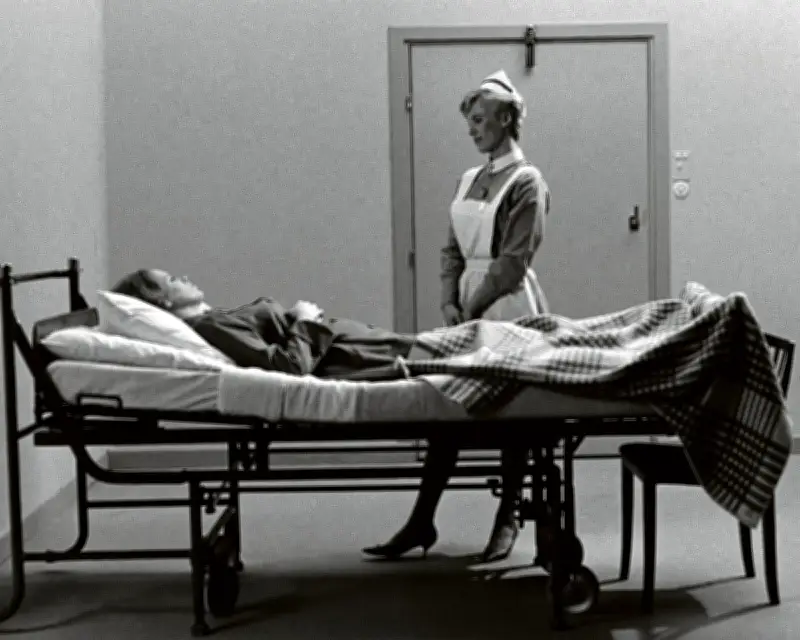
In a bold new production at the National Theatre, director Benedict Andrews has fused Sophocles' Electra (c. 420 BC) with Ingmar Bergman's Persona (1966) into a single evening titled Electra/Persona. The two dramas, written 23 centuries apart, share the stage with a stunning coup de theatre linking them. Cate Blanchett and Nina Hoss alternate the roles of Electra and Clytemnestra in the first half, and Elisabeth and Alma in the second.
Bergman as a north star
Andrews describes Bergman as a north star, fascinated by the impossibility of staging Persona due to its reliance on camera and close-up. He was intrigued by why Bergman's character Elisabeth breaks down while playing Electra, leading him to pair the works. 'I think it's become clear in rehearsal that the whole evening is one cycle of grief,' he says.
Alternating roles and coin toss
Originally, Blanchett and Hoss were to toss a coin on stage to determine roles, but Tom Stoppard's Rosencrantz and Guildenstern Are Dead made that risky. Instead, they swap night by night on a schedule, with the audience unaware of who plays whom until the first actor appears. Andrews notes that both actresses preferred this approach to play their best game.
Challenges of rehearsing two plays
Andrews acknowledges the long rehearsal days required to prepare all permutations. 'Yesterday we stayed in Electra all day but I still did an hour on Persona at the end,' he says. The production is not a double bill but a single hinged work, with perforations from Bergman in the first half and Sophocles in the second.
Blanchett and Hoss as sisters
Blanchett and Hoss, who previously worked together in Tár, bring different interpretations to their roles. 'They don't look the same but there's an echo between them; they could be sisters,' Andrews observes. He encourages variation, seeking the truth of each moment nightly.
Greek tragedies and modern relevance
Andrews' previous show was Aeschylus' The Oresteia in Iceland, which shares characters with Electra. He moved bits between the two shows, living with the 'crazy family' for an extended period. Both are chamber pieces with role-swapping and role-play, exploring power relationships and the masks we wear.
Why Greek plays are returning
Andrews believes Greek tragedies are resurgent due to current political and moral crises. 'These plays were made in an imperial warring empire, first triumphant then broken apart. We are watching that with American imperialism now,' he says. They question notions of law and justice, offering insights from a culture that lived through wars while giving us philosophy and theatre.
Australian directorial presence
Andrews is part of a strong Australian directorial presence in London, alongside Simon Stone and Kip Williams. He rejects the idea of being 'faithful' to classics, instead aiming to access the mythic power and X-ray the inner meaning. 'I don't think of it as disrupting classics,' he says.
Electra/Persona runs at the National Theatre, London, from 19 August to 10 October.