Men Behaving Badly Stage Adaptation Stumbles in Cirencester Revival
In today's cautious theatre landscape, where familiar titles often dominate box office sales, productions frequently evoke nostalgia for cosy nights in front of the television. This trend has seen numerous beloved TV detectives and sitcoms transition from screen to stage, aiming to capture audience affection and commercial success.
A Problematic Transition from Screen to Stage
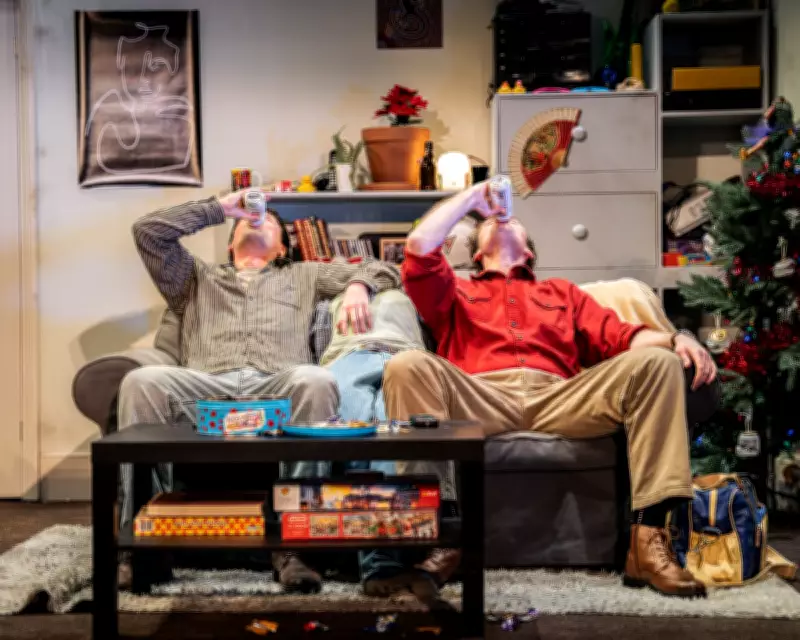
Simon Nye's latest endeavour brings his iconic 1990s sitcom Men Behaving Badly to the Barn theatre in Cirencester. The original series, which concluded its television run in 1998 with a staggering 13.9 million viewers, centred on immature flatmates and the women attempting to civilise them. However, translating such a well-known property for the theatre presents significant challenges, particularly regarding casting decisions and narrative pacing.
The production faces a fundamental dilemma: should the actors impersonate the original television stars or offer fresh interpretations? In this staging, the approach is inconsistent. Matt Howdon's portrayal of Tony and Tricia Adele-Turner's Deb closely mimic Neil Morrissey and Leslie Ash's performances, almost to the point of impersonation. Conversely, Ellie Nunn's Dorothy and Ross Carswell's Gary diverge markedly from Caroline Quentin and Martin Clunes's originals, introducing new character dynamics that sometimes feel disjointed.
Pacing Issues and Narrative Complications
Adapting a half-hour sitcom format into a full-length theatrical production often requires substantial expansion, which can strain the material. While John Cleese successfully transformed Fawlty Towers episodes into cohesive stage farce, Nye's play struggles with this transition. The script incorporates new plot elements, including two concurrent countdowns set on millennium eve.
Gary must marry his heavily pregnant partner Dorothy to secure an inheritance from a moralistic aunt, a plot device that feels anachronistic. Meanwhile, Deb returns from Australia, giving Tony just twenty-four hours to convince her to marry him and relocate to Melbourne. Despite these convoluted storylines, the production concludes after a mere one hundred minutes, including an extended musical interval featuring landlord Ken and his girlfriend Eve.
Ambiguous Tone and Character Development
The abbreviated runtime leaves insufficient opportunity to clarify the play's stance towards its central characters. Is it critiquing or celebrating their boorish behaviour? This ambiguity undermines the production's coherence. Moreover, while the original series allowed female characters sexual agency, this adaptation reduces them primarily to vehicles for pregnancy, diminishing the feminist undertones that once distinguished the show.
Joseph O'Malley's direction wavers between faithful re-enactment and innovative reinterpretation, further complicating the audience's engagement. Neil Morrissey's cameo as a ghostly figure commenting from the present day adds a meta-theatrical layer but also entrenches the production in impersonation rather than innovation.
Ultimately, Men Behaving Badly: The Play at Barn theatre feels like a misconceived project that fails to fully leverage its nostalgic appeal or develop its characters meaningfully. The production continues in Cirencester until the seventh of March, offering audiences a chance to revisit these iconic figures, albeit with mixed results.