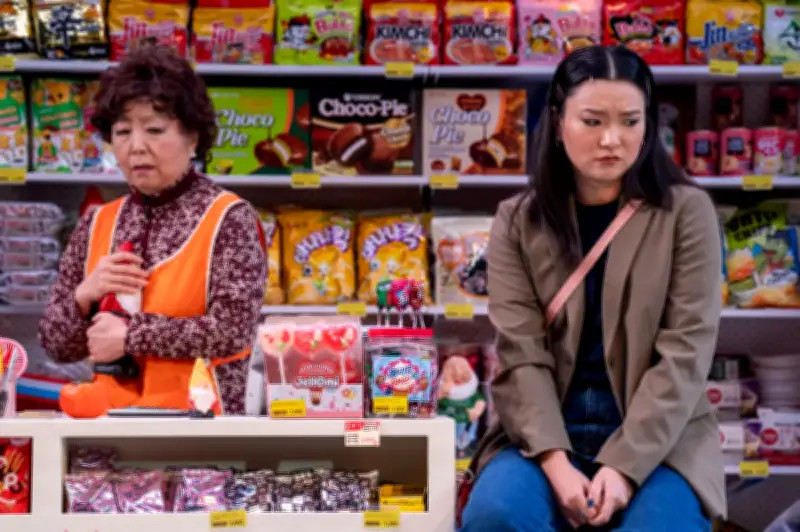
Michelle Lim Davidson's debut play Koreaboo, now touring Brisbane and Melbourne, offers a tender and emotionally complex portrait of a mother-daughter reunion fractured by adoption, cultural divides, and the unexpected bonds forged through fan culture.
The play, inspired by Lim Davidson's own experiences, follows Hannah (played by Lim Davidson), a young Australian woman born in Korea and adopted as a baby, raised in regional New South Wales. She arrives at a tiny convenience store in Seoul to reconnect with her birth mother, Umma (Heather Jeong), whom she has only recently met. The reunion is fraught from the start: Umma expects Hannah for a short vacation a week later, while Hannah reveals she plans to stay for the whole summer, saying, “I want to be with you.” Umma responds brusquely, “Go to Busan. Eat some fish.”
A play about identity, rejection, and K-pop
For Hannah, the stakes are high: she seeks not just maternal validation but confirmation of identity, feeling too Korean to be Australian and too Australian to be Korean. Umma taps into her fears by treating Hannah like a tourist, criticising her language skills and skin, bluntly stating, “[You are] not Korean.” The play unfolds largely inside the convenience store, a visually rich set designed by Mel Page, as a cat-and-mouse game where Hannah seeks intimacy and Umma deflects.
However, a common language emerges: K-pop. Umma, a self-proclaimed bigger fan than Hannah, shares better dance moves, and as fellow members of the BTS Army, they find glimmers of solidarity that slowly kindle into something more. This shared passion becomes a bridge, allowing them to connect despite the emotional distance.
Performance and cultural appropriation as themes
Performance runs as a central theme: of identity, intimacy, and culture. In the opening scene, Umma tells Hannah to re-enter the shop as a stranger to redo their botched reunion. Later, Hannah enters a TV talent show, transforming herself with cute-core outfits and K-pop affectations per Umma's instructions to be more “Korean.” This cultural appropriation cuts both ways: Umma is a “Carrie-boo,” a Sex and the City fan who quotes dialogue and escapes by pretending she's in “the Big Apple.” The play is a tender tribute to how fan culture fosters kinship across seemingly unbreachable divides.
The specificity of Lim Davidson's characters and performances saves the material from cliché. Hannah is a former eisteddfod tap dance champion, while Umma is obsessed with garden gnomes, her “friends,” which speaks to her loneliness. When Hannah questions her attachment to this white cultural artefact, Umma explains they are manufactured in Korea, so they're Korean—a moment that lands with weight.
Emotional complexity and a hard-won wisdom
Significantly, we only learn Umma's name, Soon Hee, in the final stretch, along with her childhood dream of being a singer. This underscores Lim Davidson's emotional wisdom: you can't re-do or manufacture a parent-child connection later in life; you must meet as fully formed individuals and aim first for friendship. If Koreaboo risks being too sweet, it's saved by this undercurrent of emotional complexity, focusing less on performance than on what happens when it crumbles.
Koreaboo runs at La Boite theatre as part of Brisbane Festival until 19 September, then at Melbourne's Malthouse theatre from 24 September to 10 October.