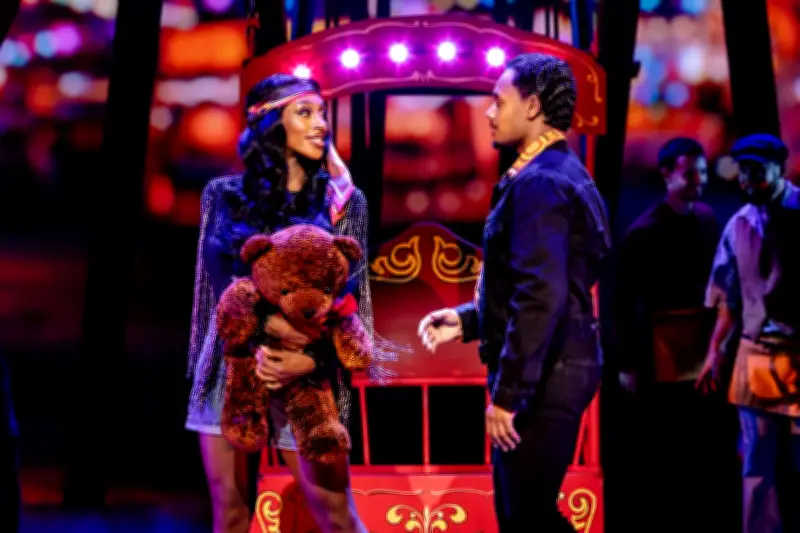
The new jukebox musical I'm Every Woman: The Chaka Khan Musical at the Troubadour Wembley Park Theatre has been slammed by critics as a messy, overly long production that wastes the talents of lead actress Alexandra Burke. The show, which runs until 27 September 2026, attempts to tell the story of the funk legend's extraordinary life, from her time as a teenage Black Panther to her battles with addiction, but critics argue it fails to do justice to either Khan's story or her iconic hits.
A Star-Studded Life, A Flawed Tribute
Chaka Khan's life story is undoubtedly ripe for musical theatre. As a teenage Black Panther who became a soul superstar, she collaborated with everyone from Whitney Houston to Joni Mitchell, survived shooting at her second husband with a rifle, and fought a long battle with alcohol and drug addiction. The potential for a compelling narrative is immense, yet I'm Every Woman fails to capture the essence of her journey.
The production, which follows a limited run at the Hackney Empire, is described as a chaotic mix of stilted scenes and puzzling song choices. The plot jumps rapidly through Khan's life, from her childhood marked by her father's heroin addiction to her experiences with abuse and first loves. The pacing is frenetic, with hits cut short to squeeze in more songs, leaving the timeline difficult to follow even with Natalie Pryce's textured costumes helping to signpost the decades.
Script and Characterisation Criticised
Nia T Hill's script has been criticised for its anachronistic phrases, including references to a 'glam squad' and 'mum guilt' before the turn of the century. The projection of tweets marking the death of Khan's collaborator Prince (played by Miles Anthony Daley) left one reviewer baffled, believing the show was still set in the 1990s. The dialogue is filled with awkward exposition, such as a character asking 'Speaking of pain, how's the new medication for your knee?' immediately after an emotional moment.
The show's framing device, a group therapy session between Khan and her family, provides a sombre opening and closing, but the middle section is a jumbled mess of non-sequiturs and rushed storytelling. The production tells the audience at every turn that Khan is a big deal, but fails to show why.
Burke's Performance Underused
Alexandra Burke, who won The X-Factor in 2008, delivers beautiful vocals that remain clear and powerful, but critics argue she is miscast. The character presented in the show is self-serious and weighed down by the world, and Burke's performance rarely fluctuates from this tone. Her pure voice lacks the trademark grit of Khan's own singing, and she is given limited opportunity to showcase her abilities.
Despite being a Chaka Khan musical, Burke sings very little. She features on the biggest hits – 'Ain't No Body', 'Higher Love', and 'Through the Fire' – yet the solos and standout moments that typically garner applause are given to other characters. The decision not to have Burke sing the title song 'I'm Every Woman' in the second half is described as utterly bewildering, especially given what replaces it.
Flashes of Brilliance Amidst the Chaos
There are moments of brilliance within the production. The diegetic music, when Khan is in the studio, singing in a bar, or performing with her band Rufus, is a clear highlight, showcasing the cast's musical prowess. However, Khan is usually intoxicated during these scenes, preventing Burke from performing at the same level.
The curtain call offers a glimpse of what could have been, with Burke finally allowed to sing the hits with raw vocal power while the dancers showcase Ebony Clarke's choreography. In isolation, it is a joyous medley, but after two and a half hours of theatre, it feels unearned.
Conclusion: A Disappointing Tribute
The production runs 2 hours and 40 minutes with ticket prices ranging from £18 to £190. The show is currently scheduled at the Troubadour Wembley Park Theatre, with performances from 5 August 2026 through 27 September 2026. Despite the star power of Burke and the legendary status of Khan, I'm Every Woman is a disappointing tribute that fails to capture the essence of its subject. As critic Isobel Lewis notes, 'Burke deserves better than this, and so, frankly, does Khan.'