Robert Icke's Romeo and Juliet Revival Emerges as the Finest West End Adaptation in Recent Memory
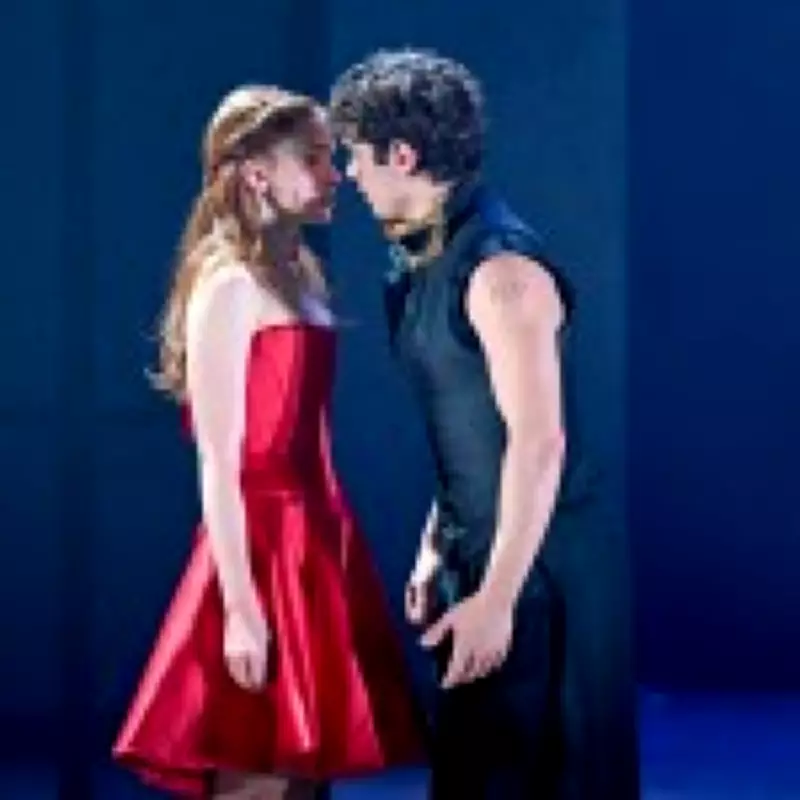
In a line early in Romeo and Juliet, director Robert Icke chooses to emphasize: 'In a minute there are many days.' This becomes the quiet thesis of his urgent, emotionally lucid revival, currently captivating audiences at the Harold Pinter Theatre in London's West End. Starring Sadie Sink and Noah Jupe, this production explores time as elastic, fragile, and devastatingly cruel, offering a fresh perspective on Shakespeare's timeless tragedy.
Sadie Sink and Noah Jupe Prove Their Mettle Beyond Stunt Casting
Sadie Sink, renowned for her role in Stranger Things, and Noah Jupe, acclaimed for his performance in the Oscar-winning Hamnet, have silenced initial skepticism from Shakespeare purists. Their casting is far from a mere publicity stunt; instead, they deliver performances that are deeply resonant and authentic. Icke, celebrated as one of British theatre's most intellectually rigorous directors, continues his tradition of deconstructing classics rather than preserving them as museum pieces, as seen in his 2024 interpretation of Oedipus.
What sets this Romeo and Juliet apart is its profound emotional accessibility. The production hinges on the belief in the reckless sincerity of young love, making the tragedy palpably real for contemporary audiences.
Compelling Performances from the Lead Actors
As Juliet, Sadie Sink radiates with adolescent intensity. She spends much of the play curled in bed, tousled and restless, often in her pajamas. This clever, disarming choice portrays Juliet as not yet fully formed, caught between girlhood and adulthood, experiencing emotions so vast they seem to eclipse the world from the safe haven of her teenage bedroom. Sink masterfully captures this volatility, navigating the giddy highs, storming lows, and the sensation that everything is happening for the first and last time simultaneously.
Opposite her, Noah Jupe delivers an angsty yet boyishly endearing Romeo. His early lovesick melancholy over Rosaline borders on petulant, but this serves as essential groundwork for his subsequent transformation. When his passion turns to Juliet, it becomes total, consuming, and frighteningly absolute. Jupe shines in moments of rage, tapping into something recognizably adolescent—the uneasy midpoint between a child's tantrum and a man's violent outburst.
Their chemistry is tender, awkward, and entirely convincing. The balcony scene, often overplayed into grandeur, here becomes something far more intimate and affecting, filled with giggling, hesitation, and shared disbelief.
Supporting Cast Nearly Steals the Show
The supporting cast excels, with Clare Perkins as the Nurse drawing big laughs through impeccable comic timing, grounding the play's intensity with warmth and wit. However, it is Kasper Hilton-Hille's Mercutio who threatens to steal the production entirely. His teenage Mercutio is a quivering bow-string, embodying the class clown who pushes every joke too far. Intensely physical, he sprawls across the stage in deliberately shocking ways, yet beneath the bravado lies vulnerability, hinting at a boy unsettled by Romeo's shifting affections. His death marks not just a plot turning point but the loss of a wild, fragile adolescence, making Hilton-Hille an actor to watch.
Icke's Direction: Heavy-Handed or Bravely Direct?
Robert Icke's direction is fluid and precise, with scenes bleeding into one another gracefully. Hildegard Bechtler's spare but evocative design allows the actors' emotional landscapes to take center stage. The production's most overt device is its use of time: flashes of light interrupt key moments as a large digital clock projects above the actors, rewinding action to suggest alternate possibilities. This may feel heavy-handed for seasoned Shakespeare scholars, but for contemporary audiences, it provides a powerful entry point into the play's central question of fate versus chance.
Not every modern flourish lands perfectly; occasional use of contemporary music feels uneven. Yet, it finds devastating clarity in the final moments, as Adrienne Lenker's Not a Lot, Just Forever plays during a montage imagining the life Romeo and Juliet might have shared. This unabashed sentimentality effectively tugs on heartstrings, aligning with the play's lack of subtlety.
Why This Play Appeals Beyond Shakespeare Enthusiasts
This production does not concern itself with perfect textual purity or classical restraint, which may draw criticism. However, watching the audience—many of whom might identify more as fans of Stranger Things than Shakespeare—sit rapt, laughing, weeping, and blushing, reveals its success. It captures the emotional core of the tragedy: the beautiful, reckless, funny intensity of youth that drives it to its end.
Unlike recent adaptations, such as Tom Holland's stylized 2024 version or Shakespeare's Globe's recent takes, this revival finds a middle ground, escaping the weight of mythology to make the most famous play in history feel brand new. It is a must-see for anyone seeking a fresh, emotionally charged theatrical experience in London's West End.