Gregg Araki's twelfth feature film, I Want Your Sex, is now in theaters, and the cult director is as provocative as ever. The movie, a delirious and often hilarious exploration of desire, power, and art, features bondage, full-frontal nudity, and a vagina made of pink bubble gum. "For me, it is a very queer story," Araki said in a video call from his Los Angeles home. "It's a take on kink and alternate sexuality that goes right across the straight-queer spectrum."
A Record-Breaking Independent Release
Opening on 700 screens in the US, I Want Your Sex is set to reach Araki's biggest audience to date, a stunning figure for an independent film and a wider opening than recent releases by indie veterans like Nicolas Winding Refn and Jim Jarmusch. The film features his starriest cast in years, including Olivia Wilde, Cooper Hoffman, Charli xcx, Johnny Knoxville, and Margaret Cho, signaling that Hollywood has caught up with Araki's anarchic vision.
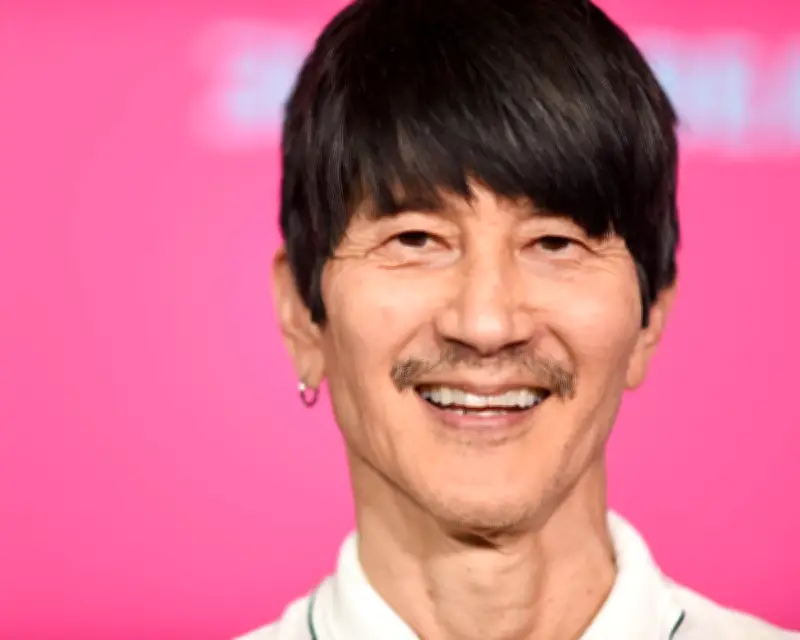
At 66, Araki appears at least two decades younger, wearing a striped tank top and exuding buoyant energy. "The world's so fucked up right now with wars and ICE and fucking genocides that I want to put a little queer joy and positivity into the world," he said.
The Plot: A Queer Kink Odyssey
The film follows Elliot (Cooper Hoffman), a 23-year-old college graduate whose ambitions are vague. He becomes an assistant to Erika (Olivia Wilde), a brash, sexually carnivorous artist, and falls under her spell, leading to a series of sexual epiphanies. Elliot describes himself as "a slave to this vagina," referring to one of Erika's artworks. The ensemble cast includes Charli xcx as Elliot's dorky girlfriend, who prefers neurology textbooks to sex, and Johnny Knoxville and Margaret Cho as detectives investigating a body found in a swimming pool. Mason Gooding plays Zap, who retorts to Elliot's claim of being "queer adjacent" with "Have you ever sucked a dick?" Araki admits, "He's very much my snarky sensibility."
From '50 Shades' to Feminist Reversal
The script initially was a "comic 50 Shades of Grey" with a female intern seduced by her male boss. But after funding fell through and the #MeToo movement emerged, Araki felt uncomfortable with the image of a woman being dragged by the hair, even consensually. "I don't want to kink-shame anybody, but as a man, I didn't really want to put that image out there," he said. "That's when I got the idea to flip the sex roles and make it a male sub and a female dom." The script also crystallized after a 2022 study found that Gen Z were having less sex. "When Erika says 'Your generation's all about Fomo and you're missing out on the sexual part,' that was my reaction to that article," Araki explained.
Provoking Conversation
Araki's comments about Gen Z regretting not having sex sparked debate on social media. "That is one of the most exciting things about the movie to me," he said. "I don't want to lecture anybody, but I want to open up a conversation." He elaborated, "A certain number of Gen Z live a sheltered life and don't go out much. It's like a fear of making a mistake, or being uncomfortable. A lot of those experiences are not wonderful! The first time you get your heart broken, it really rocks your world. I just can't imagine going through life without that experience."
Sex in Cinema Today
Araki criticized the so-called sexual renaissance in films like Babygirl, saying, "I didn't find Babygirl sex-positive at all. The way that the Nicole Kidman character gets punished for exploring her own desires made me a little uncomfortable." He defended the sex scenes in the gay TV show Heated Rivalry, which he praised: "I thought the sex scenes were well-handled and not really watered down. It's kind of what a lot of my sex scenes are: 'R-rated HBO'."
Personal Inspirations
Araki based Elliot's character on himself in his early 20s, while Erika is partly inspired by post-fame Araki, with dialogue culled from his own past interviews. He told Wilde, "Whoever plays this part needs to be completely fearless and not give a fuck about what people think." Wilde responded, "That's what I want to do." Araki's approach to actors is trust: "I'm not a director that is like: 'OK, here's how you're going to act this scene.' Once I find the right person, I just let them have at it."
Satire of the Art World
The film also satirizes the commercial art world, with Erika's art described as "frankly hideous," featuring garish pop-feminist sculptures. Araki describes Erika as a cross between Robert Mapplethorpe and Madonna's Sex book. He noted, "In America, things are worse than they've ever been. The level of puritanical tyranny, repression and cancelling of trans people … it is awful right now. That's why the movie ends with the Jessie Ware song 'Free Yourself'."
Hope in the Next Generation
Despite his critique, Araki feels hopeful about younger audiences. "Whenever we do screenings in New York, [the audience is] all these Letterboxd kids," he said, referring to the social platform for movie fans. "They're very sophisticated cinephiles – Charli xcx is one of them! They have very discerning taste in auteurs. It really gives me hope that this younger generation seeks out films that are not your standard popcorn multiplex movies."
Queer Cinema's Resilience
While a recent GLAAD report found LGBTQ+ inclusion at a three-year low in films from the 10 largest distributors, Araki says queer cinema is thriving. "At Cannes this year, it was like a bonanza of queer movies," he said. "It's amazing that that is the state of where we are at. That's kind of where the queer new wave came from in the first place, way back in the early 90s." He drew parallels to the early 90s AIDS crisis: "Because of the AIDS crisis, queer people were kind of being exterminated, so there was a need for expression. I think that exists today as well. Queer film-makers that can see the writing on the wall, and that the right wing in this country are not going to stop at trans people. We're not safe."
"It's very important to be able to have a queer voice and be unfiltered about it," he said. "That's where almost all my movies come from. You know, that's the magic."
I Want Your Sex is out now in the US, on 27 August in Australia and on 28 August in the UK.