Belvoir's Drive Your Plow Adaptation Loses Novel's Radical Heart
When Nobel laureate Olga Tokarczuk published Drive Your Plow Over the Bones of the Dead in 2009, the Polish author faced accusations of inciting eco-terrorism. This remarkable reaction was sparked by a novel centered on a sixty-something English teacher, Mrs Duszejko, who chronicles a series of murders in her remote village where all victims are hunters. Mrs Duszejko insists that local animals are delivering their own form of justice, leading most villagers to dismiss her as insane.
Tokarczuk's work is profoundly radical, proposing a worldview that, when fully embraced, fundamentally challenges our understanding of animals and humanity. The novel is transgressive in subtle ways too, featuring a protagonist rarely seen in literature: an intelligent, rebellious, eccentric, angry, and effective older woman. This makes it an excellent choice for theatre, particularly appealing to the substantial audience of women in this demographic.
Pamela Rabe's Brilliant Performance
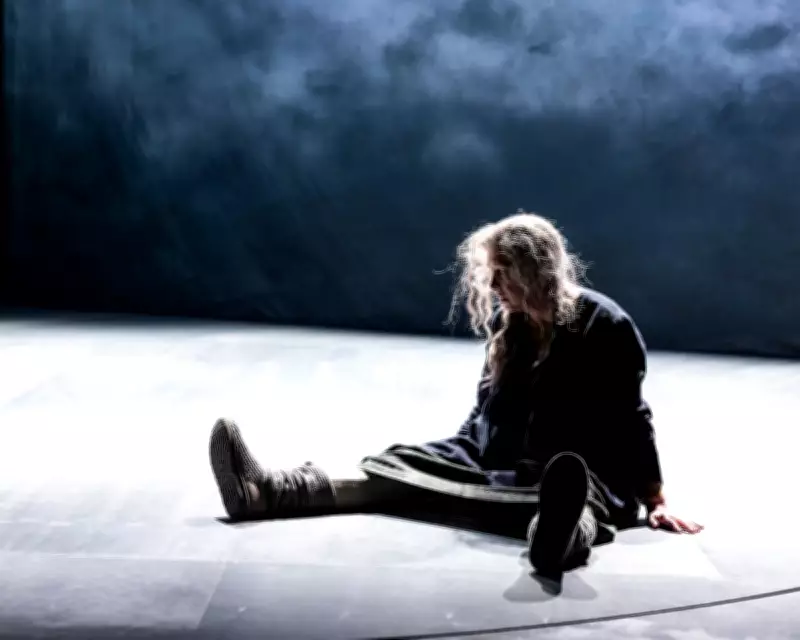
In Belvoir St Theatre's Sydney production, Pamela Rabe delivers a brilliant portrayal of Mrs Duszejko, masterfully blending deadpan humor with deep emotion, social discomfort, and touches of the ridiculous. Rabe leads an immensely entertaining production that remains funny, engrossing, visually stunning, and playful throughout its three-and-a-half-hour runtime, which never feels excessive.
Director Eamon Flack employs a lo-fi "theatre as make-believe" aesthetic with full force, where actors create snow blizzards using confetti and fans, and rain squalls from spray bottles. His adaptation remains remarkably faithful to Tokarczuk's novel, condensing the action while preserving key events and chronology, and lifting the author's sublimely droll narration and dialogue almost verbatim.
Faithful Recreation with Missing Elements
The creative team and ensemble of eleven actors beautifully recreate the novel's distinctive setting: a remote Polish plateau inhabited by societal drop-outs from cities and locals hardened by harsh weather, poverty, and violent history. Mrs Duszejko belongs to the former group, surrounded by a chosen family including her taciturn neighbor Oddball (played by Arky Michael and Bruce Spence), former student and William Blake enthusiast Dizzy (Daniel R Nixon), and local thrift shop assistant Good News (Emma Diaz).
Many actors double as animals, portrayed as humans—a smart choice that amplifies the novel's post-humanist manifesto. Having these actor-animals observe from the sidelines adds a nice touch, though inconsistency diminishes its effectiveness.
The Lost Radical Heart
Despite these strengths, something crucial is missing: the radical, angry heart of Tokarczuk's novel and its profound sense of grief and horror. This murder mystery features gruesome, disturbing deaths necessary to mirror the cruelty inflicted on animals in the story, with a final reveal that delivers a gut-punch. In this production, each death is presented as light comedy, stripping away the satisfaction of understanding the motivations behind them.
This omission is particularly disappointing because the novel's most radical aspect is its proposition that rage can be a clarifying and positive force. Tokarczuk tests a thesis for confronting authoritarianism, patriarchy, and ecological crisis while validating the distress of living in a world where morality and law are severely disconnected.
Undercut Tension and Resolution
Losing the novel's deep rage, horror, and grief undermines dramatic tension and catharsis. The final reveal feels strangely muted, passing too quickly and calmly on stage without eliciting discernible audience reaction. This is compounded by cutting a crucial late-novel scene involving a sermon on hunting merits—one of the book's essential components and finest moments.
In the final act, Flack seems rushed to conclude just when scenes need space to breathe and fully resonate with audiences. The play feels somewhat messy and unresolved in other respects too. The ensemble generally appears underutilized, with satisfying choreographic scenes making their limited use more noticeable. Actors Paula Arundell and Nadie Kammallaweera feel particularly wasted.
Flack creates a distinctive theatrical style with moments capturing the text's weird mania—such as a dress-up dance party of mushroom pickers or fieldfares dispatching magpie foes through defecation. Yet, it's difficult to ignore the sense that what Flack aims to achieve as a director doesn't fully align with what Tokarczuk's text demands. Drive Your Plow Over the Bones of the Dead continues at Belvoir St Theatre until May 10th.