Between the River and the Sea: A Personal Journey Through Political Divides
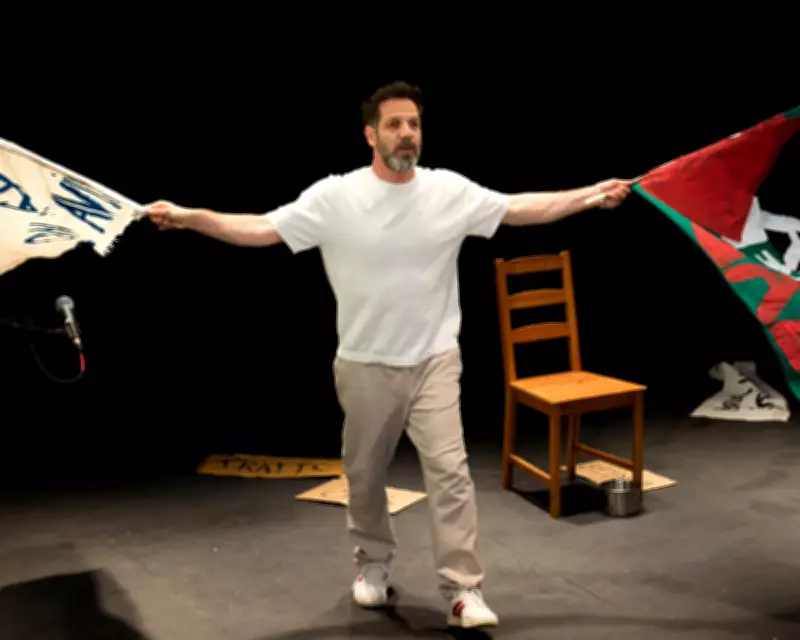
Yousef Sweid opens his performance at the Royal Court Jerwood Theatre Upstairs with a striking disclaimer: this is not a political show. Despite the provocative title and a stage cluttered with protest banners, Sweid insists he is simply here to discuss his divorce. The Israeli Palestinian actor and writer, now based in Berlin, presents a narrative that is deeply personal yet inevitably intertwined with the larger geopolitical struggles that define his identity.
A Man Caught Between Worlds
Sweid, a Christian Arab Palestinian who grew up in Haifa holding an Israeli passport, finds himself navigating multiple contested spaces. He is divorcing his second wife, who is Israeli, while engaged in a custody battle over their children—half-Jewish Berliners with Austrian ancestry tracing back to Holocaust survivors. This personal turmoil mirrors the broader conflict that permeates his life, creating a powerful parallel between domestic strife and national division.
On stage, Sweid exhibits remarkable charm and wit, employing humour to address weighty subjects. He recounts conversations with his divorce lawyer in Berlin, but his mind frequently drifts to childhood memories. These include a father urging him to "take a stand," early experiences of prejudice from a Jewish child who called him a "stinky Arab," and complex relationships with Jewish Israeli girlfriends who alternately celebrated his Arab identity or condemned him as a Hamas sympathizer.
Exploring the Gray Areas of Conflict
Co-written with Isabella Sedlak and previously staged in Edinburgh, the play deliberately avoids binary perspectives. Instead, it ventures into the nuanced territory between mutual suspicion and hatred, where potential for understanding and empathy might emerge. Sweid skillfully voices multiple characters—parents, friends, lovers—sometimes creating confusion but effectively presenting diverse viewpoints. His seamless transitions between English, Hebrew, Arabic, and German further emphasize his liminal existence.
The production takes its time reaching its central theme: the immense pressure on individuals like Sweid to declare allegiance, particularly following the Hamas attack of October 7, 2023, and Israel's subsequent military response in Gaza. While the tone remains lighthearted perhaps longer than necessary, the narrative gains substantial emotional weight as it confronts these recent tragedies.
The Burden of Neutrality
Sweid's reluctance to take sides emerges as both a personal philosophy and a source of tension. This neutrality feels like a withholding of sympathy to his Jewish friend mourning multiple losses from the October attacks, and equally to his Palestinian friend recounting stories of sexual abuse by Israeli soldiers and arbitrary arrests. The play suggests that this uncomfortable middle ground—where final judgments are suspended—might be essential for genuine human connection.
In a poignant conclusion, Sweid articulates a utopian vision of a world without borders, then leaves the thought hanging, unresolved. The performance runs at London's Royal Court Theatre until May 9, offering audiences a rare glimpse into the complex realities of those living between entrenched political positions.