Archipelago: Yolanda del Amo's Photographic Exploration of Intimacy and Isolation
Spanish-born, New York-based photographic artist Yolanda del Amo presents her compelling debut photobook Archipelago, published by Kehrer Verlag. This intriguing collection of images delves deep into the complex dynamics of human relationships, exploring how our fundamental longing for closeness paradoxically coexists with an equally powerful desire for individuality and separation.
The Conceptual Framework of Connection and Solitude
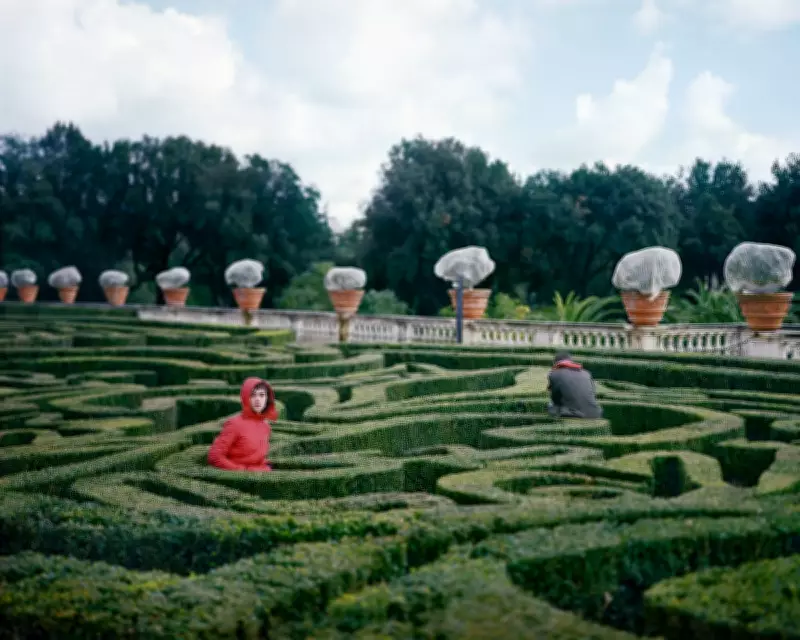
Del Amo's work focuses on the inherent contradictions within human connections across different countries, generations, and genders. Through carefully staged tableaus featuring friends and family members, she constructs moments that reveal the social frameworks shaping identity, class, family structures, and gender roles. Her photographs masterfully illustrate how closeness and separation can exist simultaneously within the same physical space, exposing the fragile balance between connection and solitude that defines modern relationships.
Technical Approach and Artistic Influences
Photographed between 2004 and 2014 using a large-format camera, Archipelago was created in real interiors and outdoor locations across various countries including Spain and the United States. Del Amo describes her photographs as 'a collection of "islands", separated by the loneliness of each one and linked by the intimate bond of belonging to the same world'.

The artist's approach is significantly influenced by multiple artistic traditions:
- The dance theatre of Pina Bausch, whose exploration of interpersonal relationships and precision in translating emotion into gesture and movement deeply impacted Del Amo during her formative university years in Germany
- European cinema traditions, particularly Michelangelo Antonioni's "alienation trilogy" which explores isolation and emptiness in bourgeois life
- Bertolt Brecht's theatrical concept of breaking the fourth wall to transform passive observers into active participants
Critical Perspectives on Del Amo's Work
In her essay Islands in the Sea of Life, prominent critic Vicki Goldberg observes: 'Del Amo does not take portraits; she invents, designs, and constructs moments from unwritten plays. The casts are amateurs – friends and relatives – directed by her to act the feelings and relationships she has in mind, and the settings are arranged to mirror or explain the emotions on view. The result is a union of psychological tension, subtle formality, wavering levels of reality and striking visual beauty.'
Jean Dykstra, in her essay Alone Together, adds another dimension to understanding Del Amo's work: 'Here's another secret in these pictures: they can be funny. In the most understated way, they are often playful, with interventions and contradictions that slyly puncture the sombre surface.'
Notable Photographs and Their Themes
The collection includes several particularly revealing images that demonstrate Del Amo's thematic concerns:
- Noemí, Joseant (2010) - A couple with a newborn embody the tension between connection and separation, with the mother turned away from her family while the father remains absorbed in contemplating their baby
- Jesse, Kerry (2005) - A prescient exploration of how technology contributes to isolation even in shared spaces, featuring a young couple side by side in separate beds, each staring at a laptop screen
- Macarena, Rosario (2007) - Two young women in what appears to be their childhood bedroom, with wigs placed on bedposts that suggest both childhood playacting and potential adult disguise or escape
The Viewer's Role and Emotional Engagement
Del Amo deliberately invites viewers to become active observers and interpreters of the emotional exchanges between her subjects. Her compositions, while balanced and quiet on the surface, are consistently emotionally charged, requiring audiences to read between the lines of each carefully constructed scene. This approach transforms what might otherwise be straightforward portraits into complex psychological studies that raise profound questions about:

- Social connectivity in contemporary society
- The performance of roles within relationships
- The intersection of class and intimacy
- Gender dynamics in domestic settings
Together, the photographs in Archipelago form a comprehensive study of intimacy and estrangement, depicting people performing roles that simultaneously define and confine them. Del Amo's distinctive style creates a body of work that continues to resonate with audiences exploring the fundamental tensions of human connection in an increasingly complex world.