Rediscovering Martin Parr's Overlooked Irish Photography
The iconic photographer Martin Parr (1952-2025) believed his two years documenting rural Ireland in the early 1980s had been largely overlooked compared to his later, more famous projects. A new exhibition at London's Photographers' Gallery aims to correct this historical oversight, presenting Parr's black-and-white photographs that capture a society in fascinating transition.
Capturing Everyday Life in Transition
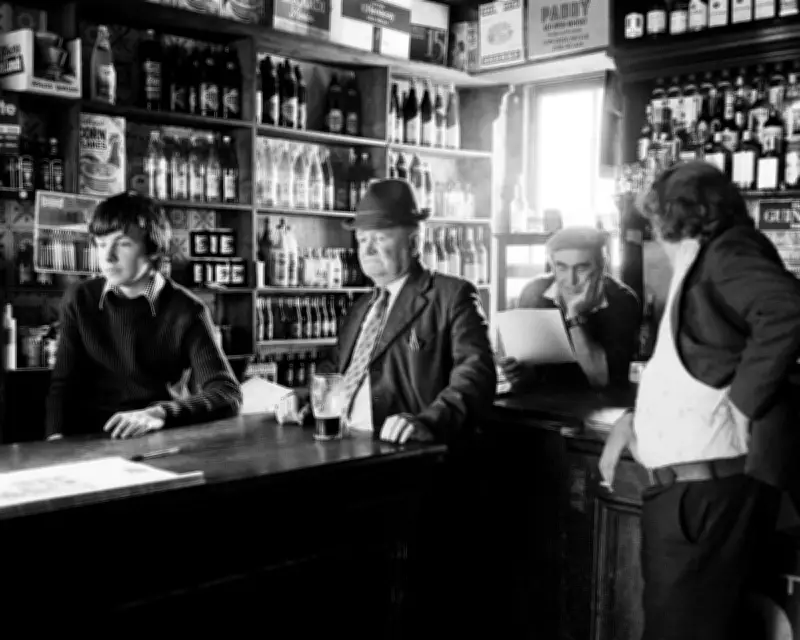
Parr spent two years in Ireland creating this body of work, approaching his subjects with characteristic patience and a keen observational eye. The photographs show cattle trading, horse fairs, folk musicians, and dance halls alongside new buildings, abandoned Morris Minors, and partygoers in 1980s fashion. His distinctive style captured the oddities and humors of everyday life through a hyper-realistic lens that avoided cliché while revealing deeper social truths.
At first glance, many images appear timeless, but closer inspection reveals telling details: a plastic cup floating in the Virgin Mary's holy well, television aerials creeping into pastoral scenes, or modern fashion appearing alongside traditional dress. These subtle elements document the collision between long-standing customs and emerging global influences that characterized Ireland during this period.

Community Gatherings and Cultural Traditions
Fair days provided Parr with rich photographic opportunities, serving as occasions for communities to gather for trade, entertainment, and religious observance. Many of the special events he photographed—including the Glenbeigh Races in County Kerry, Manorhamilton Sheep Fair in County Leitrim, and Puck Fair in Killorglin—continue to be celebrated annually, preserving a strong sense of community and tradition.
Parr's images of venues like the Mayflower Ballroom in Drumshanbo and the Amethyst Ballroom in Elphin capture not just physical spaces but the social interactions that defined them. These gatherings represented chances to document everyday life in a society where traditional customs coexisted with modern influences, reflecting both social continuity and change.
Exhibition Details and Parr's Legacy
A Fair Day by Martin Parr can be seen at the Print Sales Gallery at The Photographers' Gallery in London until 19 April. Parr had been working with the gallery throughout 2025 on plans to showcase this work, which he felt had not received the attention it deserved. He believed these photographs spoke to contemporary debates around community, social change, and the tension between tradition and modernity.
This exhibition represents Parr's last major project in black-and-white photography, marking a significant chapter in his distinguished career. Born in Surrey in 1952, Parr studied photography at Manchester Polytechnic and went on to exhibit his work globally at prestigious institutions including the National Portrait Gallery, the National Centre of Photography in Paris, and the Tokyo Metropolitan Museum of Photography.
Parr's Distinguished Career and Foundation
Throughout his prolific career, Parr published more than 100 books of his own work and received numerous awards, including the Royal Photographic Society's centenary medal, Photokina's Erich Salomon award for photojournalism, and the 2017 Sony World Photography award for outstanding contribution to photography. He served as president of Magnum Photos between 2013 and 2017 and was widely regarded as one of Britain's most popular photojournalists.
In 2014, Parr founded the Martin Parr Foundation, which opened its premises in Bristol in 2017. The foundation holds Parr's extensive archive and serves as a center for talks, screenings, and events, ensuring his photographic legacy continues to inspire future generations. This exhibition of his early Irish work adds an important dimension to our understanding of his artistic development and social documentary approach.