Life Magazine Exhibition: Iconic Photos That Defined 20th Century America
A captivating new exhibition in New York is currently showcasing the extraordinary visual legacy of Life magazine, the publication that once captivated a third of the American public with its weekly delivery. Founded by Henry Luce in 1936, Life revolutionised media by prioritising photography over text, establishing itself as a pioneering force in photojournalism and offering an unparalleled window into the social and cultural fabric of 20th-century America.
The Pioneering Spirit of Life's Photography
Life magazine's innovative approach transformed how stories were told, employing the era's greatest photographers to document everything from monumental global events to the intimate moments of everyday life. The exhibition, titled Looking at Life, is being held at the Staley-Wise Gallery in New York until 21 February, featuring a remarkable collection from the Life Picture Collection.
These images not only recorded history but also shaped public perception, blending artistic expression with journalistic integrity. The magazine's emphasis on visual storytelling created a cultural touchstone that remains influential today, predating the instant news cycle of the internet and mobile phones.

Iconic Moments and Behind-the-Scenes Stories
The exhibition includes several legendary photographs that have become embedded in the American consciousness. Among them is Alfred Eisenstaedt's iconic VJ Day in Times Square image from 1945, capturing a sailor kissing a woman in a white uniform amidst celebrations of Japan's surrender in the second world war. Despite numerous claims, the identities of the subjects remain officially unconfirmed, adding to the photograph's enduring mystery.
Other highlights showcase the magazine's diverse scope:
- Pablo Picasso's light drawings from 1949, created in collaboration with photographer Gjon Mili using flashlight experiments in a dark room.
- Margaret Bourke-White's powerful industrial photography, including her 1935 image of the Bethlehem Steel Corporation, which earned her the nickname Maggie the Indestructible.
- Loomis Dean's 1955 portrait of Noël Coward in the Nevada desert, achieved through creative persuasion involving a limousine stocked with liquor and ice.
- Leonard McCombe's 1952 photo essay capturing men eating ice cream at the Iowa State Fair, reflecting his perspective as a new American citizen.
Celebrity, Culture, and Ordinary Life
Life magazine masterfully blended celebrity coverage with photojournalism, as seen in Peter Stackpole's photographs of Jimmy Stewart's return to his Pennsylvania hometown after military service. The magazine also dedicated space to ordinary experiences through features like Life goes to a..., documenting everything from high-school graduations to Parisian couples relaxing by the Seine.
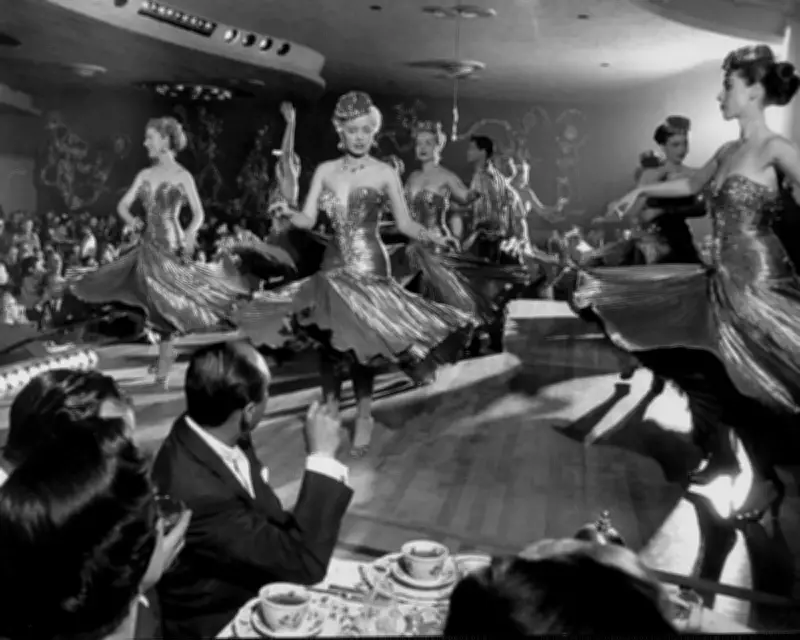
Fashion and entertainment were equally represented, with images such as Harry Benson's 1978 photograph of Halston and Liza Minnelli in the designer's luxurious New York headquarters, and John Dominis's 1963 shot of a movie propman carrying rubber rocks at Universal City Studios.
The exhibition also includes lighter moments that reveal the magazine's whimsical side, like Yale Joel's 1954 photograph of a Little League baseball team anxiously awaiting pants for their new uniforms, and JR Eyerman's 1952 image of an audience watching a 3D film premiere in Hollywood.
A Lasting Cultural Legacy
Through these photographs, Life magazine created a visual archive that continues to resonate, capturing the essence of American life during a transformative century. The exhibition not only celebrates the technical innovations of photographers like JR Eyerman, who developed camera mechanisms for extreme conditions, but also honours the human stories behind the images.
As visitors explore these photographs, they witness how Life magazine shaped America's self-image, documenting both its grand achievements and its simple pleasures, leaving an indelible mark on both photography and cultural history.