The trauma of war hangs over the film Surviving Earth as a dark and unshakeable evil. The lead character, Vlad (Slavko Sobin), moved to the UK in the 1990s as Yugoslavia broke up and war raged. We meet him now as he works as a drug counsellor in Bristol and plays a mean harmonica in a band with his work colleagues. They play Balkan music, a Klezmer-sounding swingy jazz – it is all rather wonderful.
A Man Haunted by His Past
But Vlad has demons, and they are not just the PTSD from the breakup of his home country. Vlad is dealing with a heroin addiction – he is in recovery – but as one scene so eloquently tells us, you are never really “recovered”, just not using it at that moment. His daughter Maria (Olive Gray) is the light in his life, alongside his harmonica, but he has a complicated relationship with her and her mother. We are gently allowed to discover what has gone wrong in recent years, and of course, much of it has to do with his addictions.
Compelling Performances
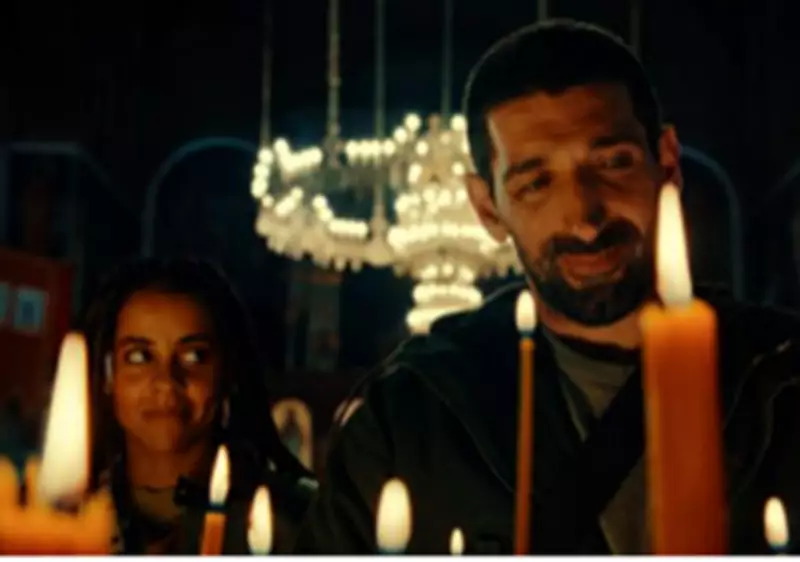
Croatian actor Slavko Sobin is completely compelling, as is the performance of Olive Gray. Vlad is handsome, clever, and talented. He clearly has won the love of colleagues, who have joined him in the Balkan-infused band. His daughter worships him – but is also wary of how his addiction has made him an unreliable father.

Based on a true story, it has airs of Andrea Arnold, Ken Loach, and Shane Meadows about it. Vlad is wholly believable, with the joys of making music that reminds him of a happier time in a peaceful homeland. But the everyday world is what he finds toughest – and perhaps is why he found escape in a drug-fuelled needle.
Intelligent Direction
What pushes this beyond a rather downbeat bit of realist cinema is the twin delights of a great cast and direction that treats the viewer with intelligence. You are not bombarded with the situations in front of you but given a fly-on-the-wall view to see the drama unfold. It is a neat trick and one that all too often smaller budget realism fails to do: too often, directors have a drum to bang and so they hold it right up to your ear and thrash the daylights out of it. Director Thea Gajic instead has created a compelling and intricate narrative and given it the room to breathe.