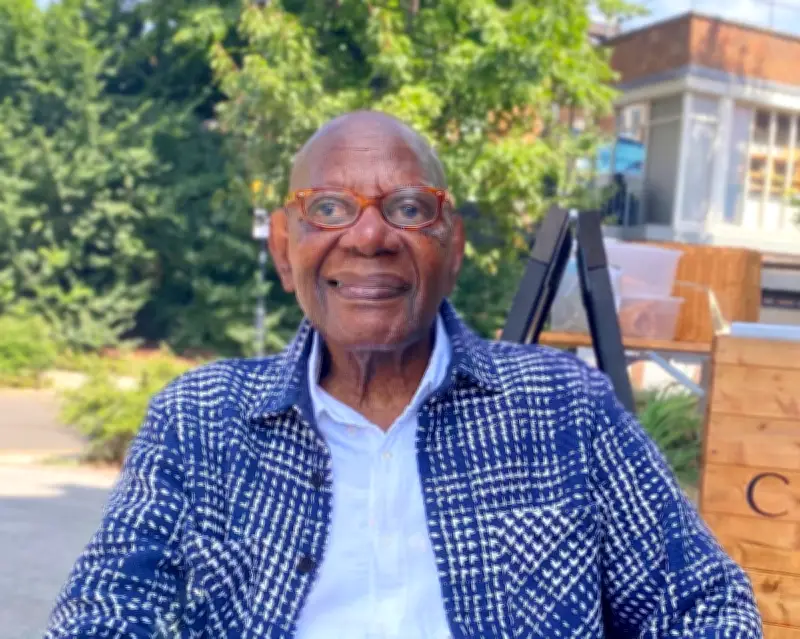
Sterling Betancourt, the Trinidadian musician who brought steelpan music to the United Kingdom and helped lay the foundation for the Notting Hill carnival, has died at the age of 96. He passed away on 3 June after a major stroke earlier in the year. Despite facing racism and struggling to gain acceptance for his instrument, Betancourt remained patient and positive, his widow Beatrice recalled.
From oil drums to the Royal Festival Hall
Betancourt was born in Port of Spain, Trinidad, in 1930. As a child, he beat rhythms on empty tins and milk tins instead of attending school. During the second world war, the US navy brought oil drums to Trinidad, which were repurposed into steelpans. Betancourt mastered making them as a teenager.
In 1951, he and 10 bandmates from the Trinidad All-Steel Percussion Orchestra (Taspo) travelled to London on a banana boat to perform at the Festival of Britain outside the Royal Festival Hall. Initially met with scepticism and jokes about "black magic," their music stunned the crowd. After the festival, Taspo toured the UK, performed on BBC TV, and made Europe's first commercially released steelpan recordings in Paris. All members returned to Trinidad except Betancourt, who stayed in London.

Building instruments from waste
In London, Betancourt built his own steelpans from oil drums discarded in the city's waste grounds. He struggled to interest the public initially and learned jazz drumming to make a living. According to his widow Beatrice, he was "quite distraught" but never procrastinated or felt down. He infiltrated steelpan into the Soho jazz scene, then across Britain, and from the 1970s into continental Europe and Asia.
"He was an incredible teacher," Beatrice said. "He had so much patience. I'd watch him trying to teach a student who had no talent and I'd later say to him, 'Why do you bother?' And he would reply: 'They will get there.'"
Racism and the birth of Notting Hill carnival
Upon arrival in London, Betancourt and Taspo were shocked by the bleak, bomb-damaged city. "He recalled signs in windows stating 'No Blacks, No Irish, No Dogs'; and the teddy boys attacking Black people," Beatrice said. "But he never got bitter and, being a musician, he attracted a great deal of goodwill."
Partnering with Trinidadian jazz pianist Russell Henderson, Betancourt played at Claudia Jones's 1959 Caribbean carnival and led a steelpan walkabout around Notting Hill in 1966. These events became the basis for the Notting Hill carnival, which celebrates its 60th anniversary in August 2025. "Sterling was surprised at how carnival took off over here," Beatrice said. "When he and Russell led the original walkabout with children, they had no idea it would develop into this huge event."
Global reach and final composition
Betancourt recorded with jazz, pop, reggae, and soca musicians while continuing to build instruments. "Sterling had perfect pitch and it would take him a good three days to make a pan," Beatrice said. He popularised steelpan worldwide, performing in Switzerland, Singapore, Dubai, Oman, Abu Dhabi, Spain, France, Germany, and Holland. In 2018, he recorded Brexit Bacchanal Story, a calypso lament about Brexit. "Sterling was aghast at Brexit," Beatrice said. "He loved playing pan all over Europe and believed in bringing people together, not pushing them apart."
After suffering a major stroke in 2024, Betancourt was commissioned by the Southbank Centre's Steel Scenes festival to write a melody line. "Apparently he put his mallet to his pan and said, 'one last time', and played the melody line while a friend recorded it," said event producer Deborah Yewande Bankole. Beatrice noted he was frail and said, "I'm not going to make it," but they humoured him. He died before the festival, which runs 24-26 July at the Royal Festival Hall, featuring 500 pan musicians.
Legacy of a humble pioneer
Betancourt was awarded an MBE for his services to music. Beatrice recalled his humility: "He said to me: 'My role is not enormous but I'm very proud of what I've achieved.' When people would praise him as the pan pioneer he would just say: 'Many people were involved.'"