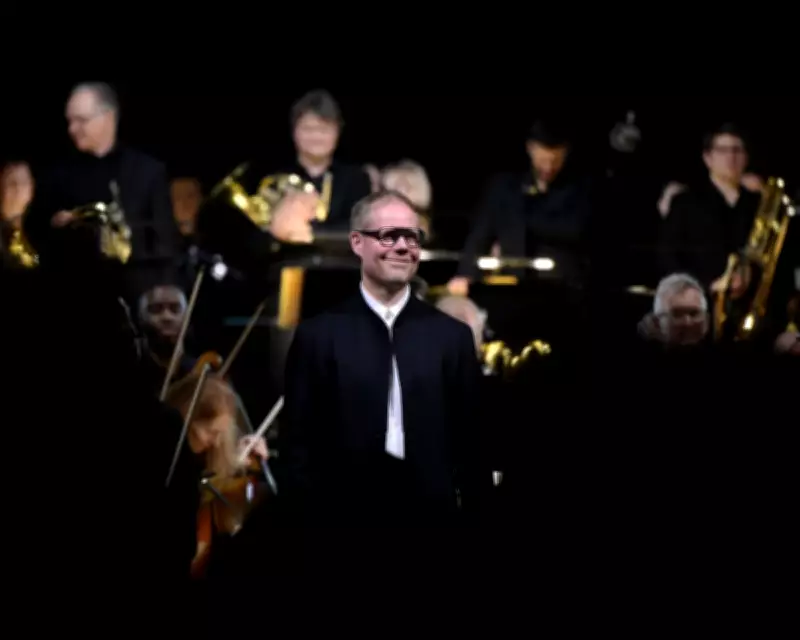
The acclaimed German-born British composer Max Richter has achieved a significant career milestone with his first Oscar nomination. He is recognised in the Best Original Score category for his work on the Shakespearean drama Hamnet, a testament to his enduring influence in both classical and contemporary music spheres.
A Landmark Year for the Composer
This nomination arrives during an exceptionally productive period for Richter, who will celebrate his 60th birthday shortly after the Oscars ceremony in Los Angeles. The past year has seen remarkable accomplishments, including his 2015 album Sleep surpassing two billion streams across all platforms, making it the first classical record to reach this landmark figure.
Further honours include receiving a CBE in the New Year Honours list and being selected for the Berlinale Camera award at the upcoming Berlin Film Festival. Additionally, from Monday, UK cinemas will livestream a ballet inspired by Virginia Woolf's works, featuring Richter's original score.

From Bedford to International Acclaim
Richter's musical journey began unexpectedly during his childhood in Bedford, where a local milkman with a passion for new music introduced him to minimalist composers like Terry Riley, Philip Glass and John Cage. This early exposure sparked an epiphany that would shape his future career, bridging what he describes as the "invisible divide" between high and low musical forms.
Though classically trained, Richter has never concealed his enthusiasm for diverse genres, from Kraftwerk's early electronica to Stiff Little Fingers' punk energy. Before establishing himself as a solo composer, he collaborated with electronic group The Future Sound of London in the mid-1990s and contributed string arrangements to Roni Size & Reprazent's 2000 album In the Møde.
The Ubiquitous On the Nature of Daylight
A recurring element in Richter's film work is his piece On the Nature of Daylight, which features prominently in Hamnet. This composition has become something of a cultural phenomenon, appearing in numerous films and television programmes including Stranger than Fiction, Shutter Island, The Last of Us and even an anniversary episode of EastEnders.
The piece begins with a 24-bar chord progression on lower strings, layered with repetitive violin melodies in a minimalist style. According to music lecturer Jono Buchanan, its harmonic structures resonate equally with pop music enthusiasts and classical devotees, drawing comparisons to both Coldplay's Fix You and Samuel Barber's Adagio for Strings.
Critical Reception and Artistic Philosophy
While Richter's music enjoys widespread popularity, it has attracted some critical scrutiny. Certain reviewers have described his work as overly functional or emotionally manipulative, with The Guardian's Tom Service recently characterising On the Nature of Daylight as "the go-to cliche for moments of serious contemplation or emotional intensity" in film.
Nevertheless, supporters argue that Richter's compositions offer more than mere background music. Sam Jackson, controller of BBC Radio 3 and the BBC Proms, emphasises that Richter's work encourages active engagement, citing his 2020 project Voices which incorporates text from the Universal Declaration of Human Rights.
Collaborative Excellence and Future Prospects
Richter's success owes much to his collaborative approach and professional reliability. Kevin O'Hare, director of the Royal Ballet, praises the composer's punctuality and adaptability, noting that Richter has consistently delivered music that complements choreographer Wayne McGregor's non-linear narratives in productions like Woolf Works and MaddAddam.
In film circles, Richter has been a sought-after collaborator since his synth-led score for Ari Folman's 2008 animated documentary Waltz with Bashir. His ability to create emotionally resonant music that serves narrative needs has made him particularly valuable to directors seeking to enhance their visual storytelling.

As the Oscars approach, Richter stands at a career crossroads. Whether he secures the award or not, his nomination for Hamnet represents a significant acknowledgement of his unique ability to transcend musical boundaries and connect with global audiences through emotionally powerful composition.