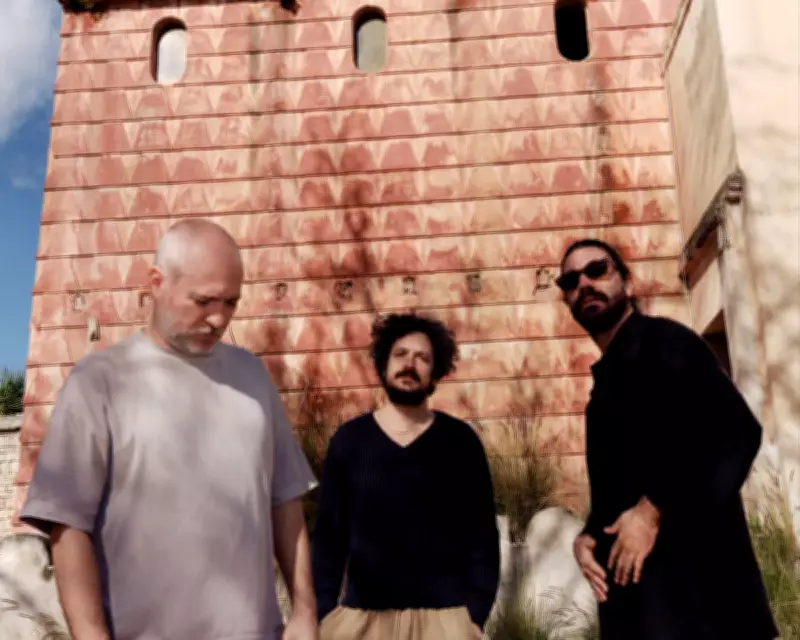
Palermo collective Lero Lero is breathing new life into Sicily's forgotten musical traditions. Their self-titled debut album draws from archival field recordings of washerwomen's songs, carters' cries, and lullabies, reimagined through electronic and microtonal instrumentation. The opening track, Com'haiu a Fari, features lyrics from a traditional washerwoman's song, sung in three-part polyphony inspired by Sicilian Holy Week traditions.
Challenging Stereotypes
In the Italian imagination, Sicily has long been romanticized or patronized. Lero Lero aims to dig beneath those surface representations. The group, formed by singer-songwriter Alessio Bondì, synth player Donato Di Trapani, and producer-guitarist Fabio Rizzo, spent years combing through 20th-century field recordings. They found that much of the surviving music had been detached from its social context, often simplified or cleaned up for public consumption.
Di Trapani observed that older peasant singers were remembered with shame, while later generations sought to 'ennoble' those traditions by making them more palatable. This resulted in an exportable Sicily of black lace and seaside landscapes, as seen in Dolce & Gabbana and Inspector Montalbano. Lero Lero rejects that sanitized image.

Songs of Labor and Indignation
On Salinai, they rework surreal rhymes once shouted by salt workers counting baskets. The playful refrains gradually reveal the workers' hunger and misery: 'Last night I went to work for Campanella, who gave me bread one slice at a time with nothing to eat alongside it but a hazelnut shell.' The following track, Cuori ri Canna, is a canto di sdegno (song of indignation) that transforms bitterness into irony and liberation. Di Trapani recalls playing it in Palermo and watching people stand up and sing as if freeing themselves from their own problems.
Reconstructing Oral Tradition
The group's process involves painstakingly decoding lyrics and obscure metaphors from archival material. They do not aim for faithful reproduction but for entering the generative processes of oral tradition. For example, Bedda ca Cantari A Mia Sintisti began with a 1955 prison recording of voice and mouth harp, which they expanded using other ottave siciliane (traditional verse forms) to create a larger lament of love and lost freedom.
Rizzo modified his guitar to create a microtonal, double-stringed instrument that can follow the shifting tonalities of archival songs. On Franculina, its serrated riffs cut through pounding bass-synth, while on Aieri Ci Passava, it coils around an insistent bassline, sharpening tension and sarcasm.
The Crocodile of Palermo
The album artwork by Giulia Parlato features the mythical crocodile of Palermo's Vucciria market, said to have arrived from the Nile through the now-buried Papireto river. Lurking beneath an ordinary scene, it symbolizes the latent voices Lero Lero pulls from archives, poised to rupture the polished image of the present.
Lero Lero's debut is out on Black Sweat Records, Panta Records, and Shhh/Peaceful.