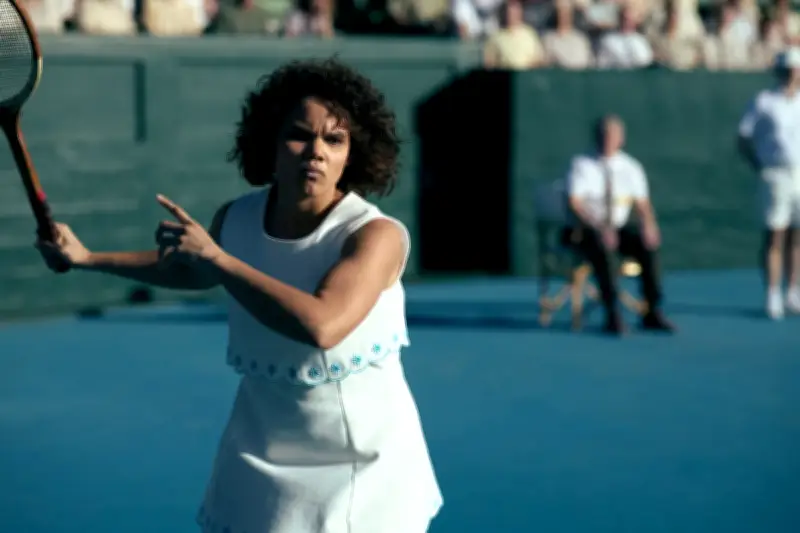
The three-part drama Goolagong, airing on BBC Four and now available on iPlayer, tells the story of Evonne Goolagong, the first Aboriginal player to compete at Wimbledon and a seven-time grand slam champion. The series, produced by Australia's ABC, opens with Ann Peebles' song 'It's Your Thing' as the teenage Evonne (played by Lila McGuire) prepares for her first Wimbledon match. While the drama is a heartfelt tribute, it often leans into saccharine territory, with repeated flashbacks of a young Evonne (Eloise Hart) hitting a ball against a wall with a plank of wood.
A Champion's Journey
Goolagong won the ladies' singles title at Wimbledon twice, in 1971 and 1980, along with a doubles win in 1974. She was ranked world No 1 and won seven grand slams in total. The drama highlights her rise from a poor Wiradjuri family in rural Barellan, New South Wales, to global stardom. However, the series struggles with tonal shifts, moving from lighthearted scenes to darker themes such as financial abuse and sexual harassment by her coach, Vic Edwards (played by Marton Csokas).
Difficult Themes Amidst the Gloss
The portrayal of Edwards is unsettling, as he grooms Goolagong from age 14, moving her from her family home into his in Sydney. The series does not shy away from the abuse, but the transition from cheerful childhood scenes to Edwards's unwanted advances feels abrupt. 'When it stops being fun, come home,' Evonne's mother tells her, foreshadowing later events. After family tragedy and Edwards's manipulations, Evonne echoes those words, declaring tennis is 'not fun any more.'

The drama also weaves in issues of race, gender, and pay equity in 1970s tennis, including Goolagong's clash with Billie Jean King after telling a journalist she would play for free. This leads to ostracization by fellow players. The performances anchor the story: Hart, McGuire, and Rilee Clarke each portray Goolagong at different life stages with defiance and determination. Luke Carroll and Chenoa Deemal shine as her parents, and Felix Mallard plays Roger Cawley, the English tennis journalist who becomes her husband.
An Uneven Tribute
Despite strong performances, Goolagong cannot decide on its tone. The final episode drags with forced tension as Goolagong returns to tennis months after giving birth to her daughter Kelly in 1977, culminating in her second Wimbledon win. The series ends with a slideshow of the real Evonne, suggesting a documentary might have been more compelling. The closing notes mention her tennis charity supporting Indigenous children and her 51-year marriage to Roger. While not a smash, the drama is a lovely tribute to a remarkable athlete.