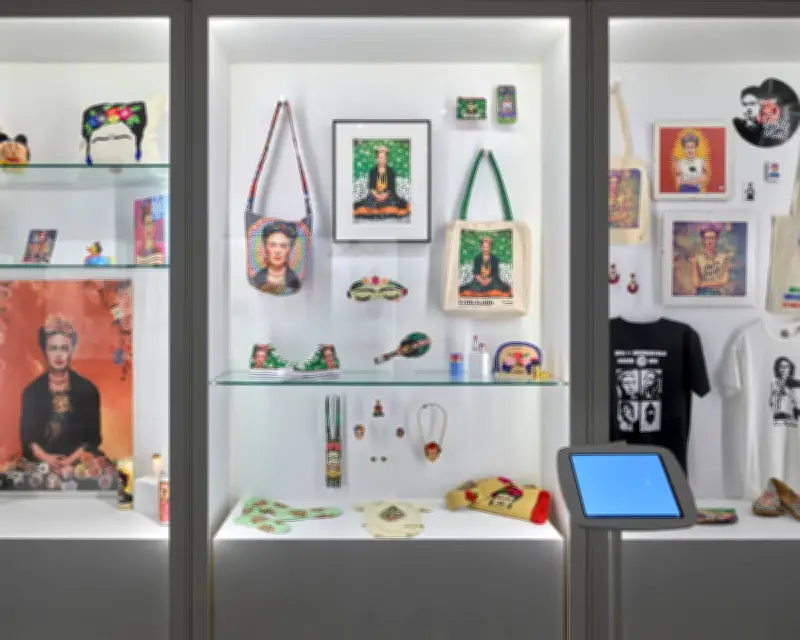
Frida Kahlo's face is ubiquitous in museum gift shops worldwide, appearing on socks, dolls, puzzles, water bottles, cushions, jewellery, mugs, eggcups, phone cases, shopping bags, votive candles, notebooks, and keychains. Her image has been reduced to a recognisable shorthand of monobrow, lipstick, and extravagant floral headdress, while her life and career are often sanitised into an inspiring tale of resilience. However, the real Kahlo was far more complicated: she was sharp-tongued, scandalously rude, a prodigious drug user, heavy drinker, intoxicating flirt, and committed communist.
The Making of an Icon at Tate Modern
Tate Modern's exhibition, Frida: The Making of an Icon, opened this month and examines Kahlo's status as a secular saint. Co-curator Beatriz García-Velasco acknowledges the tension: “The idea of Frida being universally accessible and inspiring is not something to be apologetic for. It speaks to the extraordinary range of artists and communities she has inspired: Chicana/o art, feminist movements, disability arts, queer culture, and constituencies all over the world who have claimed her as their own.”
Commercialisation vs. Devotion
The exhibition includes works by artists inspired by Kahlo, such as Rio Yañez, who created “Ghetto Frida” to satirise her commercialisation. Yañez noted that a classic print of Kahlo hung in his family home “as it did in the homes of so many Chicanos, artists, leftists, radical queers and Mexicans.” Another project, Camila Fontenele de Miranda's Todos Podem Ser Frida (Everyone Can Be Frida, 2012–20), invited visitors to Brazilian cultural events to wear embroidered fabrics and floral crowns.

García-Velasco sees a “productive tension” between mass-market products like the criticised 2018 Frida Barbie—which depicted Kahlo as pale-skinned, non-disabled, and with plucked brows—and handmade devotional objects that honour her as Santa Frida. “Nichos, ex-votos, and calaca figures speak to a very different kind of ownership, devotional rather than commercial, and rooted in the communities for whom Frida remains a symbol of resistance and identity,” she said.
Kahlo's Enduring Relevance
Kahlo's art remains contemporary, exploring identity, pain, and heartbreak. After a bus accident in her late teens caused catastrophic injuries, she began painting. Her works like The Accident (1926) and Henry Ford Hospital (1932) depict her physical and emotional suffering. Tracey Emin, whose work is also on display at Tate Modern, said: “Women can relate to her… She did images of herself bleeding in the bath, of foetuses coming out of her, and pictures of her family and lovers.”
The Role of Photography
Kahlo's relationship with the camera was crucial. Her father, Guillermo Kahlo, was a photographer, and her lover Nickolas Muray, a pioneer of colour photography, captured many iconic images. Despite frequently painting self-portraits, popular iconography of Kahlo derives largely from Muray's colour photographs rather than her often more painful self-portraits.
From Chicano Icon to Global Phenomenon
The first mass-produced object bearing Kahlo's likeness was a 1975 silkscreen print by Rupert García, titled Frida Kahlo (Septiembre), which became a totem for Chicano communities. By the late 1970s, the women's movement embraced her. In 1982, a landmark exhibition at the Whitechapel Gallery in London, co-curated by Laura Mulvey, introduced her work to a wider audience. The following year, Hayden Herrera's bestselling biography unleashed “Fridamania.”
The Real Frida
Despite her canonisation, Kahlo was no saint. She was filled with self-doubt and capable of treating loved ones badly. As Hettie Judah, author of Lives of the Artists: Frida Kahlo, writes: “If we expect figures we admire to be pure and flawless, we set ourselves up to fail. If there’s one thing Kahlo’s art reminds us, it is not to shy away from exploring the more complex and difficult parts of life.”
Frida: The Making of an Icon is at Tate Modern, London, until 3 January.