
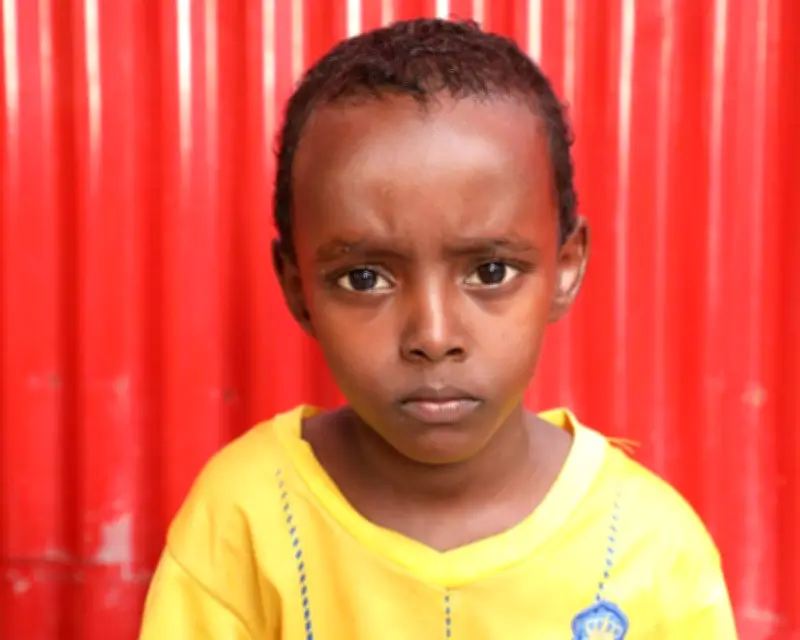
Readers rally to help child injured in US drone strike in Somalia
Guardian readers have raised £750 for seven-year-old Abdiqadir Salah, who was severely injured in a US drone strike in Jamaame, Somalia, that killed 12 civilians, including eight children. The strike, which occurred 18 months ago, was the deadliest US attack in the east African country in 18 years. Washington has never acknowledged the deaths.
Abdiqadir suffered shrapnel injuries, and his brother and sister were also wounded. His mother, Marian Haji Abdi Guled, told reporter Mohamed Gabobe: "What's worse than being a mother who can't do anything for her wounded children?" The family could not afford the medical operation needed for his recovery, but the funds raised by readers will now cover the costs.
US drone attack kills 12 civilians, mostly children
The Guardian, in collaboration with Mohamed Gabobe on the ground and Mark Townsend in London, pieced together the details of the attack using photos, videos, X-rays, and witness testimony. The family was sitting down for breakfast when the drones struck. A grandfather rushed to the wreckage to find his pregnant daughter-in-law and her two small children dead. The attack killed at least 12 civilians, including eight children.
The US has not acknowledged the deaths, and Tracy McVeigh, editor of Global development, criticized leaders for being "mealy-mouthed" in condemning such conflicts. She highlighted the UK's response to the war in Sudan and the UN's report on Israeli targeting of children in Gaza, calling both "genocidal conflicts" that the international community fails to decisively condemn.
Global health: Midwives denied visas for conference
African and Asian midwives were denied visas to attend the International Confederation of Midwives congress in Lisbon, Portugal, which focused on preventing deaths in childbirth. Eminent midwives from Nigeria, Ghana, Rwanda, Ethiopia, Bangladesh, and Indonesia were excluded, even as politicians, donors, and UN agencies gathered for the event.
Taliban destroys smartphones under new ban
In Afghanistan, the Taliban began destroying smartphones after ordering a sweeping ban on their use by government officials. Analysts warn that broader restrictions could follow, targeting civilians including women, medical workers, schoolteachers, and students in some provinces.
FGM controversy in Sierra Leone
The first lady of Sierra Leone, Fatima Maada Bio, denied reports that she supported female genital mutilation (FGM). However, she said she would not condemn the practice until she saw "reliable data" that it was harmful, sparking concern among medics, survivors, and human rights activists.
Violent attacks on schools rise globally
According to the Global Coalition to Protect Education from Attack, violent attacks on schools, pupils, and staff rose by 40% worldwide. Cases were reported in 83 countries, with at least 10,600 students and staff killed, injured, abducted, or arrested.
Other top stories
In India, factory workers are being told to film themselves for AI, raising concerns about job replacement. Pakistan's minister announced the abolition of the "period tax" on sanitary products. Ecuador's mangroves are being destroyed by the world's demand for shrimp. The Taliban's new marriage law is drawing criticism for its brutality. Ayesha Inoon's novel The Sisters of Serendib explores the lives of three Sri Lankan sisters adopted after fleeing their homeland.




