The Lost Legacy of a Scottish Folk Icon
For decades, the extraordinary work of Scottish folk music pioneer Dick Gaughan remained largely inaccessible to music lovers, trapped in legal limbo despite his legendary status among fellow musicians. Now, a determined fan has launched an unprecedented rescue mission that has not only rediscovered this vital musical heritage but also sparked a broader movement for artists' rights within the folk community.
A Champion of Social Justice Silenced
Colin Harper, an author and music compiler, recently reconnected with Gaughan's music after several decades and was stunned by what he found. "It felt to me as if the world had forgotten about the Frank Sinatra or Elvis Presley of folk," Harper explains. "His singing and guitar playing were astonishing – he performed traditional songs and championed social justice so powerfully."
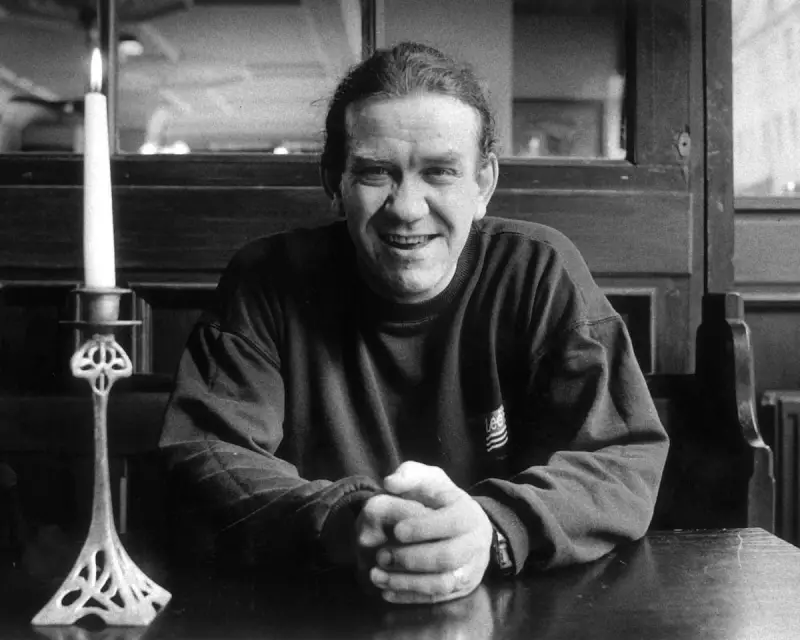
Gaughan, now 77 and living quietly in Edinburgh after retiring from performing in 2016 due to partial sight and a previous stroke, had watched helplessly as much of his life's work became unavailable. The rights to eight albums featuring his work, from his 1972 debut No More Forever to 1995's Clan Alba, were claimed by the label Celtic Music, which hasn't made them available digitally. Gaughan recalls not receiving a royalty statement from the company in 40 years.
"To find that the music I made, that I put a lot of work into, is just not available – it's like your life isn't available," Gaughan says with poignant simplicity.
From Glasgow Tenements to Folk Legend
Born in Glasgow in 1948 and raised in Leith within an impoverished musical family, Gaughan became a professional musician at 22. He recorded twelve solo albums and multiple collaborations, developing a reputation for performances that balanced stunning delicacy with fiery spirit. His influence extended far beyond the folk clubs where he became a beloved regular.
Radio legend John Peel featured him in nine sessions, both solo and with groups, once remarking during a 1977 show: "He's a singer so good that prolonged exposure to him could drive you daft."
His 1981 album Handful of Earth, recorded after recovering from a breakdown, remains a landmark achievement. Sheffield musician Richard Hawley describes it as "another league away from most things in any genre of music I've ever heard." The album significantly influenced Billy Bragg, who still performs Gaughan's version of The World Upside Down regularly in his live shows.
The Crowdfunding Phenomenon
Harper's shock at discovering only three of Gaughan's albums had been reissued in the last twenty years prompted him to action. "This is someone with a similar cultural standing in Scotland as Bert Jansch or Christy Moore in Ireland," he realised.
Assembling a team working for free or at "ultra mates' rates," Harper launched a crowdfunding campaign in March hoping to raise £28,000 within a month. The response astonished everyone involved. "We got that amount in a day," Harper recalls. The campaign ultimately raised £91,985, demonstrating the enduring appetite for Gaughan's music.
The success has enabled the creation of lavish seven-CD and DVD packages, complete with liner notes and archive interviews, under what's now called the Dick Gaughan Legacy Project. Live at the BBC: 1972-79 has been released this month, with Re/volution 1969-1984 scheduled for early 2026.
Legal Battles and Wider Implications
The project hasn't been without significant hurdles. Harper failed to license material from Celtic Music, the entity that acquired several legendary folk labels in the 1980s, including the bankrupt Trailer and Leader.
Celtic Music, which isn't listed on Companies House, and its affiliated publishing entity Northworks, claim 100% mechanical royalties to 61 of Gaughan's works. Despite initial contact referring to unspecified "inaccuracies," Celtic Music did not respond to detailed questions from journalists.
Emboldened by renewed interest in his music, Gaughan has now formally challenged the companies' claims through the Performing Right Society. The contested works were frozen in September, with royalties held until rightful ownership is established.
A separate GoFundMe campaign has raised nearly 90% of the £45,000 needed for legal fees, with supporters including Woody Guthrie's daughter Nora Guthrie and music industry investor Merck Mercuriadis.
The outcome could have far-reaching consequences for other folk artists whose work is claimed but not reissued by Celtic Music, including Nic Jones, Martin Simpson, Barbara Dickson, and Barry and Robin Dransfield.
Marry Waterson, daughter of the late Lal Waterson, expresses support for Gaughan's actions: "I'm delighted that Dick Gaughan is testing the legal grounds around the continued Celtic Music claiming and hoarding of so much music from the past that people care about."
A Life's Work Restored
The renewed appreciation has deeply moved Gaughan. "At the time, I did the gigs and the records without worrying too much about how it was received," he reflects. "It's been wonderful to realise all that actually meant something to so many people."
Harper has already been able to give Gaughan substantial earnings from the Kickstarter campaign – his first real music income in years. More importantly, they've demonstrated that audiences still cherish this vital musical legacy.
Gaughan captures the essence of his artistic mission with characteristic clarity: "I never wanted to sing into a vacuum. I wanted to sing my songs to real human beings who are listening." After decades of silence, his powerful voice is finally being heard again.