Death Valley Series 2 Review: Timothy Spall Shines in Cheery Welsh Crime Drama
The second series of Death Valley returns with Timothy Spall and Gwyneth Keyworth, delivering a cosy crime drama that is as gentle as a pillow yet knowingly arch. This curious confection manages to balance a high body count with soothing episodic rhythms and Welsh valley quaintness, making it as comfortable as Christmas.
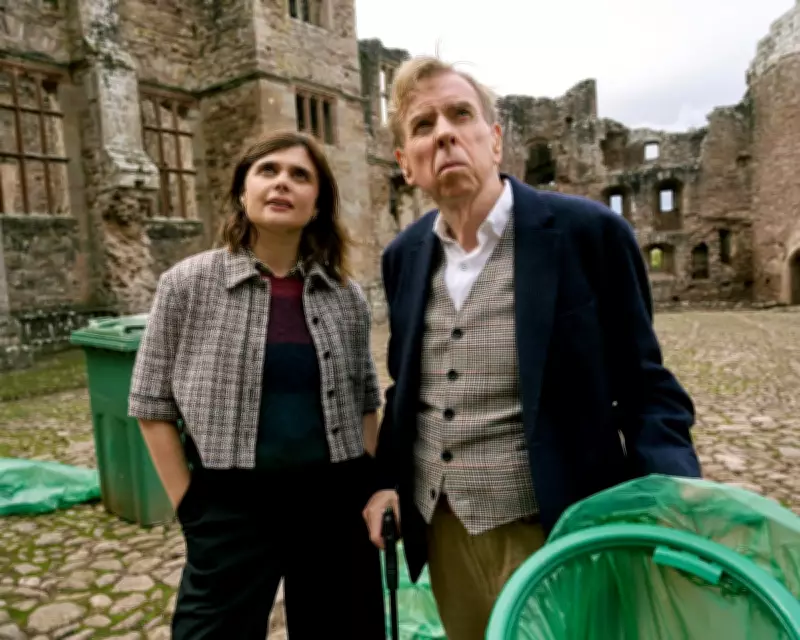
Everything and nothing has changed for Janie Mallowan (Gwyneth Keyworth), now promoted to detective inspector, who wonders if her seniority means she can no longer call herself "J-Dog." She remains charming but goofy and tactless, once complaining about a teabag left in a cuppa made by a murder victim's wife. Meanwhile, John Chapel (Timothy Spall) is far from the gloomy recluse of old, now positively chipper and full of self-regarding quips. He is in a relationship with Janie's mum, Vonnie (Melanie Walters), much to Janie's displeasure, making John persona non grata at the police station. However, this state of affairs will not last, as the provincial police force inevitably enlists the help of an ageing but universally recognisable actor to crack homicide cases.
Death Valley's main strength remains its willingness to lean into the absurdity of its premise. This second season includes stories ranging from a suspicious death in a community service litter-picking detail to the murder of a hipster chef selling seaside street food. The cases are variable in entertainment value but never in depth or weight, each as light as a feather and as gentle as a pillow. Cheerful cameos from guest stars like Alexandra Roach, Jane Horrocks, Jim Howick, and Roisin Conaty add to the fun. Each crime is solved through hilariously stagey deductions, and the climactic reveals veer dangerously close to self-parody as Janie and John take turns doling out revelations.

The plotting is ridiculously schematic throughout, making Death Valley feel less like a cosy crime drama and more like a snarky spoof. However, you will forgive its eye-rolling moments thanks to Spall's performance. As he becomes more windy and verbose by the episode, you realise you are watching a man breezily engaging in one of the least subtle roles of his career, and very probably one of his most enjoyable. Crucially, he and Keyworth have excellent chemistry, animated by just enough affection and antagonism. Thanks to them, Death Valley is supremely comfortable in its own skin, entirely undemanding but contentedly so.
The show is relaxed enough to self-critique relentlessly. Once you notice these internally referential Easter eggs, they are hard to miss. John rails against "the current level of banality in most mainstream TV drama." Janie describes John's performance as "a bit hammy." A suspect describes one of their reveals as "needlessly theatrical." All of these meta-judgments check out: on all counts, Death Valley is guilty as charged. If scenery-chewing and excessive exposition were crimes, we would be locking it up and throwing away the key.
But still, who is to judge? Just the audience, and Death Valley offers audience service in spades. Not every TV cop show has to be as grave as Line of Duty or as expansive as Blue Lights. The only thing unforgivable in a cosy crime drama is a lack of character. If the crimes themselves are simple, that is a feature, not a bug. The twists and turns of a cleverly constructed investigation would get in the way of the core narrative, which remains the odd but sweet central relationship.
Chapel's entire detective persona revolves around deducing "character inconsistencies" in suspects, but as far as he and Janie are concerned, there are none. Death Valley simply has its daft, sometimes painfully sweet cake and eats it. Consumed as part of a balanced diet, it is just fine.