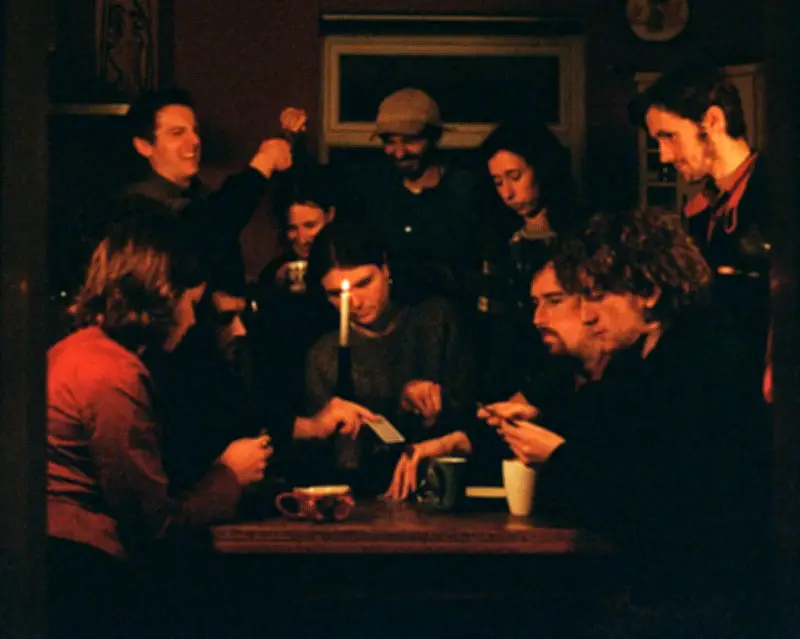
Tea and whist? … Brown Wimpenny. Photograph: Sorcha Frances Ryder
Brown Wimpenny: Long Live Brown Wimpenny review – Manchester folk collective get bawdy and shambolic
(Broadside Hacks) Named after a 19th-century relative, this sprawling group foreground folk's rough edges, but are best in the emotional, less showy moments.
Brown Wimpenny arrive with a name suggesting the softness of a twee indie band, before you discover it belonged to a fourth great-uncle of banjo player Seth Lockwood, who emigrated from a West Yorkshire farm to the 19th-century US. Then you hear the exploratory, hour-long debut album of this sprawling young collective, formed in Sunday sessions in Lockwood's Manchester living room. A band happy to show their music's muddy roots, these expansive eight tracks nonetheless pulse with ambition.

The album begins with a high-reaching medley, building from an atmospheric fiddle-led instrumental over a low cello drone. Dusty live production makes a feature of the music's cracks and creaks, but when Lockwood's athletic banjo takes the lead, it carries the rest of the group with arresting dynamism.
The Sheffield Grinder/Black Joak, linking a northern industrial ballad to a bawdy London broadside, has similar energy, though accordionist and singer James Brown, who sounds like the Only Ones' Peter Perrett fronting the Pogues, overplays the swashbuckling. Other adventurous blends include O'Keefe's/Farewell to Whalley Range, beautifully led by flautist Ella Evans, and Often Drunk/Kings of Kerry/Teddybear Jig, which travels somewhere unholy before tipping into extravagance.
Belonging in the same world as Shovel Dance Collective and Goblin Band, they are clearly devoted to unearthing and celebrating folk music, but their foregrounding of shambolic rough edges risks sounding fetishistic, distracting from the songs themselves, lessening their impact. The group are strongest in quieter territory: in the gorgeous opening passages of Raglan Road, the dying minutes of Jesus at Thy Command, and the moving communal singing of Pratty Flowers (The Holmfirth Anthem). The least showy track, Old Molly Metcalfe, introduced by a sample of Yorkshire chansonnier Jake Thackray, is the album's best moment, every strummed string, fiddle shimmer and soft harmony landing with emotional impact.
Also out this month
Magic Tuber Stringband's raging, broiling and beautiful Heavy Water (Thrill Jockey) explores the effects of a nuclear arms plant on the local landscape and the communities of rural South Carolina. Stunningly played folk tunes and field recordings create an astonishing world touched by magic and terror, from the mesmerising Blooms in the Rapids to the apocalyptic Sound of a Million Stars.
Norway's Hytta Trio release a striking debut album Vindespel (self-released), which mixes the hardanger fiddle's folk roots with new music and jazz (its title means "wind chime"). Especially lovely are Dråpeslått (Drop Tune) and Sildreslått (Murmuring Melody), which take rhythms reminiscent of jigs and reels into stranger, dreamier spaces.
Frankie Archer's The Dance of Death (self-released) is also fantastic, a collection of nine "nu-ancient trad bangers" that does something tricky but terrific, injecting trip-hop atmospheres and beats into ballads while preserving their edge and avoiding glossy novelty.