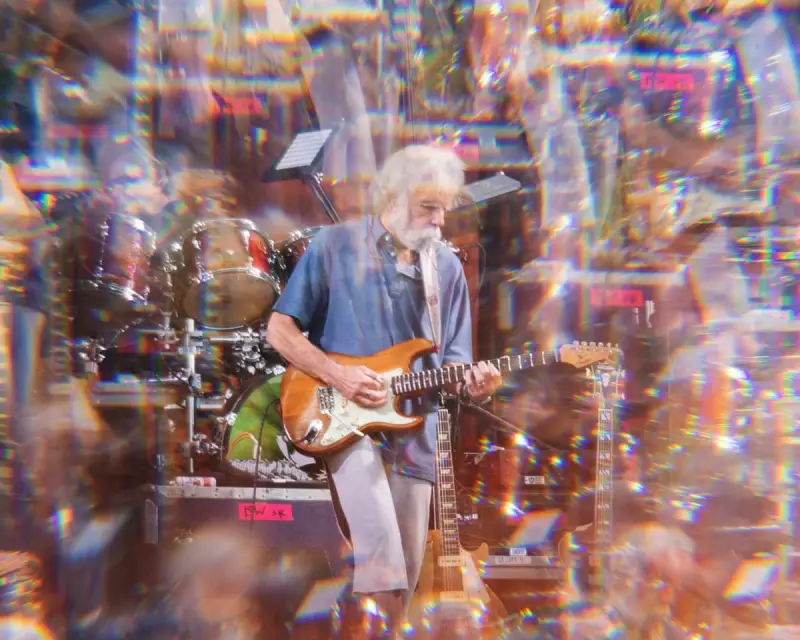
The musical journey of Bob Weir, the Grateful Dead's legendary rhythm guitarist and vocalist, is a tapestry woven with freedom, exploration, and a uniquely American sound. From the band's psychedelic infancy to their stadium-filling zenith, Weir's songwriting and performances were pivotal. Here, we chart a course through his ten most significant recordings, celebrating the 'rainbows of sound' and the philosophy of 'enjoying the ride' that he so perfectly embodied.
Foundations of a Legacy: The Early Explorations
The Grateful Dead's formative years were marked by musical and lyrical experimentation, with Weir often at the heart of the adventure. A prime example is 'The Faster We Go, the Rounder We Get / The Other One' from their 1968 album Anthem of the Sun. This segment, part of the suite 'That's It for the Other One', features rare Weir-penned lyrics referencing his real-life arrest for 'smiling on a cloudy day' after pelting police with water balloons in Haight-Ashbury. It also nods to Neal Cassady, driver of the Merry Pranksters' bus, cementing the band's counter-cultural roots. The song evolved into the jam vehicle 'The Other One', spectacularly demonstrated in a 1974 Winterland performance.
No list is complete without 'Truckin'' from 1970, the band's de facto anthem. Lyricist Robert Hunter captured the gnarly reality of life on the road—groupies, drug busts, endless travel—but it was Weir's jovial growl that located the magic in the chaos. The definitive live version is arguably found on the 'Europe '72' album, recorded at London's Lyceum. Another cornerstone is the joyous 'Sugar Magnolia' (1971), a tribute to Weir's partner Frankie Hart and a highlight of American Beauty. It became a New Year's Eve tradition, with the 1978 Winterland closing show standing as a fan favourite.

Solo Ventures and Musical Evolution
Weir's individual voice shone brightly on his 1972 solo album Ace, home to two classics. 'Playing in the Band' framed the Dead's lifestyle as a mystical calling. Originating from a riff by David Crosby, it became a launchpad for the band's most exploratory jams, including a legendary 46-minute version in Seattle in 1974. The tender 'Cassidy', named for a roadie's daughter and beat icon Neal Cassady, offered life advice in its coda: 'Let your life proceed by its own designs'. This sentiment became a touchstone Weir revisited for decades.
The mid-70s saw the Dead embrace new rhythms. 'The Music Never Stopped' from 1975's Blues for Allah is a funky, southern-tinged reverie driven by Weir's prickly guitar. During the band's hiatus, Weir joined Kingfish, co-writing the luminous two-parter 'Lazy Lightning/Supplication' (1976). Its true potential was unlocked in later Dead setlists, like a 1977 Florida performance that revealed its jazzy conversation.
Later Triumphs and Unlikely Hits
The late 70s produced 'Estimated Prophet' (1977), a rare, menacing reggae-inflected track where Weir portrayed a darkly charismatic figure. While a 1990 version with Branford Marsalis is celebrated, the 1979 Oakland show captures its ominous heart perfectly. The underrated 'Lost Sailor' from 1980's Go to Heaven finds a melancholic Weir identifying with a weathered seaman, musing that 'freedom don't come easy'.
Finally, the band's only US Top 10 album, 1987's In the Dark, yielded the cynical kiss-off 'Hell in a Bucket'. Despite a dated Miami Vice-style video, the song's dark wit endured, with Weir's Dylanesque croak delivering the immortal line: 'I may be going to hell in a bucket, babe, but at least I'm enjoyin' the ride'. It proved the Dead's spirit remained intact, even amidst mainstream success.
Through these ten recordings, Bob Weir's role as a chief architect of the Grateful Dead's enduring legacy is unmistakable. His work, from folk-rock ballads to psychedelic jams, continues to invite listeners on a long, strange, and profoundly rewarding trip.