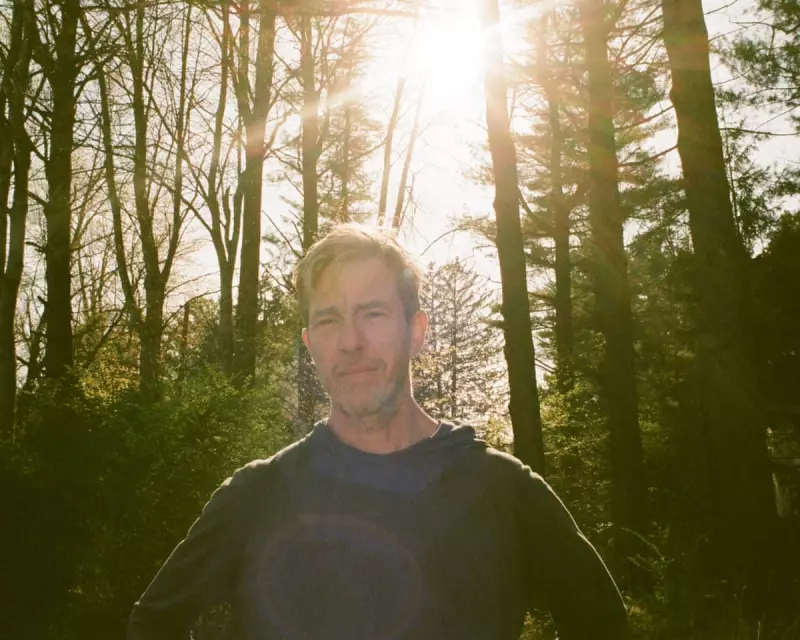
Ahead of the release of his new album, 'My Days of 58' on 27 February, revered American singer-songwriter Bill Callahan has opened up in a characteristically wry and insightful interview. The artist, once known under the moniker Smog, discussed everything from his formative years in North Yorkshire to his creative philosophy, which he describes as being more 'a drunk professor' than a craftsman.
From Yorkshire Orchards to Dub Dreams
Callahan revealed a slice of his childhood spent in Knaresborough, North Yorkshire, between the ages of seven and twelve. His memories are of exploring forbidden farmland, being chased by farmers from apple orchards, and fishing in the river. He described the cultural shock of moving from Maryland in the 1970s, where American TV shows like Dallas and Starsky & Hutch made him feel 'like a movie star' in a England he recalls as a sometimes rough place, reminiscent of the film Kes.
When asked about a dream collaboration, Callahan named iconic dub producers Lee 'Scratch' Perry for his infectious excitement and King Tubby for his minimalist mastery. While he enjoyed making the dub version of his album 'Dream River', he suggested any future remix project might take a different turn, perhaps into the realm of 'chopped and screwed' music.

The 'Mafia' of Streaming and the Sanctuary of Drag City
The conversation turned to the modern music business, where Callahan did not hold back. He compared the dominance of streaming platforms to coercive mafia techniques, explaining that even his steadfastly independent label, Drag City, was forced to capitulate after holding out for a decade. 'They would be out of business now if they hadn't,' he stated, highlighting the lack of choice for artists and labels in the current ecosystem.
This stark view contrasts sharply with his profound loyalty to Drag City, his home for over 30 years. He likens their relationship to growing up together, granting him complete creative freedom. 'If I gave them a silent record and said, "put this out", they would do it without question,' he affirmed.
Lyrical Precision and Accidental Art
Callahan firmly rejected the label of 'craftsman' for his musical approach. 'I picture a craftsman as the guy who's got his tools all labelled,' he said. Instead, he describes himself as a conduit, precise only with lyrics while embracing happenstance and mistakes in the music itself. 'The rest of it is more like: throw it at the wall,' he admitted, citing a fondness for randomly experimenting with synthesisers he doesn't fully understand.
He praised Randy Newman and Stephen Malkmus as masterfully funny lyricists, noting how Newman blends humour with potent social commentary. For Callahan, personal rituals like meditation, exercise, and socialising are crucial to keeping his creative channels unblocked, a practice he began after moving to Austin, Texas, in 2004.
The interview concluded on the sombre topic of artificial intelligence in music. Callahan was unequivocal: he would never license his voice for AI-produced songs. He finds the trend 'sad' and dehumanising. 'AI is never going to make anything worth thinking about,' he argued. 'Creating things involves growing as a human, and that's not what AI is about.' For Bill Callahan, the imperfect, exploratory journey of human creativity remains irreplaceable.