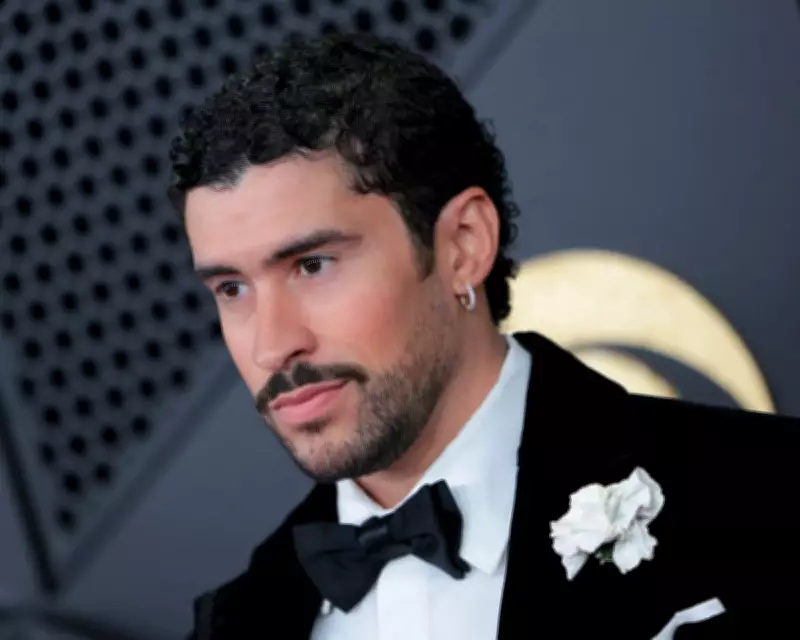
Bad Bunny's Super Bowl Moment: When Music Meets Politics
In the days leading up to the Super Bowl, all eyes are on Bad Bunny, the Puerto Rican reggaeton superstar whose halftime performance has become about far more than just music. The Grammy-winning artist, born Benito Antonio Martínez Ocasio, finds himself at the centre of America's ongoing culture wars as he prepares for what should be the crowning moment of his career.
From Gas Station Roofs to Global Stages
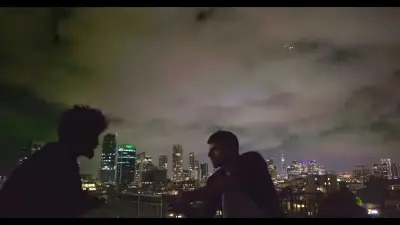
Bad Bunny's journey to this moment has been anything but conventional. Just over a year ago, he surprised fans with an impromptu concert on the roof of a Gulf Oil gas station in San Juan's Santurce neighbourhood. Performing alongside collaborator Arcángel, he delivered what became an iconic moment - part music video shoot, part homecoming celebration, part political statement. The set concluded with El Apagón (The Power Outage), a protest anthem addressing displacement and the persistent blackouts that have plagued Puerto Rico since Hurricane Maria devastated the island in 2017.
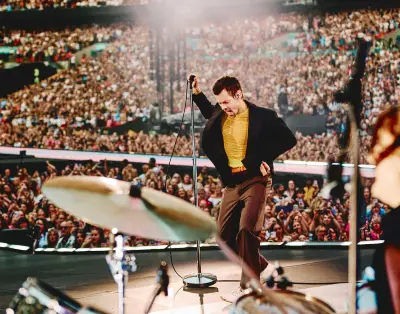
This combination of raw charisma, cultural authenticity and undeniable musical talent has propelled Bad Bunny to unprecedented heights. Despite performing exclusively in Caribbean Spanish, he has achieved mainstream success in the United States that transcends language barriers. His 2022 US arena tour broke records, including two sold-out nights at Yankee Stadium. At Coachella 2023, he became the first Spanish-language headliner in the festival's history, opening his set atop a replica of that same San Juan gas station. Just last week, he made Grammy history as the first Spanish-language artist to win Album of the Year for Debí Tirar Más Fotos (I Should Have Taken More Photos).

The Political Storm Surrounding Sunday's Show
Bad Bunny's Super Bowl appearance represents both an inevitable milestone and a politically charged moment. Inevitable because he has been the world's most-streamed artist for four of the past five years, with massive appeal among the United States' approximately 55 million Spanish speakers - the second-largest Spanish-speaking population globally after Mexico. From a business perspective, his selection makes perfect sense for the NFL as it seeks to reach younger audiences and expand its global footprint, according to music scholar Perry Johnson, who is writing a cultural history of the Super Bowl halftime show.
Yet the choice feels improbable given the current political climate. The Trump administration's demonisation of Hispanic immigrants and politicisation of the Spanish language makes a Spanish-speaking headliner seem like an unusual risk for the typically brand-safe NFL. The announcement immediately drew hostility from certain political quarters.
"It's so shameful that they've decided to pick somebody who just seems to hate America so much, to represent them at the halftime game," said former Trump campaign manager Corey Lewandowski. Homeland Security Secretary Kristi Noem promised that Immigration and Customs Enforcement (ICE) would be "all over" the Super Bowl. In response, right-wing organisation Turning Point USA has planned an alternative "All-American Halftime Show" featuring Donald Trump ally Kid Rock.
A History of Backlash at America's Biggest Stage
The Super Bowl halftime show has long served as a battleground for competing visions of American identity. Since the first Super Bowl in 1967, the performance slot has consistently courted controversy, particularly around issues of race, gender and cultural representation. The disproportionate outrage following Janet Jackson's 2004 "wardrobe malfunction" demonstrated how quickly cultural flashpoints can emerge. Beyoncé faced criticism for her Black Panthers-inspired costumes during her 2016 performance. Shakira and Jennifer Lopez encountered backlash as Latina performers over 40 when they took the stage in 2020.
Federal Communications Commission complaints regularly spike around the Super Bowl, especially as the interests of conservative white audiences clash with the NFL's business objectives and the public's preference for hip-hop and global sounds. Since Jay-Z's Roc Nation took over halftime production in 2019, there have been no white headliners - and viewership has surged dramatically.

The Symbolism of Spanish on America's Biggest Stage
Bad Bunny's performance takes on additional significance given current political tensions around language and immigration. "His very presence on the stage is a statement," said Petra Rivera-Rideau, co-author of P FKN R: How Bad Bunny Became the Global Voice of Puerto Rican Resistance. "The fact is that we're currently in a moment where Spanish is seen as a mark of being foreign, of not belonging, where people are getting profiled for being Spanish speakers - that ups the ante and importance. It can't really be overstated."
This isn't the first time a Latino artist has faced backlash on patriotic American stages. In 1968, Puerto Rican-born musician José Feliciano performed a Latin-tinged rendition of the national anthem at the World Series, only to face calls for deportation that nearly ended his career. When Marc Anthony, a New Yorker of Puerto Rican descent, sang God Bless America at the 2013 MLB All-Star Game, he was met with social media abuse including one tweet demanding: "Shouldn't an AMERICAN be singing God Bless America? #getoutofmycountry."
Puerto Rico's Complex Status and Bad Bunny's Message
Throughout his career, Bad Bunny has addressed Puerto Rico's complicated political status as a US territory since 1898 - what one Supreme Court case described as "belonging to the United States, but not a part of the United States." He has sponsored billboards in Puerto Rico opposing US statehood. On his latest album, he references Hawaii's transformation from native homeland to tourist destination following its 1959 statehood. His recent 30-show residency in San Juan prioritised local affordability and reserved the first nine shows exclusively for island residents.
Despite the specificity of his references to Puerto Rican experience, Bad Bunny's music resonates globally. "His lyrics go to the essence of something," said scholar Frances Negrón-Muntaner. Even his song Nuevayol - named for the Boricuan pronunciation of Nueva York - speaks to immigrant experiences that transcend specific national origins.
The Cultural Battle Lines Are Drawn
At the Grammys last week, Bad Bunny addressed the political context directly, saying in English: "ICE out! We're not savage, we're not animals, we're not aliens. We are humans and we are Americans." His comments sparked another round of outrage from conservative commentators, with Megyn Kelly suggesting: "I feel like we might want to send ICE down to his compound."
According to Yarimar Bonilla, director of the Center for Puerto Rican Studies at Hunter College, "the fact that the top artist in the world is Spanish-speaking, is American with an asterisk, is not their definition of America, stokes their fears of what America is becoming." Meanwhile, fans across the United States are racing to learn Spanish lyrics ahead of Sunday's performance, creating what Bonilla describes as "something really beautiful" even as the specific colonial context of Bad Bunny's message risks being lost.
As Bad Bunny prepares for what he promises will be "a huge party" where "the world will dance," the cultural significance of his performance has already eclipsed the music itself. Whether viewed as a symbol of resistance, a business calculation, or simply entertainment, his presence on America's biggest stage represents a watershed moment in the ongoing negotiation of what constitutes American culture in the 21st century. The show may last only minutes, but its reverberations will continue long after the final whistle blows.