Angelo De Augustine's Journey from Medical Collapse to Musical Rebirth
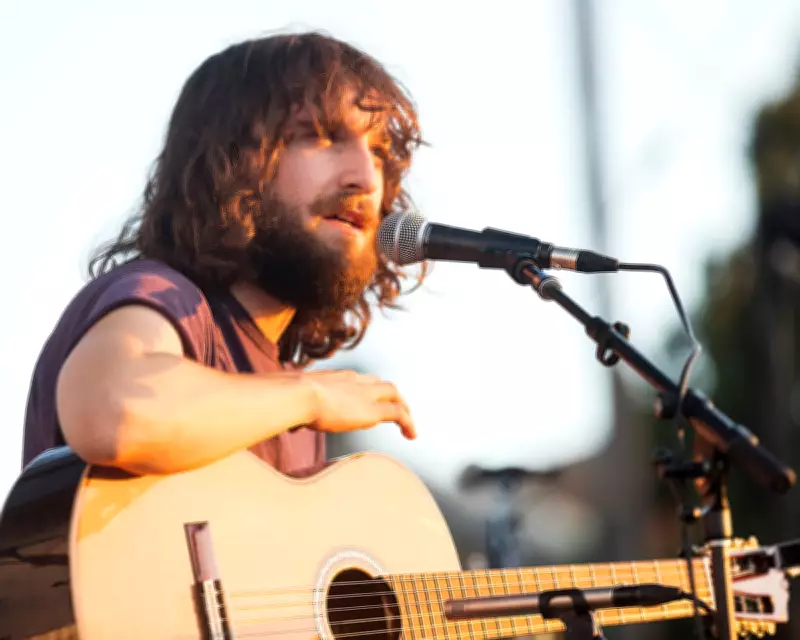
On Halloween 2022, Angelo De Augustine, a 33-year-old singer-songwriter and collaborator with Sufjan Stevens, experienced a sudden and terrifying collapse at his Los Angeles home. "I got all these strange sensations and knew something was very wrong," De Augustine recalls. "Then I lost control of my body." Fortunately, family members were present to rush him to the hospital, where he underwent days of exhaustive tests. Despite being conscious for much of the ordeal, his memory is hazy, marked by an inability to hear, see clearly, or move properly.
A Mysterious Diagnosis and a Dire Warning
Doctors conducted numerous explorations but failed to provide a concrete diagnosis. In a chilling turn, they discharged him with the advice: "Come back if you go completely deaf or blind." Left reeling and semi-incapacitated, De Augustine faced an uncertain future, grappling with the fear that he might not survive. His primary focus became finishing his album Toil and Trouble, which he had been working on for the preceding year. "Nobody was helping and I didn't think I would survive the illness," he admits. "I couldn't do basic tasks like lift things, but I'd worked so hard I didn't want to leave it incomplete. As far as I was concerned, I wanted to get it finished and then thought I was probably gonna die."
Musical Career and the Impact of Illness
De Augustine's musical journey includes his 2014 debut Spirals of Silence, signing to Sufjan Stevens' label Asthmatic Kitty for 2017's Swim Inside the Moon, and the acclaimed collaborative album A Beginner's Mind in 2021. In 2023, his song Time from the 2019 album Tomb featured in Zach Braff's movie A Good Person, amassing over 31 million streams. However, De Augustine was too ill to capitalize on this success, forcing him to "completely change my life." Toil and Trouble was released in 2023, but the effort took a toll. "I probably pushed through way too much to make that album," he says. "I couldn't lift things."

Relearning Life and Creating a New Album
Over the past three years, De Augustine has undergone a grueling recovery process, relearning to walk, talk, hear, play instruments, and sing. These experiences deeply influenced his new album, Angel in Plainclothes, which features ethereal reflections on life's transience. Songs like Spirit of the Unknown evoke the wistful beauty of artists such as Nick Drake or early Paul Simon, contemplating simple joys he feared losing forever. The lead single Mirror Mirror uses the metaphor of seeing his reflection but not recognizing himself, symbolizing his feeling of being "like a ghost" during his illness.
Understanding the Medical Mystery
Emerging research points to a potential explanation for his condition. De Augustine suggests that chronic fear and stress may have overwhelmed his central nervous system, leading to a shutdown of bodily functions. "Sometimes when somebody is under a great deal of chronic fear and stress for a very long time they can go past the allostatic load: the nervous system's ability to self-regulate," he explains. "The brain tries to protect itself, so it sends all these strange symptoms to your body. I felt like my whole body was shutting down." He attributes some of this stress to the music industry, though he remains committed to his craft.
Personal Background and Recovery Techniques
Raised by his mother, Wendy Fraser, a professional vocalist who sang on the Dirty Dancing soundtrack, De Augustine initially pursued a soccer career before injuries led him to music. During his recovery, he returned home to live with his mother because he couldn't perform basic tasks like making dinner. A breakthrough came when he joined a local spa, discovering that water alleviated his symptoms, highlighting his underlying stress. He also enrolled in a daily program of physical and mental exercises, which helped retrain his brain. "For a long time, playing guitar and singing felt wrong and weird, but then very slowly, it came back," he says.

Collaborative Recording and Antique Instrumentation
Unable to handle production alone due to his health, De Augustine collaborated with musicians like Oliver Hill, Leng Bian, Thomas Bartlett, and his mother. He also worked with LA musician Jonathan Wilson, who provided studio space and drums for the song The Cure, which draws parallels between illness and addiction. The album's ethereal sound is enhanced by antique instruments, including a bowed psaltery, aquarion, Marxophone, bass recorder, and a 1990s synthesiser version of a Japanese koto harp. De Augustine's hobby of seeking unique sounds led him to find a civil war-era pump organ, adding to the album's distinctive texture.
Rebuilding a Career and Embracing Life
De Augustine has taken cautious steps to rebuild his career, playing live for the first time in five years last year. "There were some difficult moments," he admits, "but getting through that just felt amazing. You wanna take these little steps. You don't wanna go from zero to 100." Still not fully healed, he describes himself as a blend of his old self and a transformed person who no longer takes life for granted. "I'm just really trying to find myself again," he says. "For so long, my only focus was trying to be a great songwriter and perhaps I paid the price for that. Now I'd rather not have tried so hard. I just want to live a good life." Reflecting on his new album, he gently notes that great outcomes can emerge when fixation is released. Angel in Plainclothes is set for release via Asthmatic Kitty on April 24.